
2nd-4th June 2023
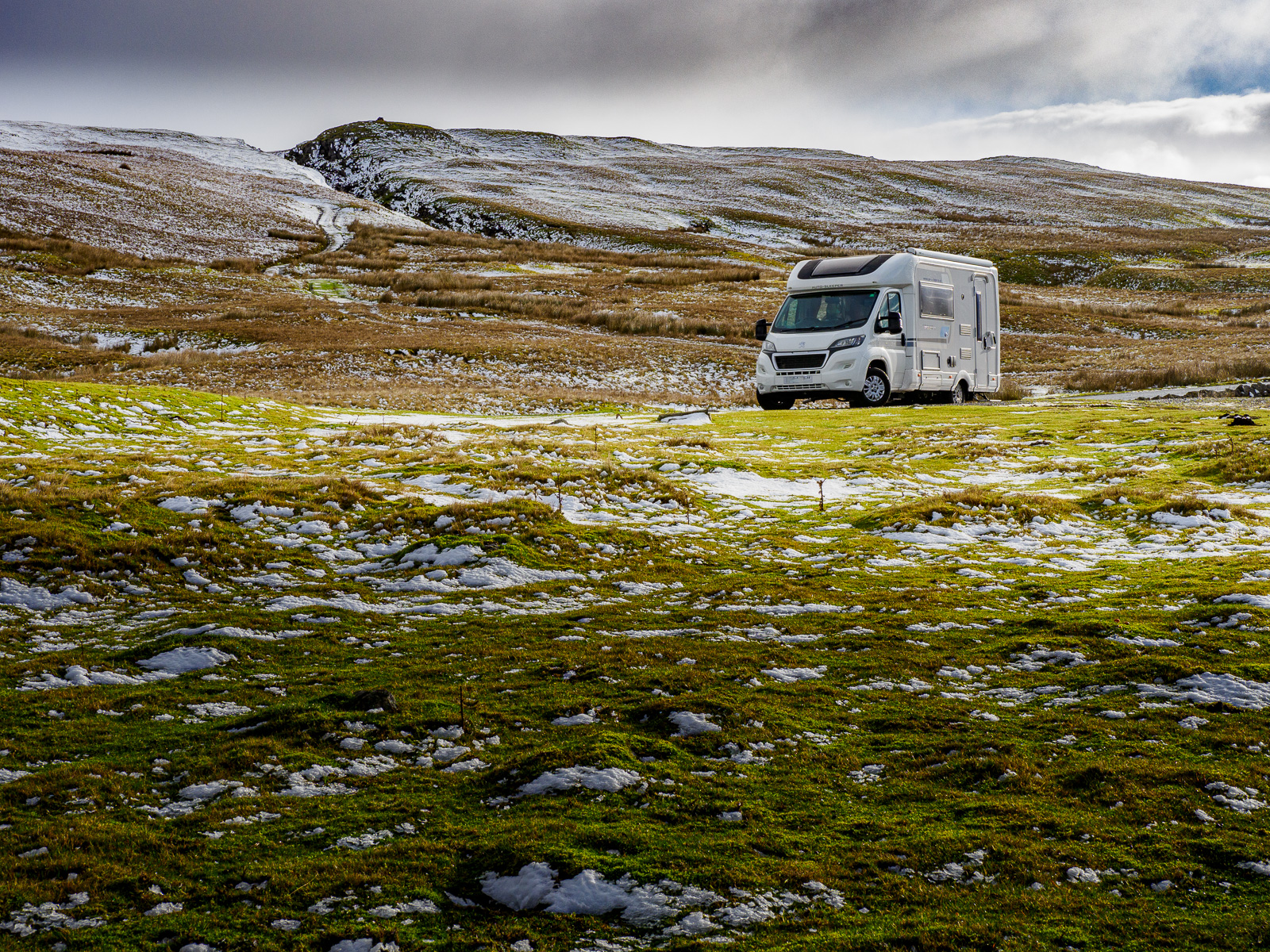
We took Fufu for the weekend to the village of Shap, in Cumbria. Our venue was a temporary holiday site hosted by Lune Valley District Association of the Camping and Caravanning Club. Our thanks to the stewards for the weekend who made us feel very welcome.

It was the last weekend of the site, so many had left before our arrival. This meant there were only about a dozen caravans or motorhomes remaining. Our nearest neighbour was about 50 feet away.

We were staying only a short distance from Shap Abbey which was built in the year 1199. This was a return visit for us to the abbey; I originally posted following our visit on 27th May 2022.
An order of Premonstratensian canons founded the abbey which was dissolved in the English reformation. Much of the building stone has been re-purposed (pilfered?) over the years and forms part of Lowther Castle, Shap Market Hall and other nearby farm buildings.


The Premonstratensian order still exists, mostly in Europe, with about 1000 male and 200 female members (in 2015). They are associated with various pastoral work and some small-scale commercial activities such as printing, cheese making and brewing. Leffe Grimbergen is a brand associated with them. (Your author has occasionally enjoyed their fine produce).

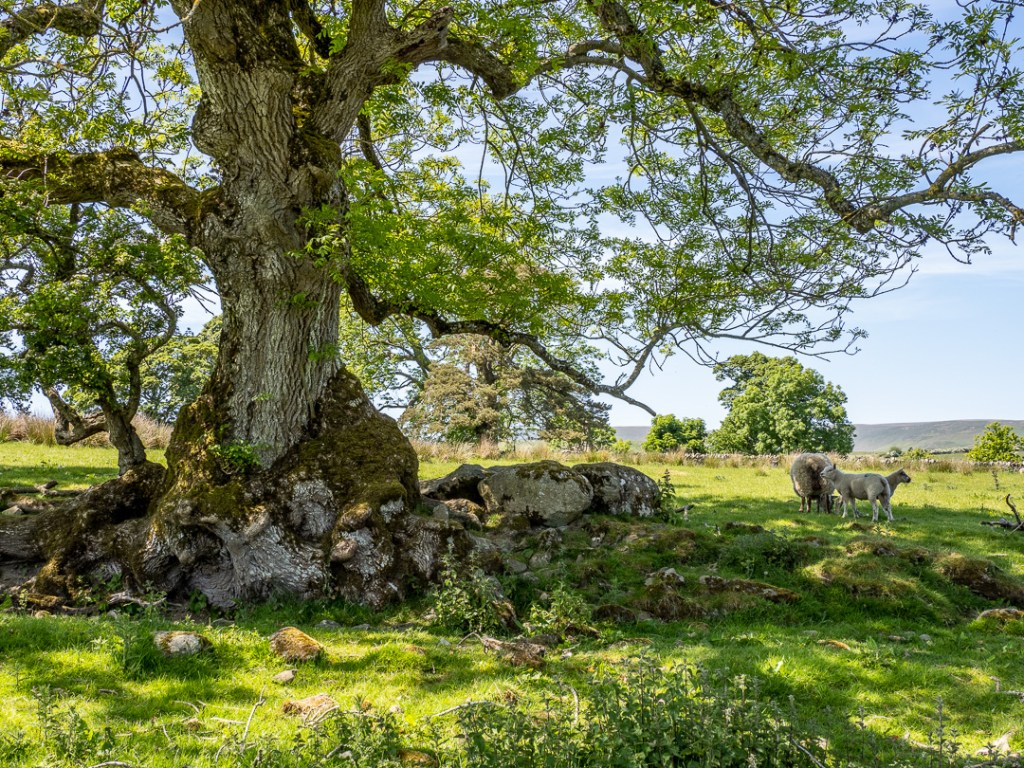
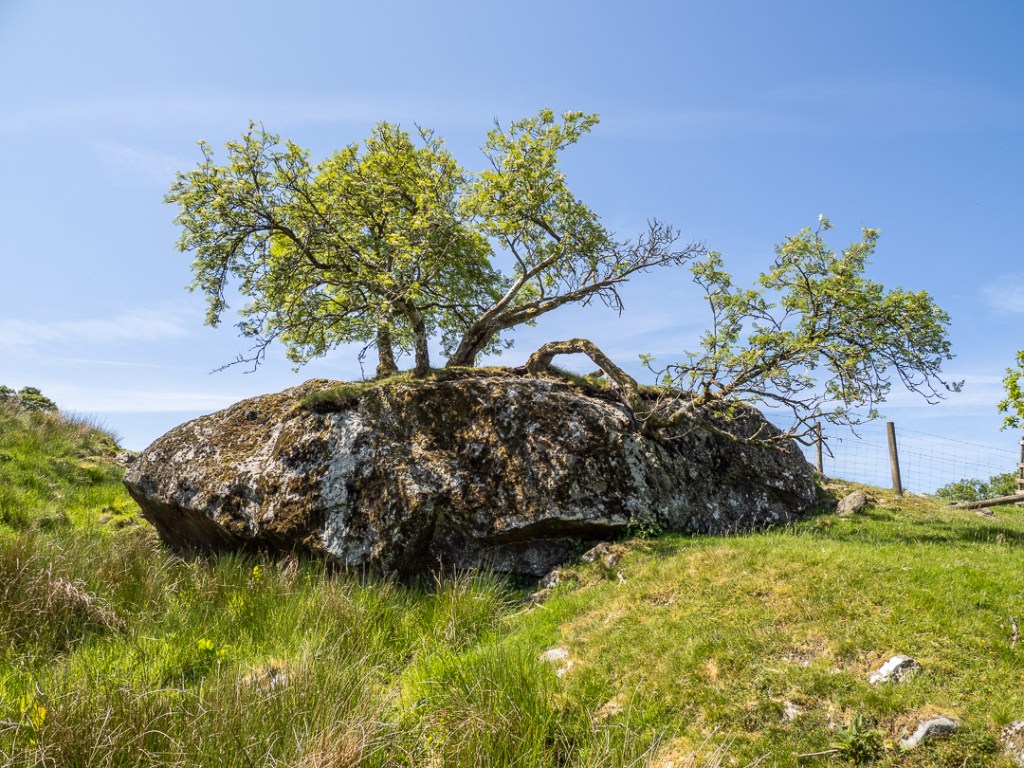
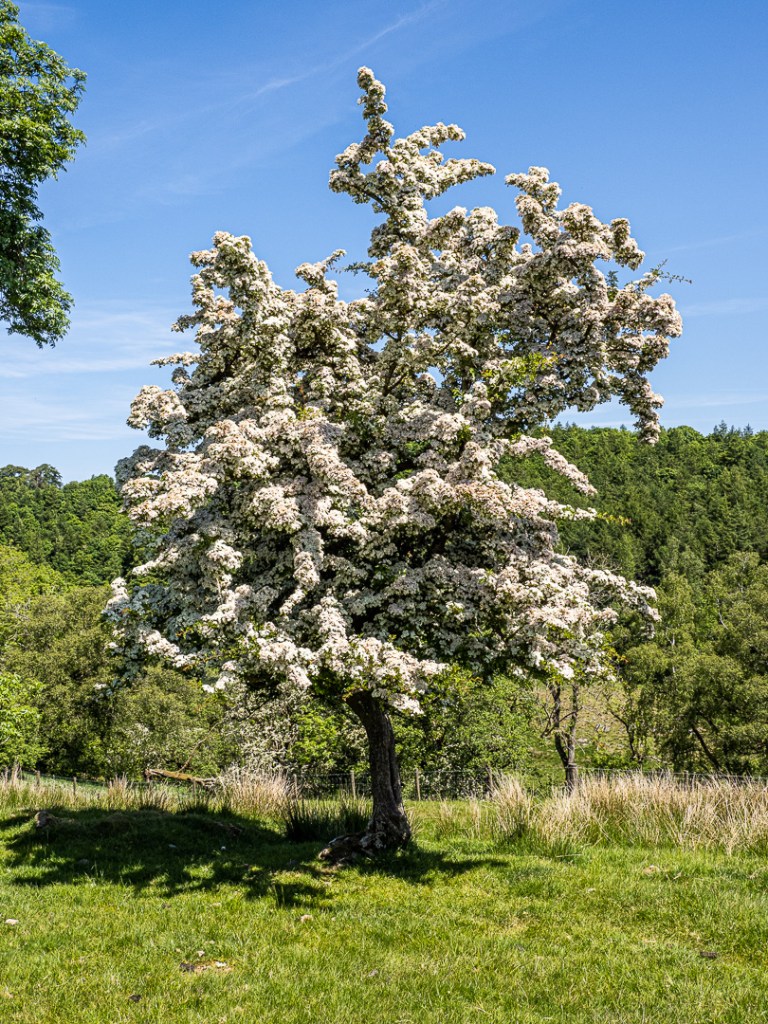
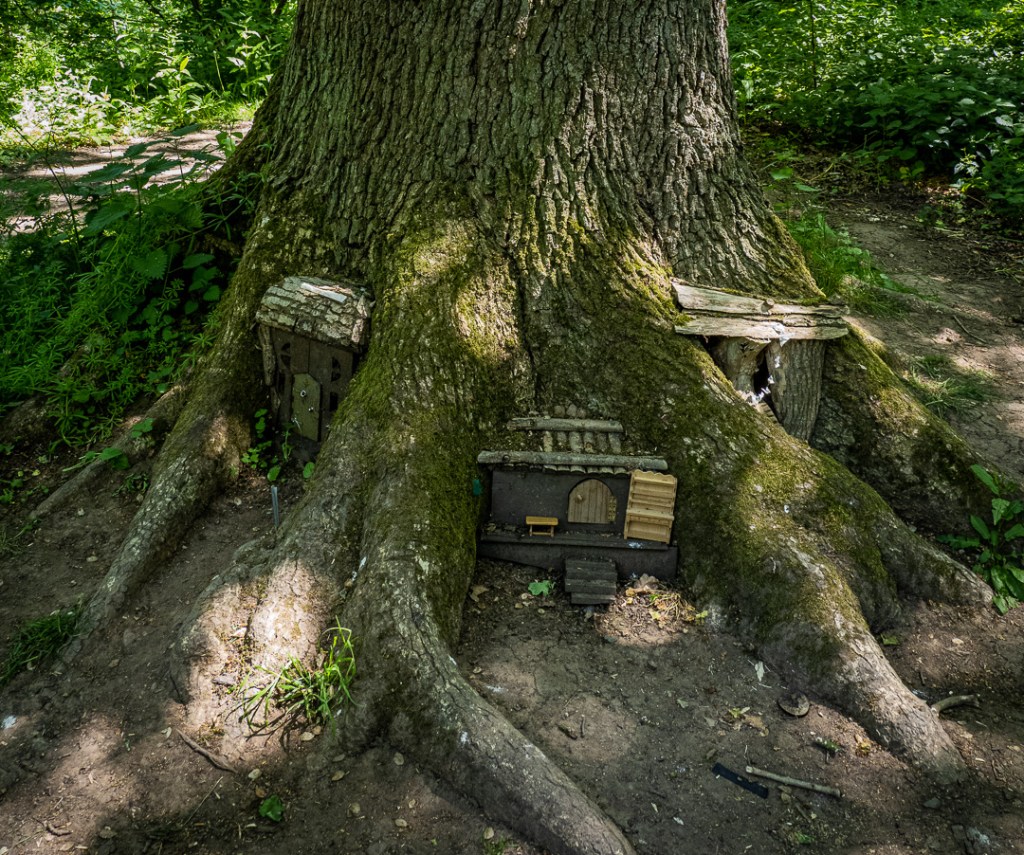
Shap Abbey sits next to the River Lowther. These stepping stones are just upstream, but our walk took us north down the river towards Rosgill Hall, on the eastern side of the river, returning back along the western side. We passed many impressive trees:
Acorn Bank
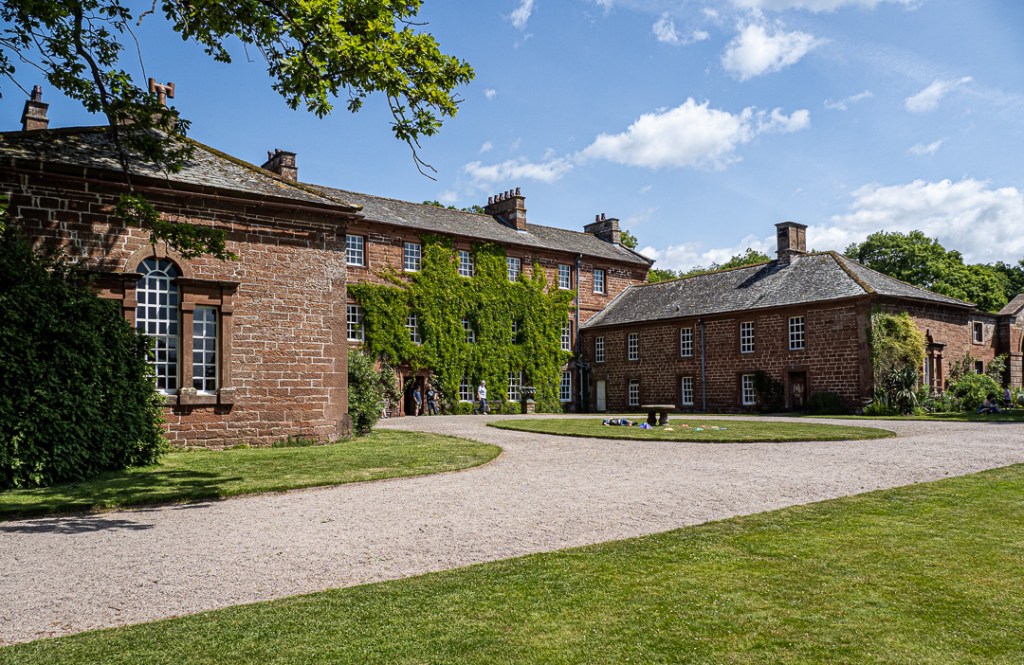
On Sunday, we chose to visit a couple of local historic sites. The first of these being Acorn Bank Garden and Watermill. Now in the care of the National Trust, Acorn Bank was clearly at one time, an impressive house. Just a couple of rooms are open as the Trust took over the house from a charity, which had converted the upstairs into accommodation.

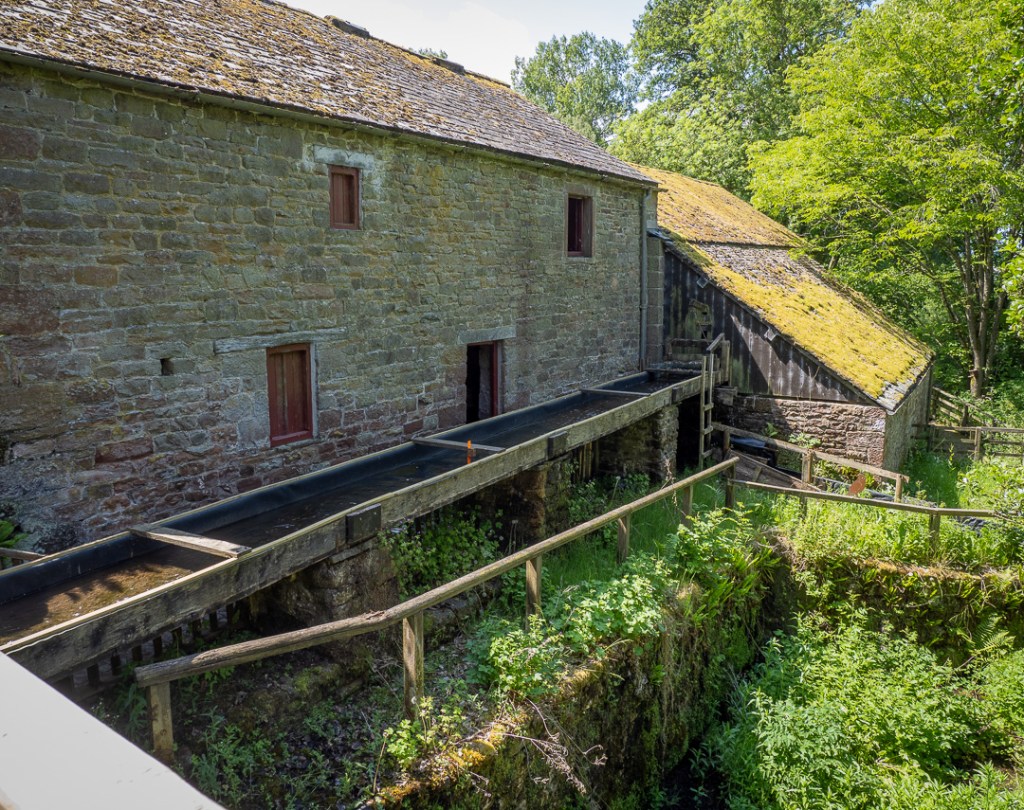
The watermill was working when we visited. Water travels along the mill-race (below) to the wheel, housed in the shed at the far end.

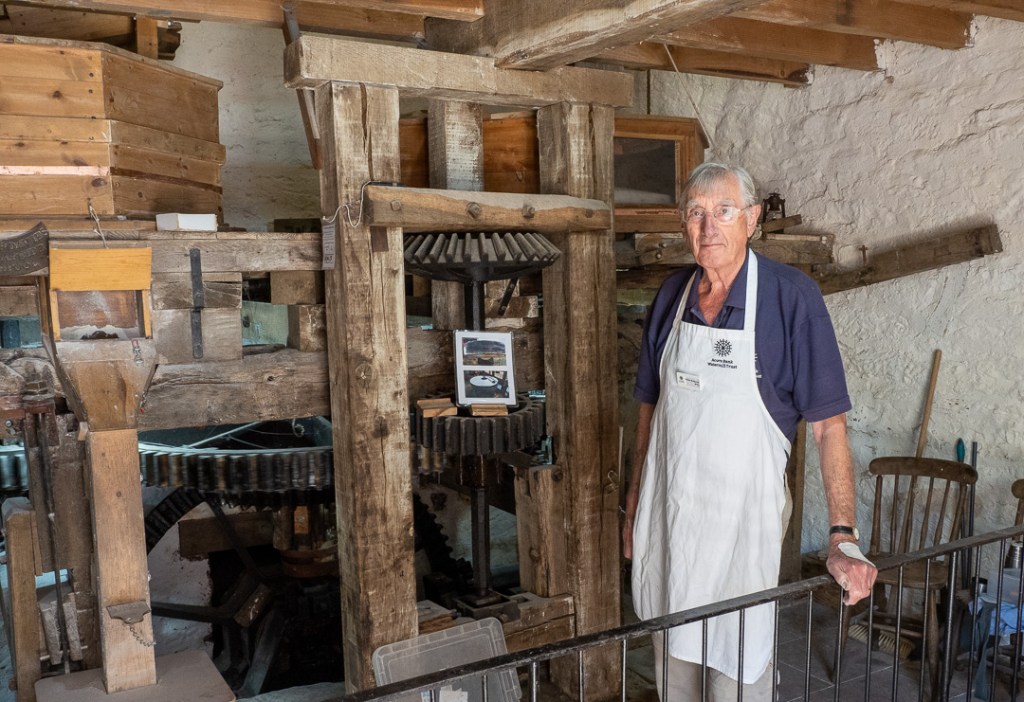
The mill is used to grind flour which can be bought. Sales are in aid of the Acorn Bank Watermill Trust.
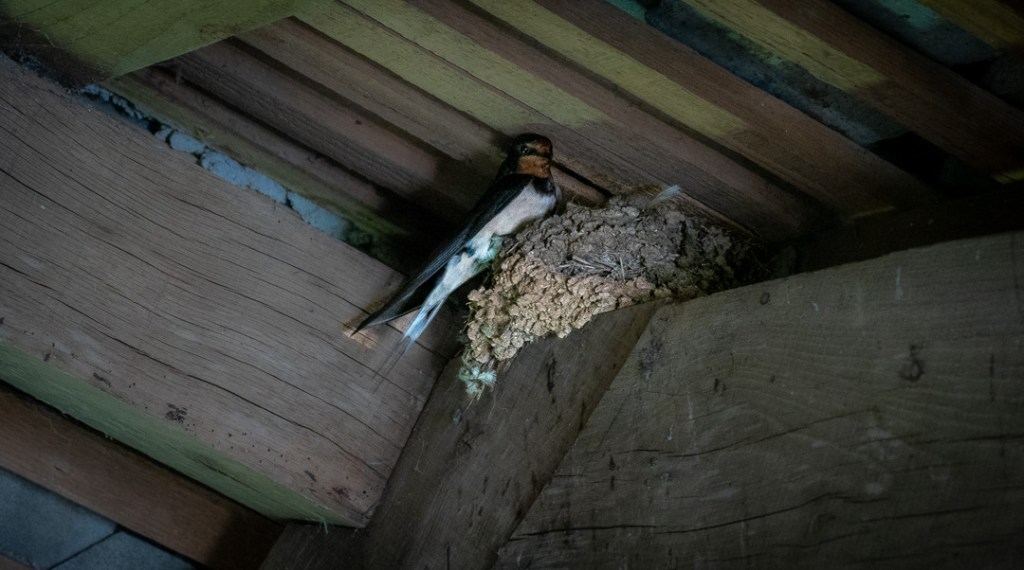
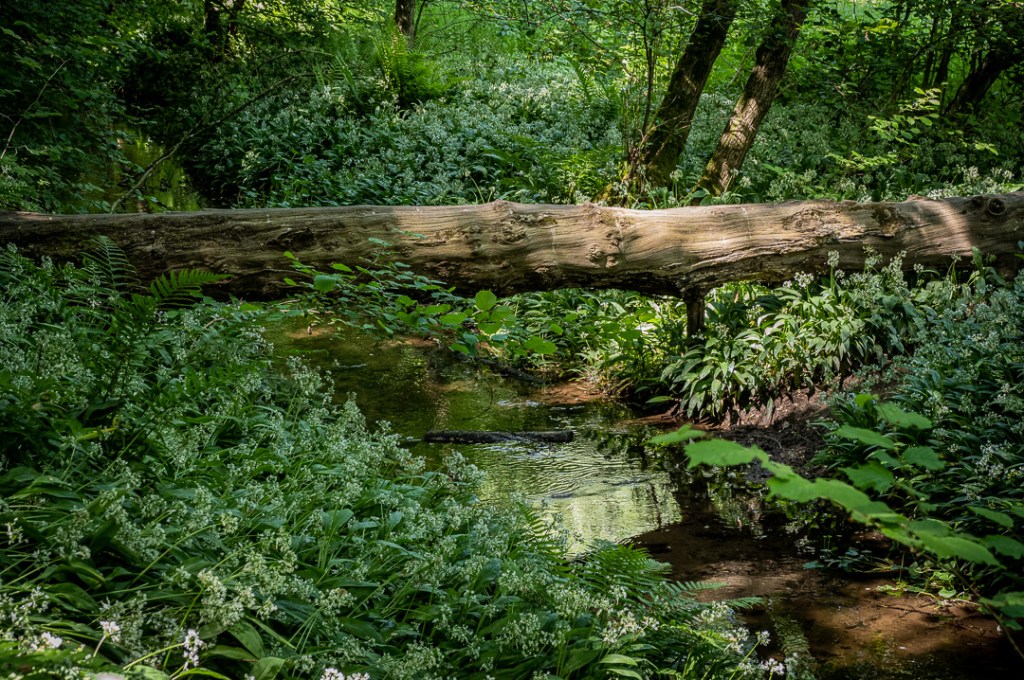
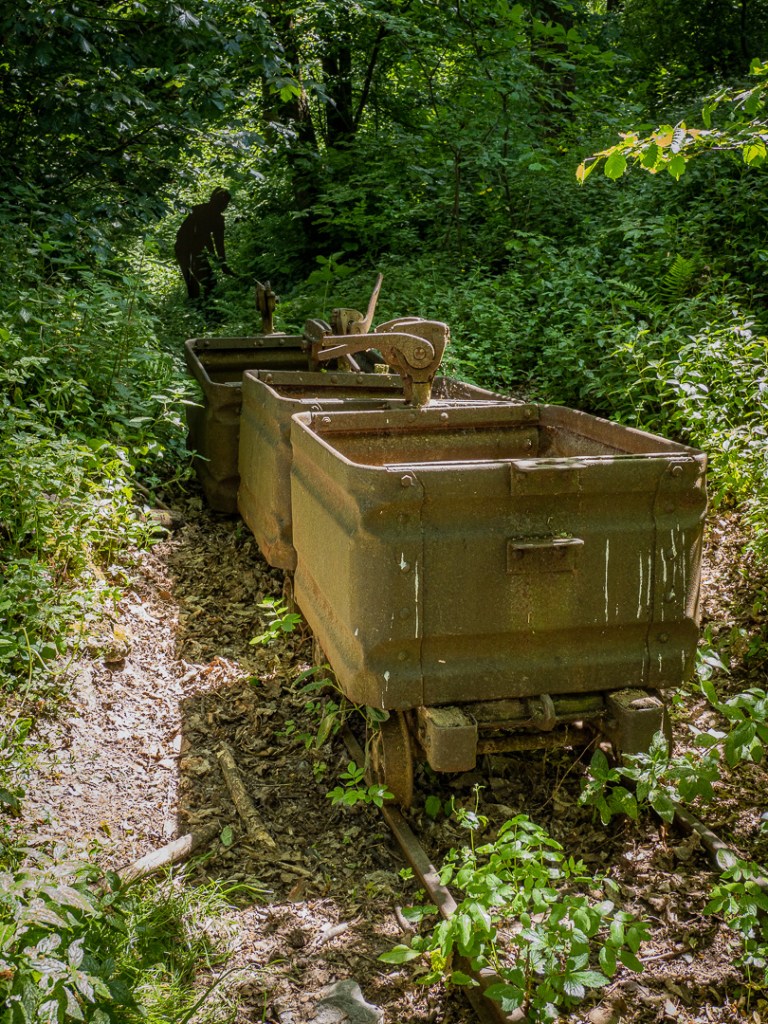
As well as the mill, the woodland around the house housed an open cast mine, mining for gypsum, which is used in the manufacture of plaster. Much of the woodland is left to nature now. At one time, the watermill was used to power equipment in the gypsum mine, using a long continuous wire rope. After the mine closed, the mill was abandoned around 1938.
Brougham Castle
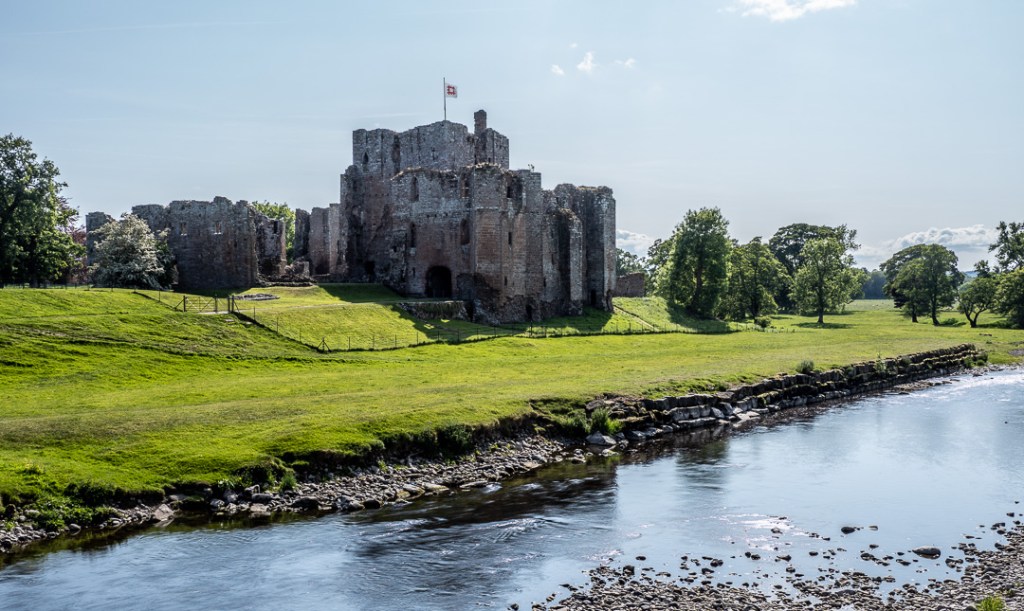
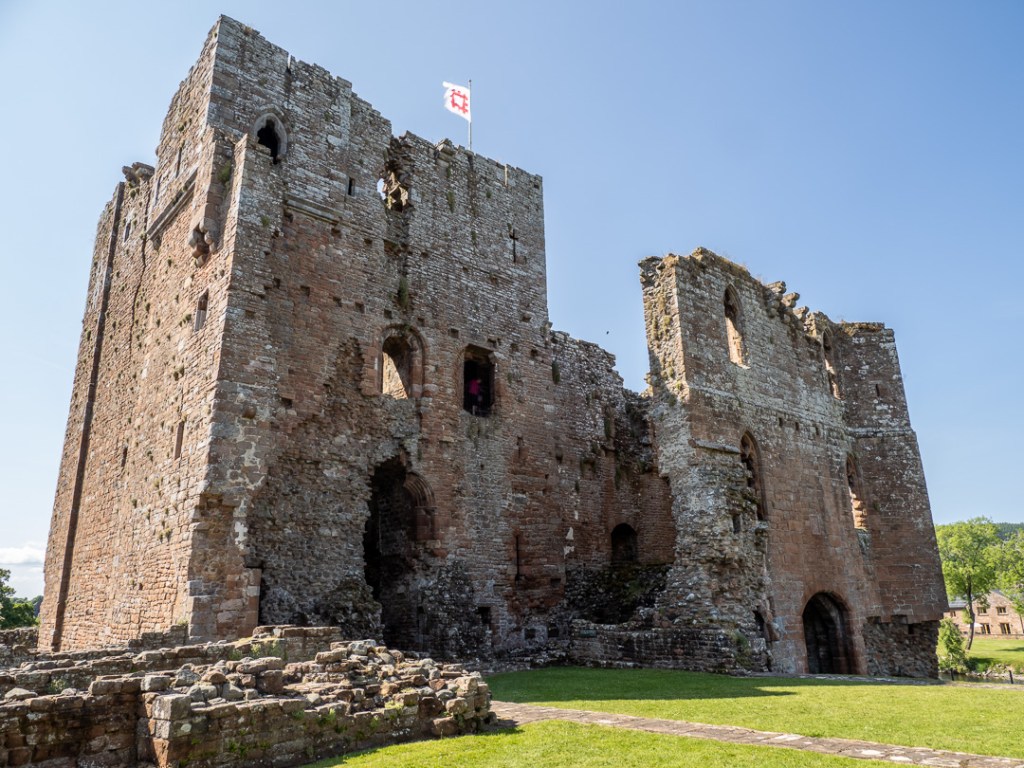
Our second visit was to the medieval, Brougham Castle (pronounced “Broom”) which is near to Penrith, on the River Eamont. It was built in the early 13th century on the site of an earlier Roman fort. It is currently in the care of English Heritage.
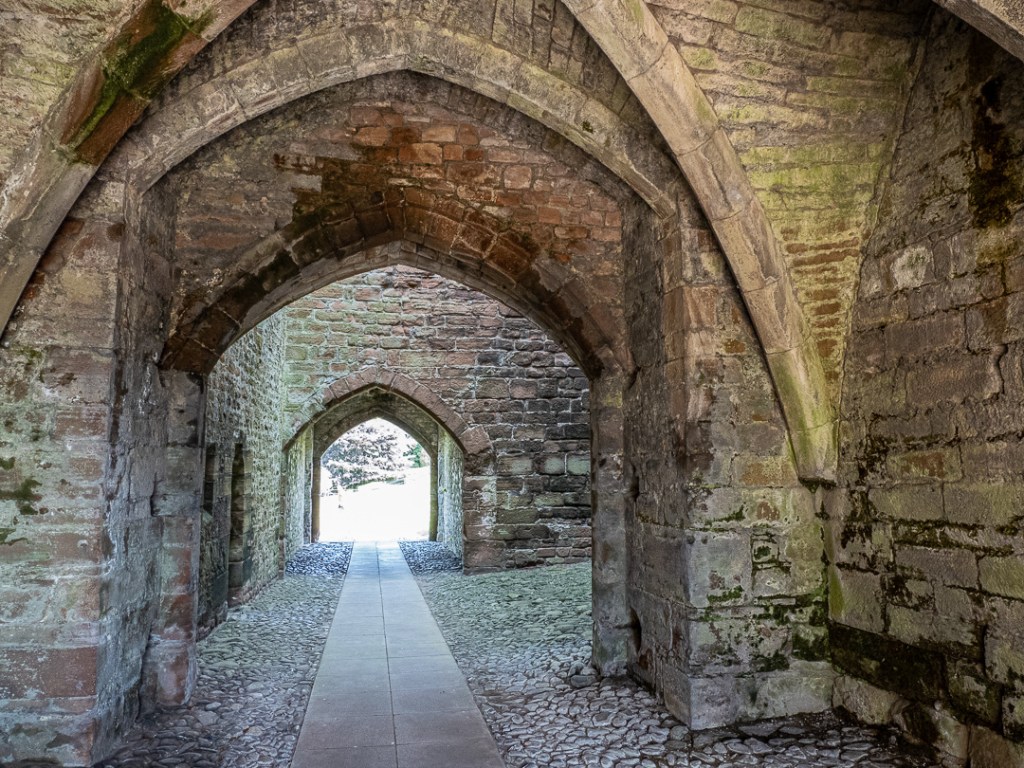
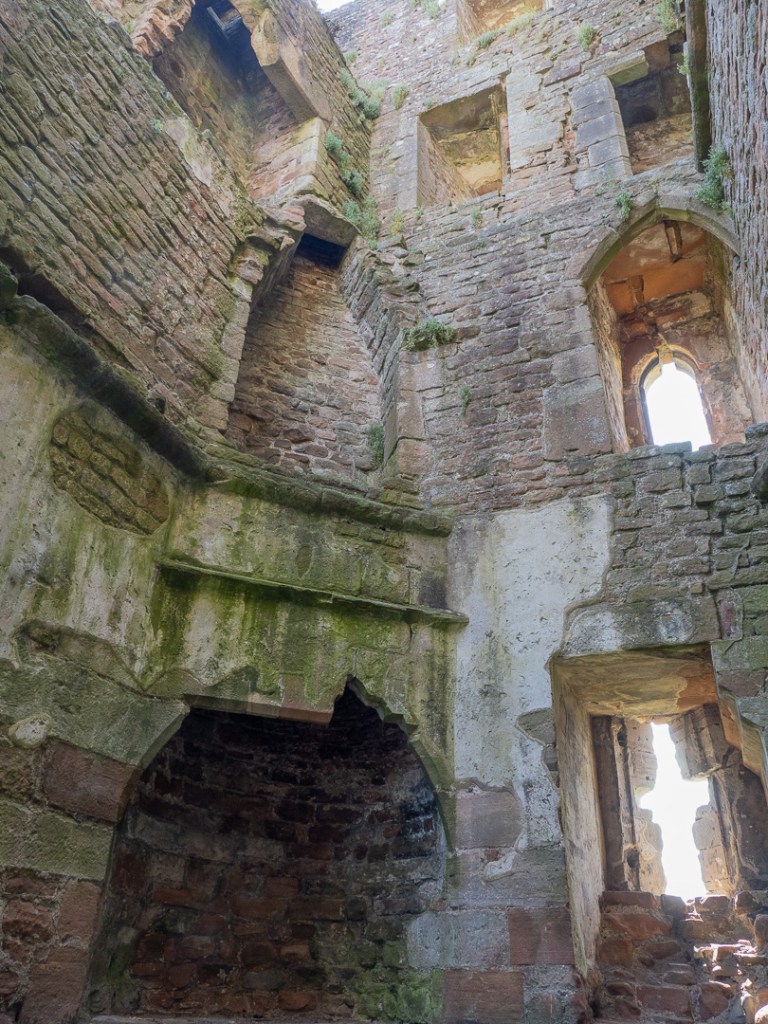
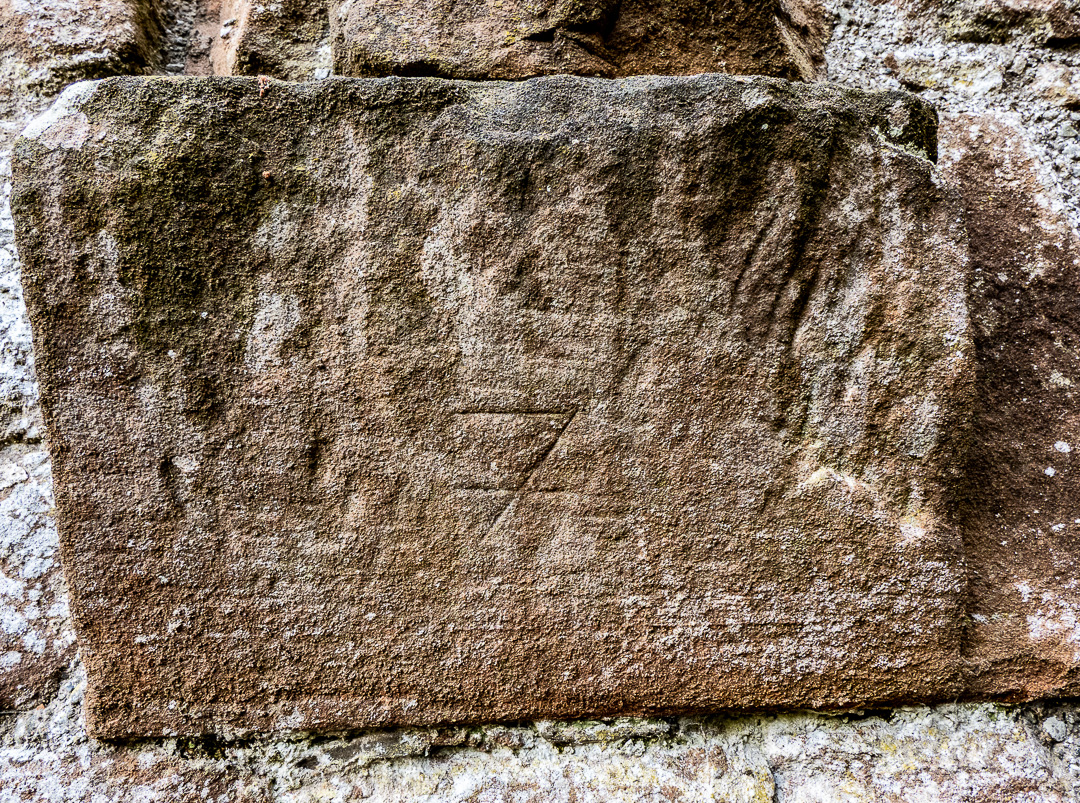
One of the things that I enjoy is evidence left behind by those working on the building. Alison found a couple of blocks of stone with mason’s marks on them:

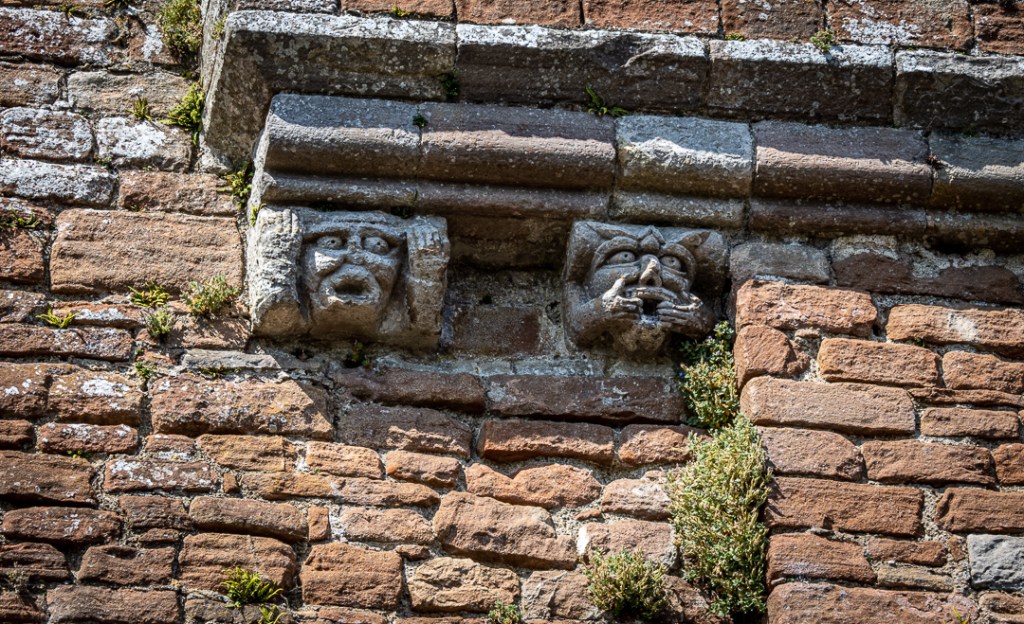
…and I spotted these two heads, high up and peering out of the side of the keep:
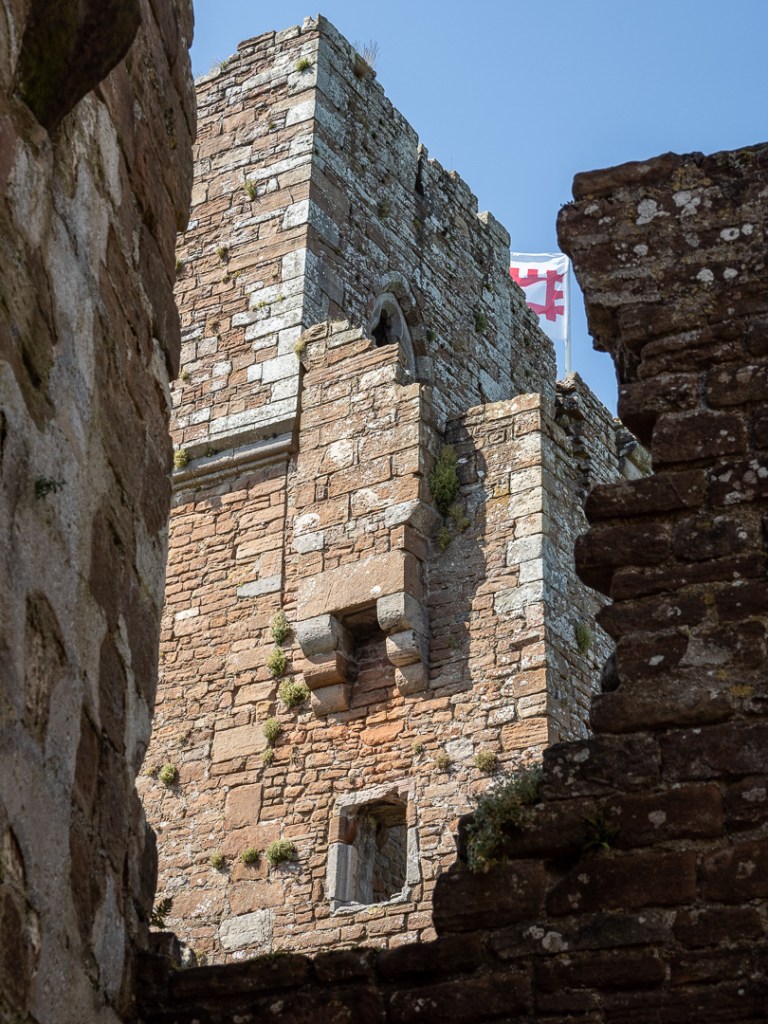
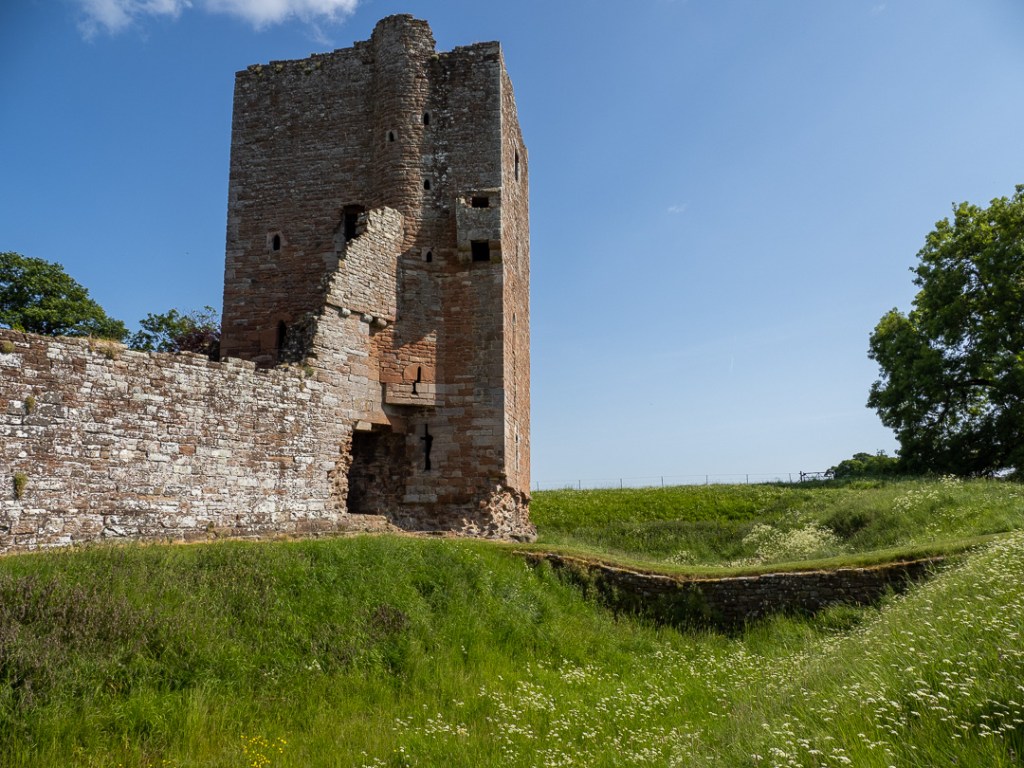
The following picture shows a garderobe which appears to exit directly above a first-floor opening in the wall. Not sure if this was originally a doorway or a window, but it seems to not be in the ideal location.
 "See-u-Later"