
Tuesday 15th April 2025
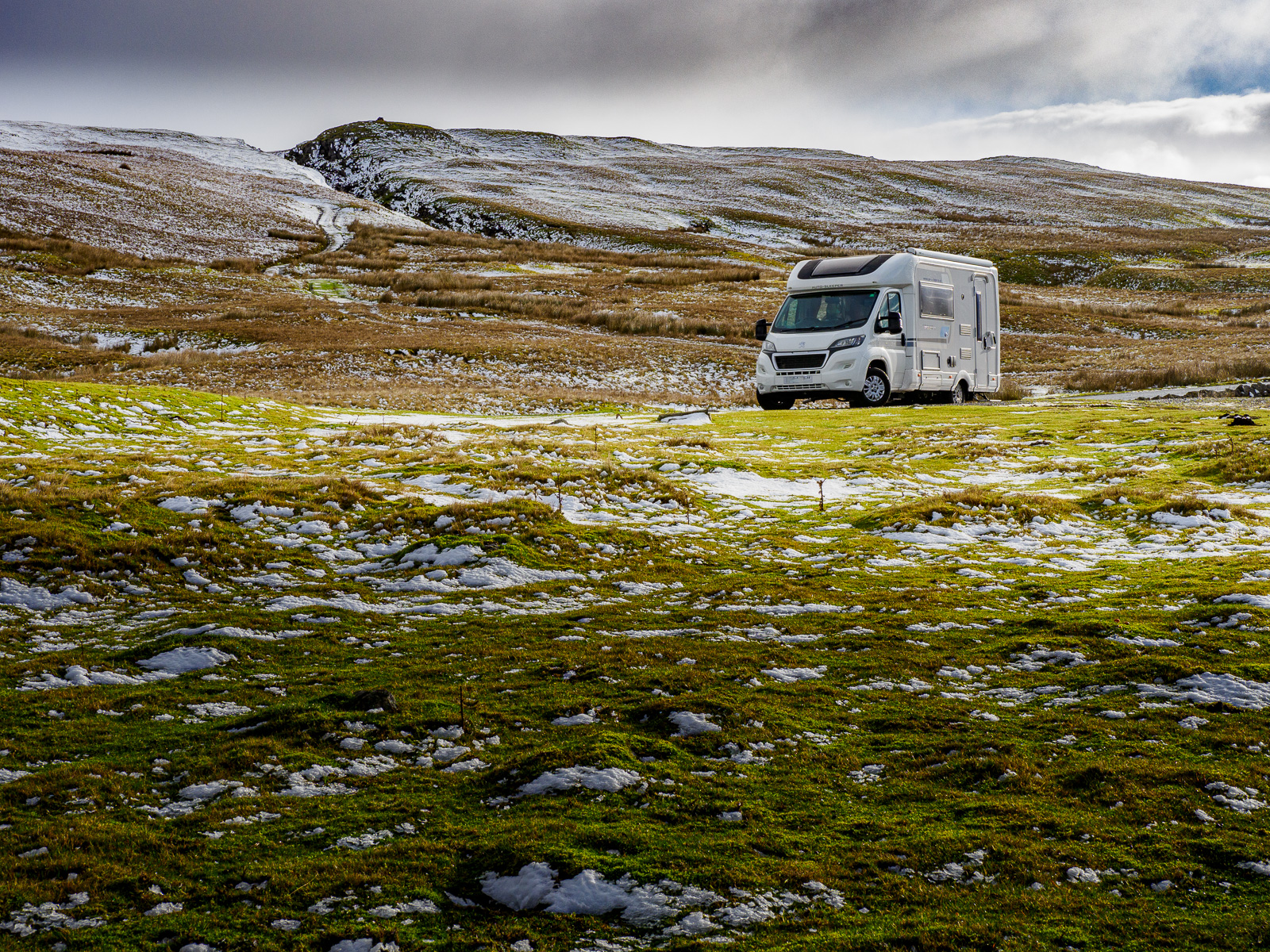
Today, we have moved further south to the small settlement of São Domingos where we are staying on a paid motorhome park-up, for the princely sum of 7 € which includes electric hook up. Most of the way, we followed the N265, which was in a dreadful state of repair. Possibly the worst road I have driven on for some time, and that includes those back home.
Apart from our continued southerly progress, the attraction of São Domingos, are the disused mine workings which are adjacent to the village and make a great place to explore. There is also a freshwater lake with a beach, but we did not visit there.

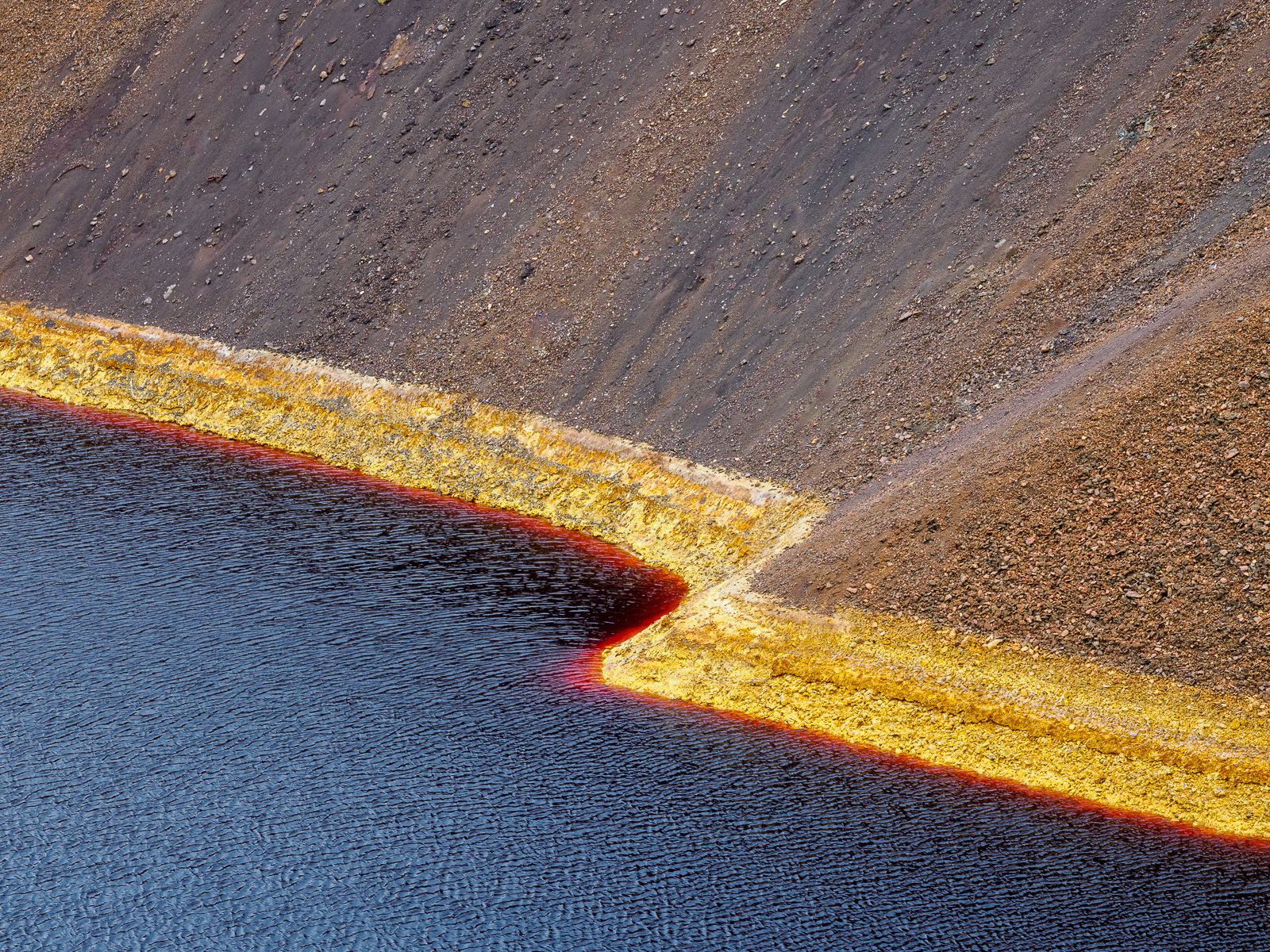
The mine was first opened in the Roman Empire period, when copper and silver were extracted, though the most abundant ore was iron ore. More recently, in the 19th century, copper and sulphur were the main minerals extracted, via a huge pit, 120 metres deep, which is now flooded (see above), and many tunnels and galleries.
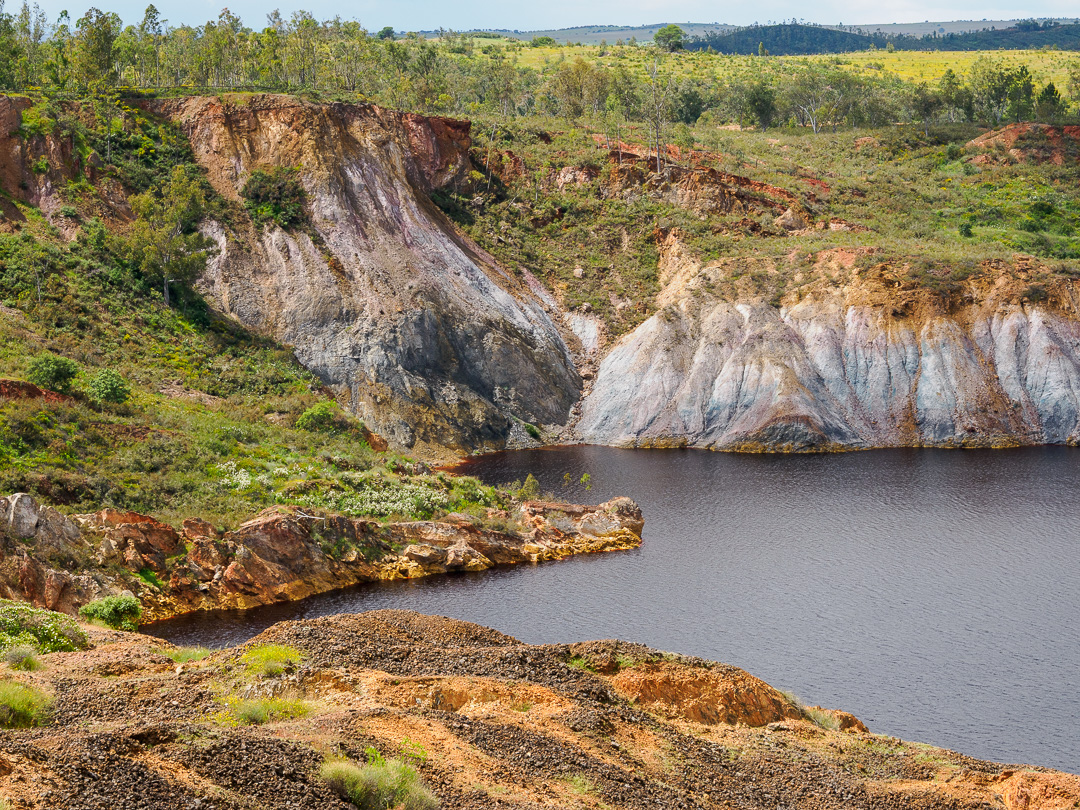
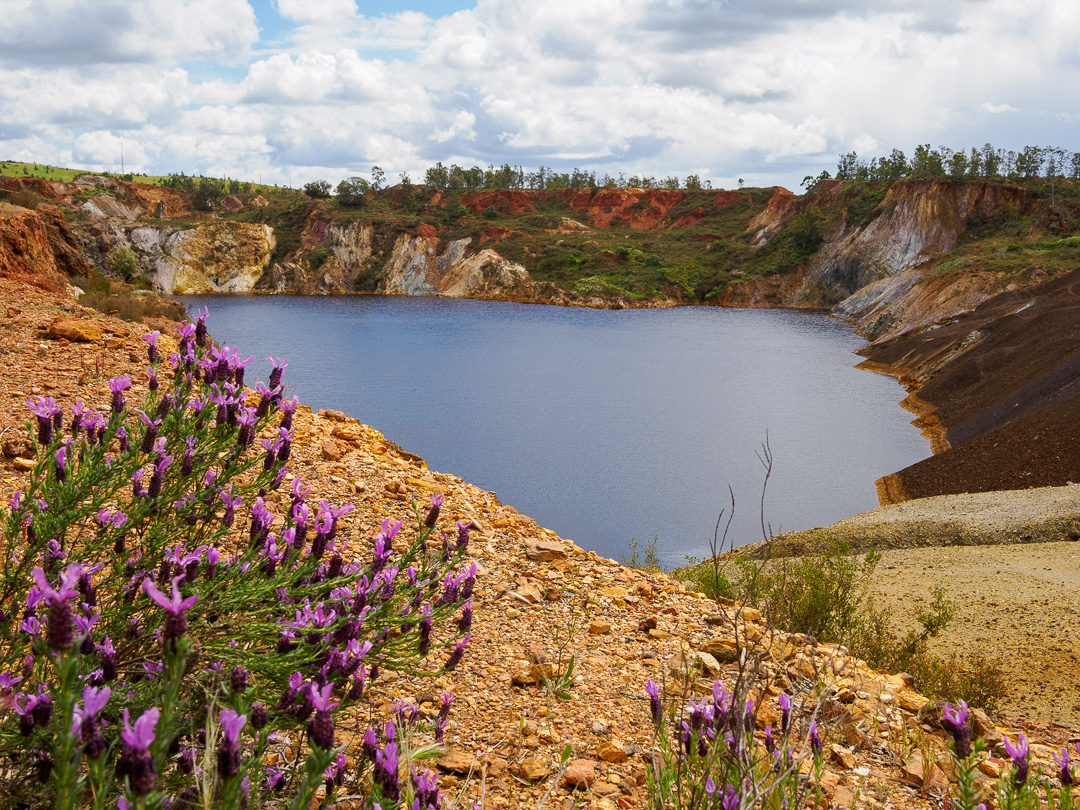
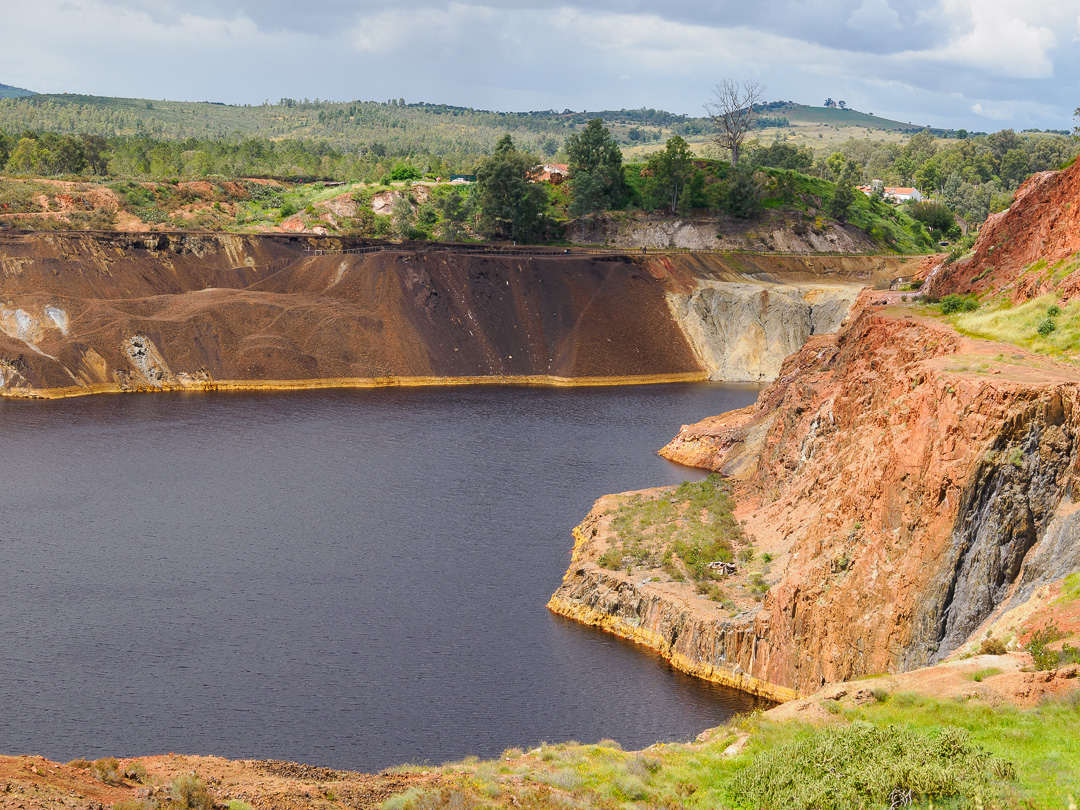
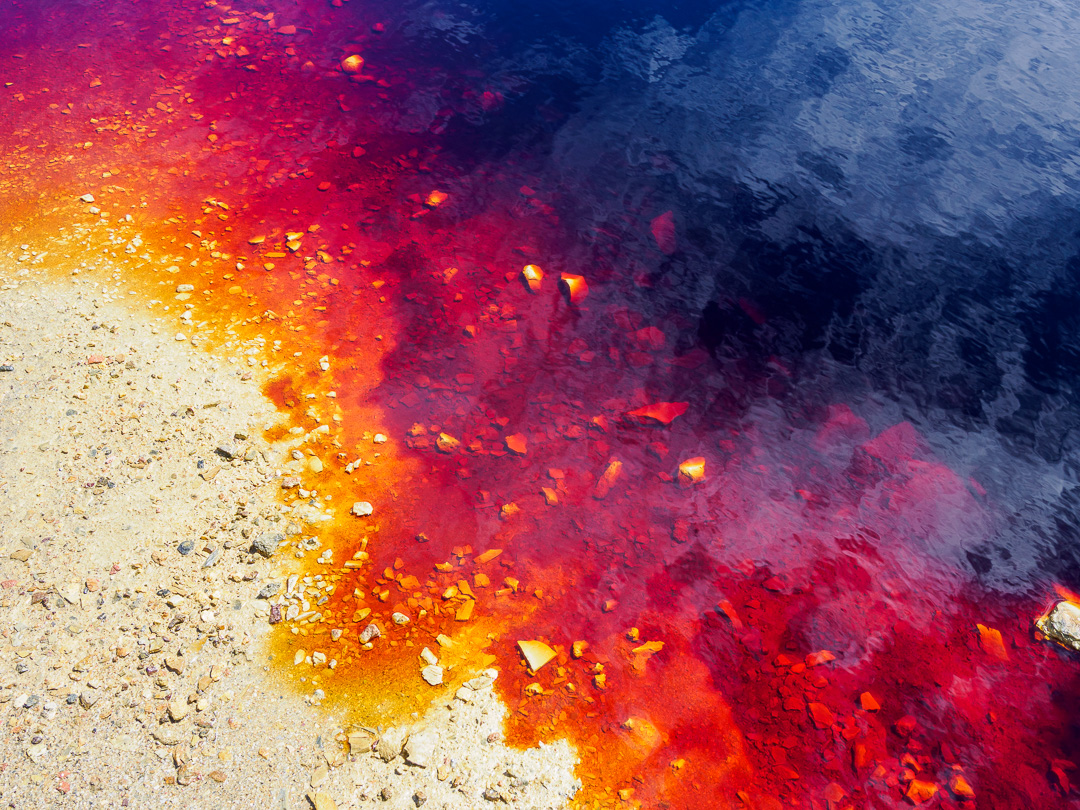
The lake is very acidic as much of the water has leached from the surrounding rocks via the mine workings as they progressively flooded.
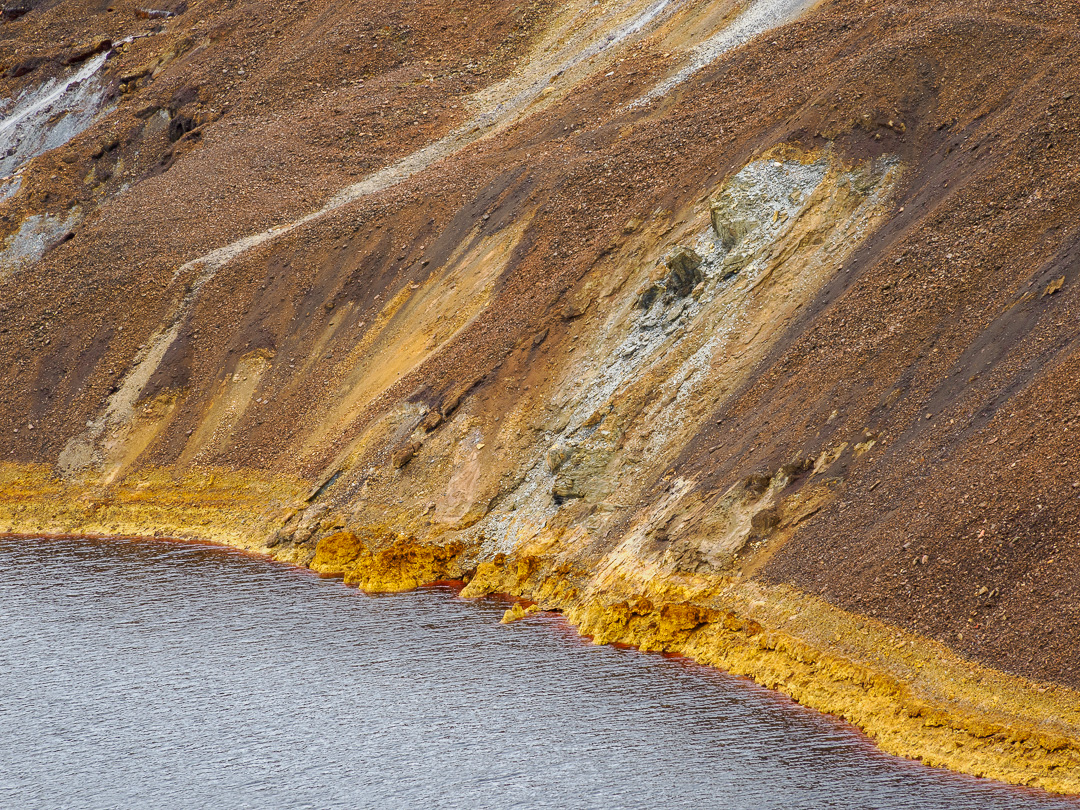
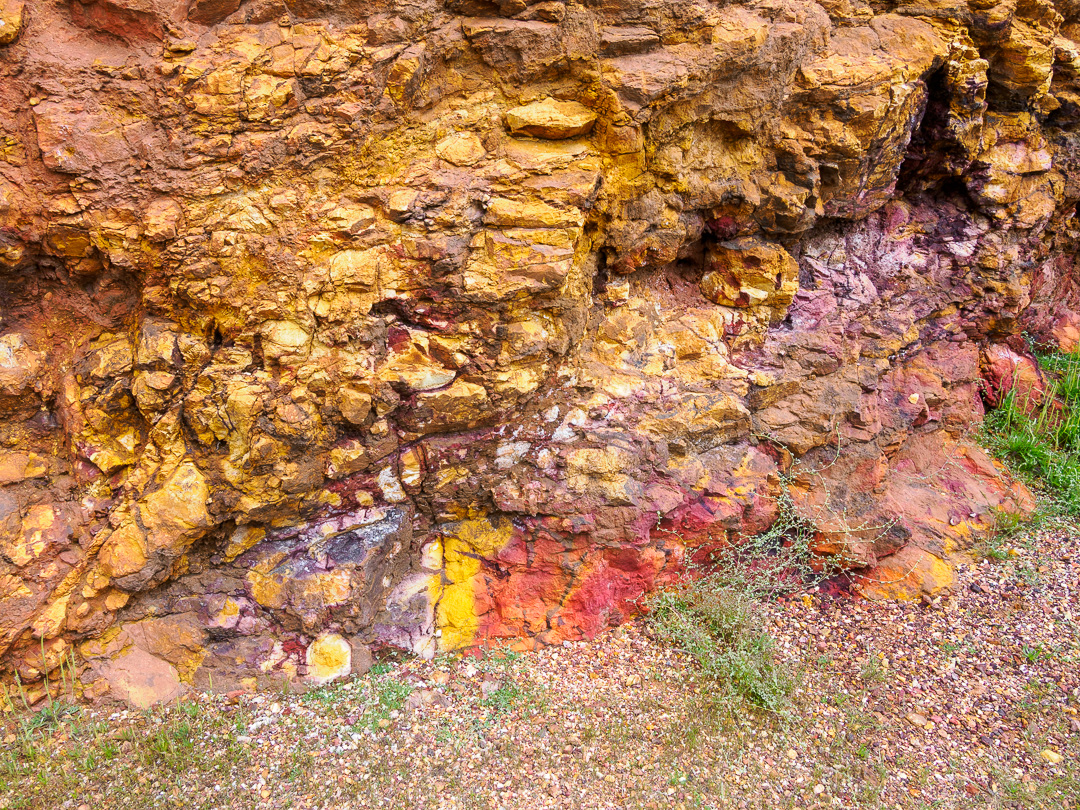
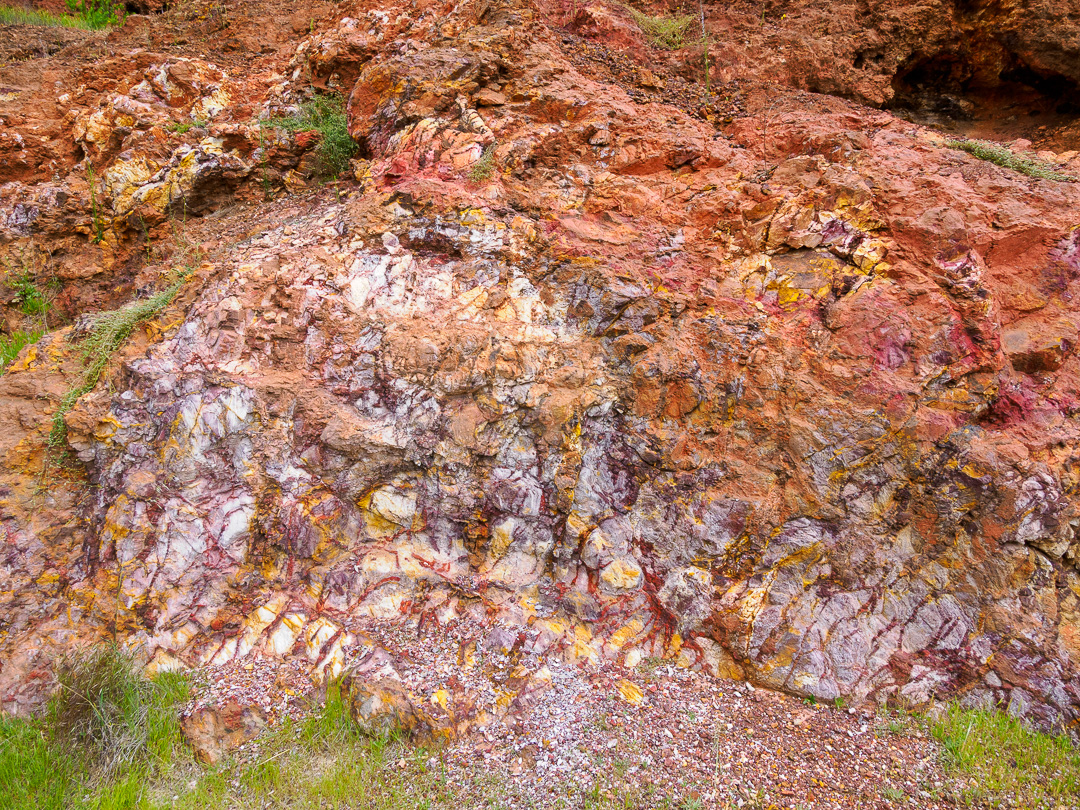
There are many brightly coloured rocks to be seen:
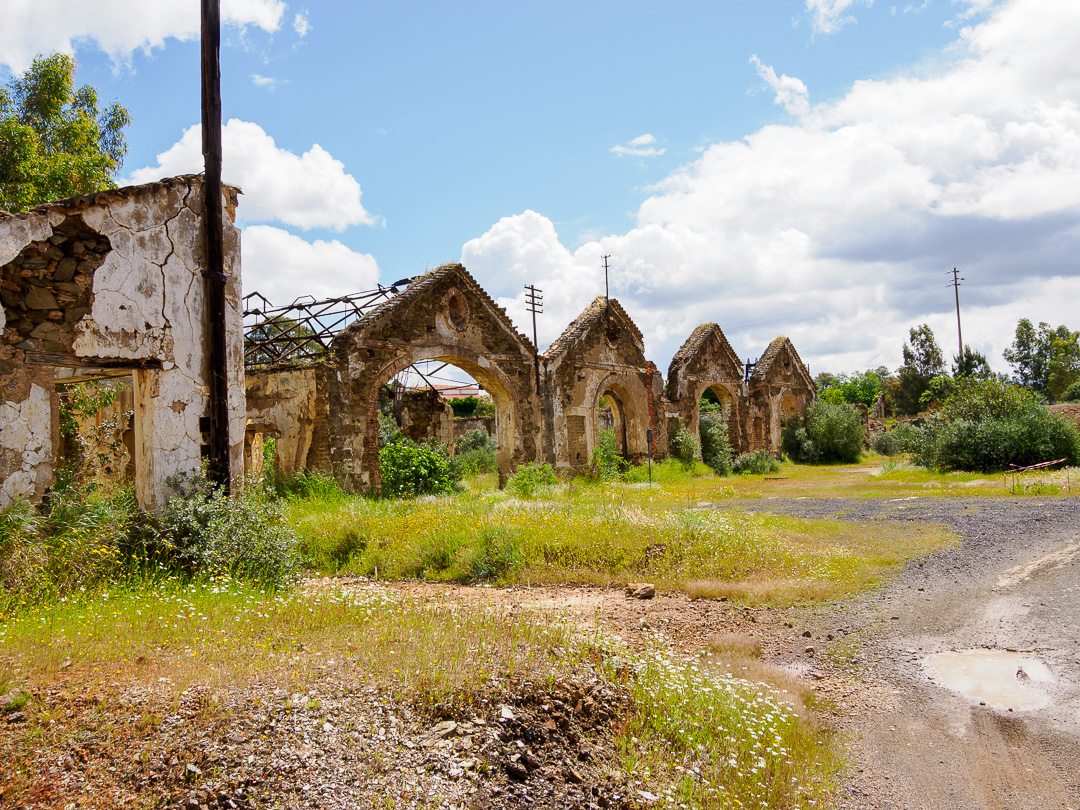
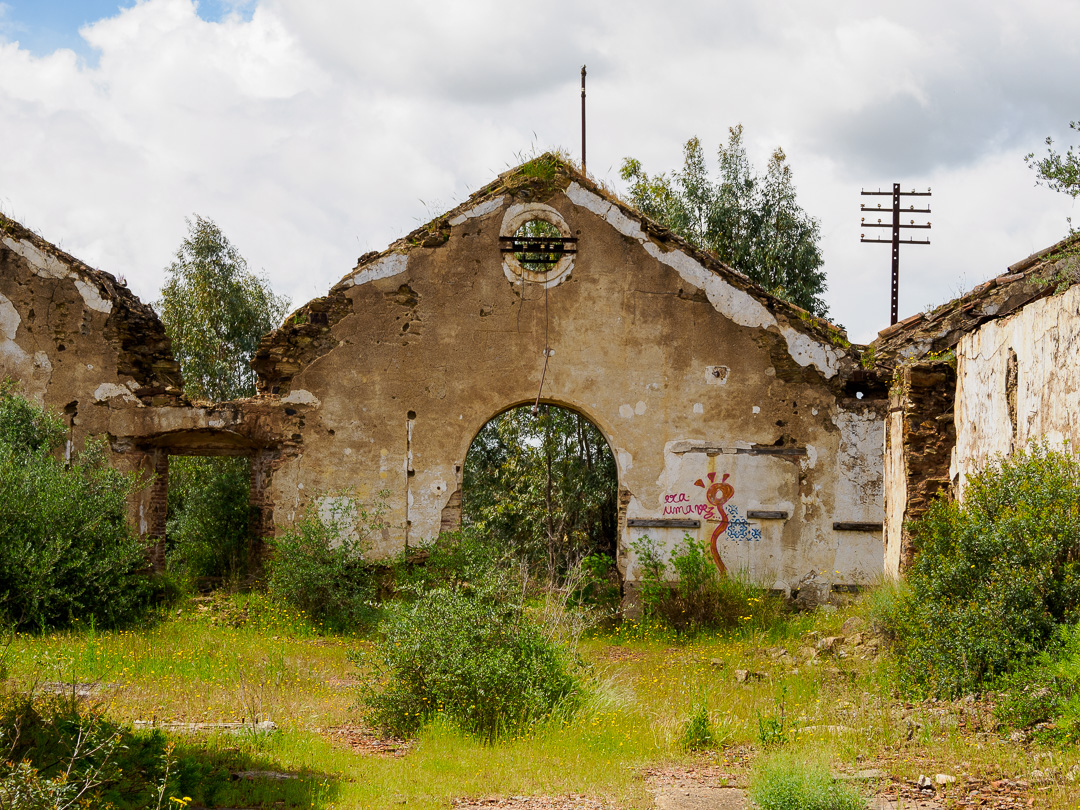
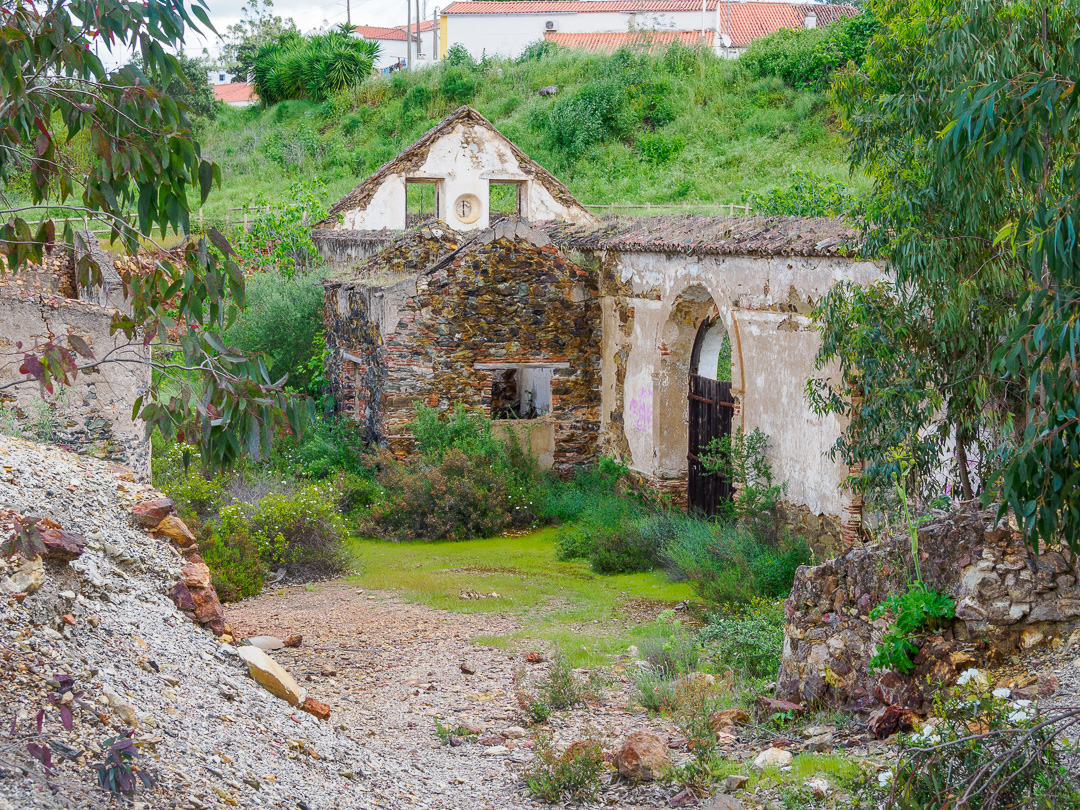
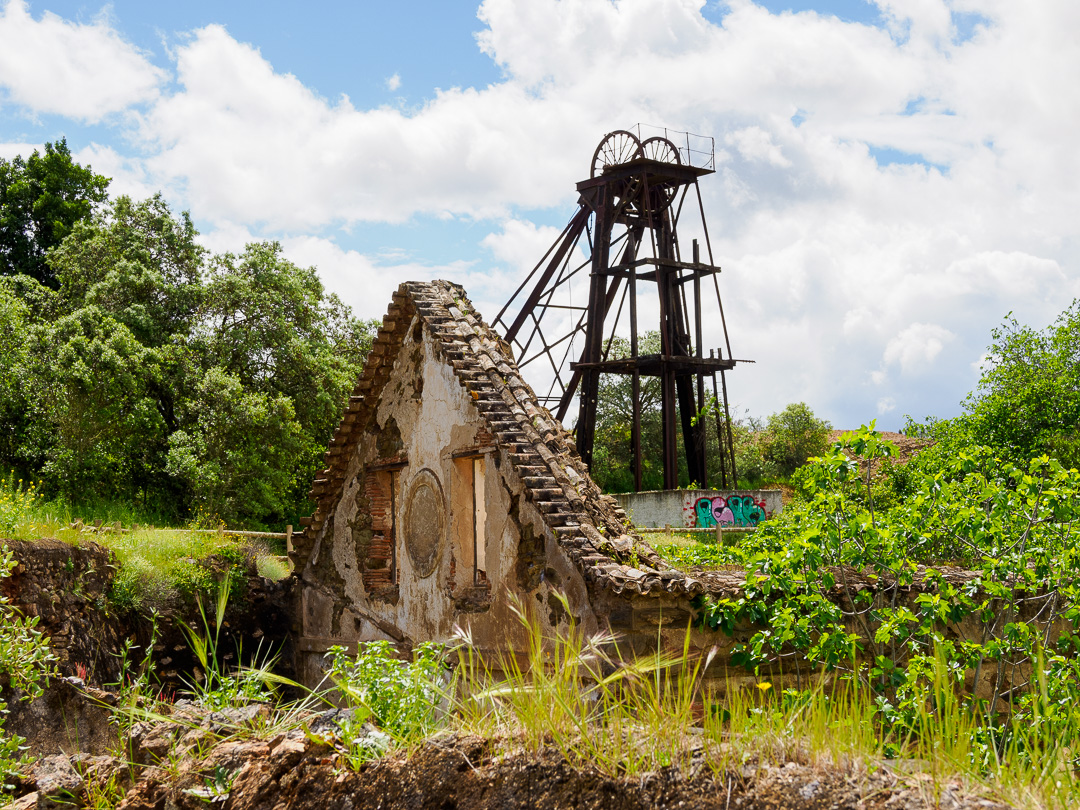
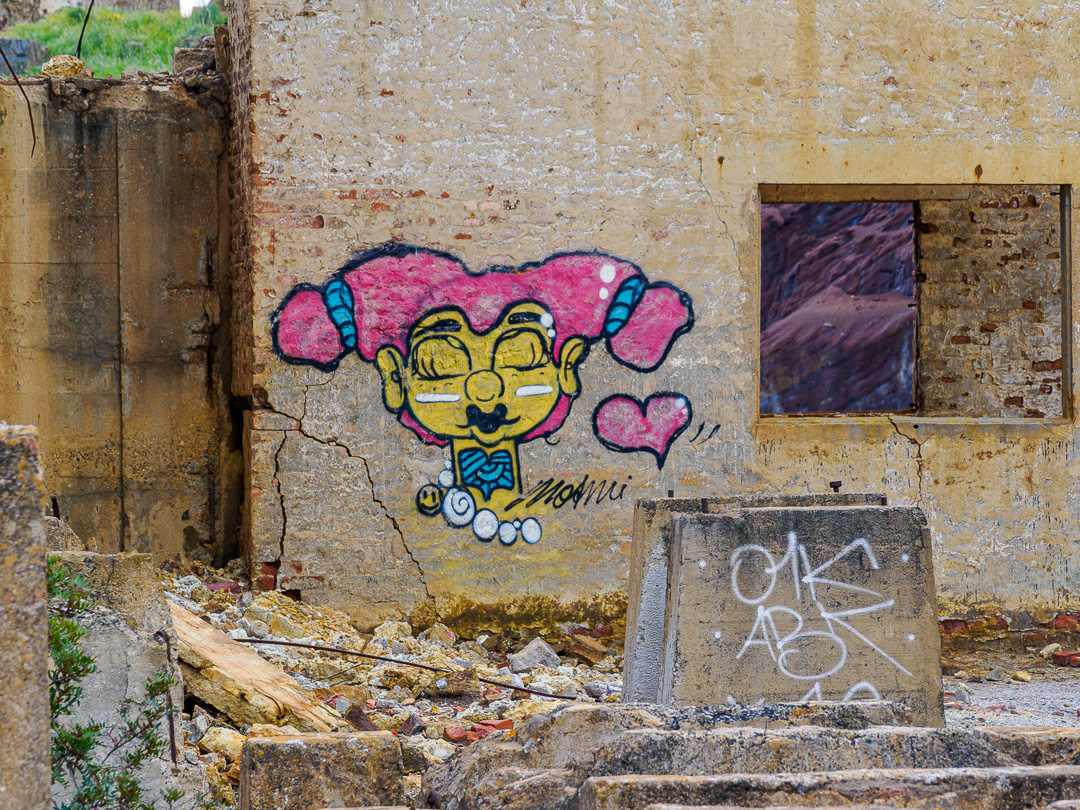
You can wander around the many derelict buildings at will.
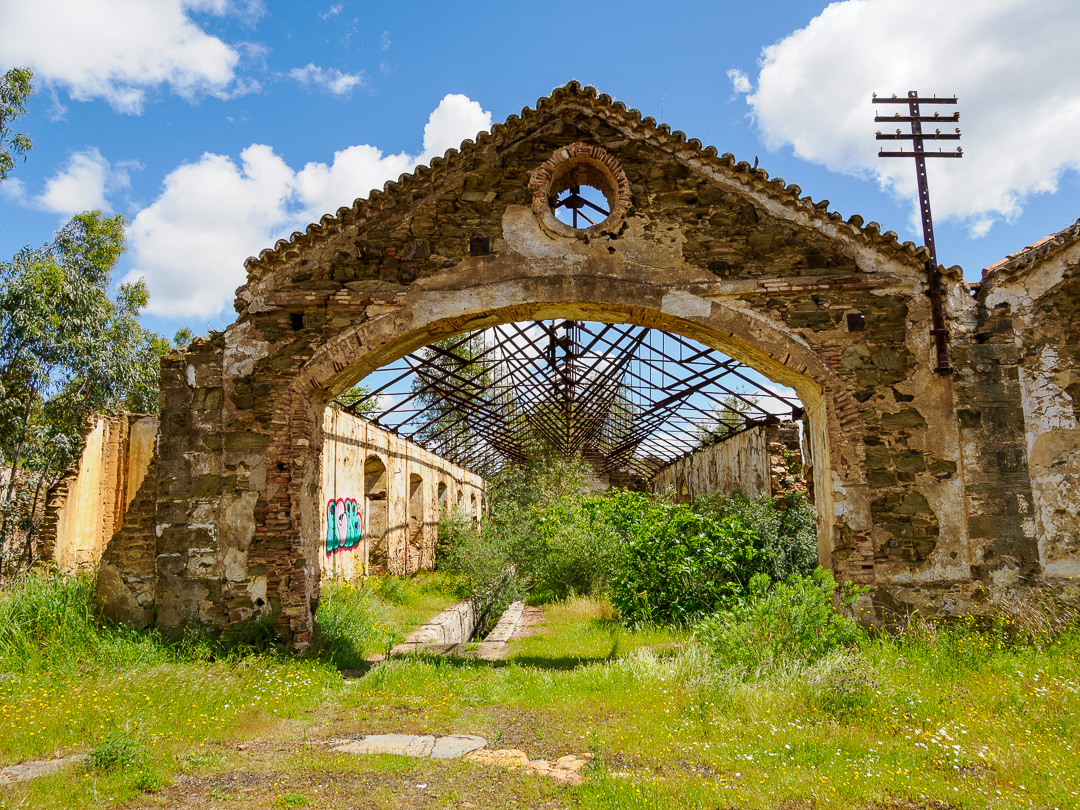
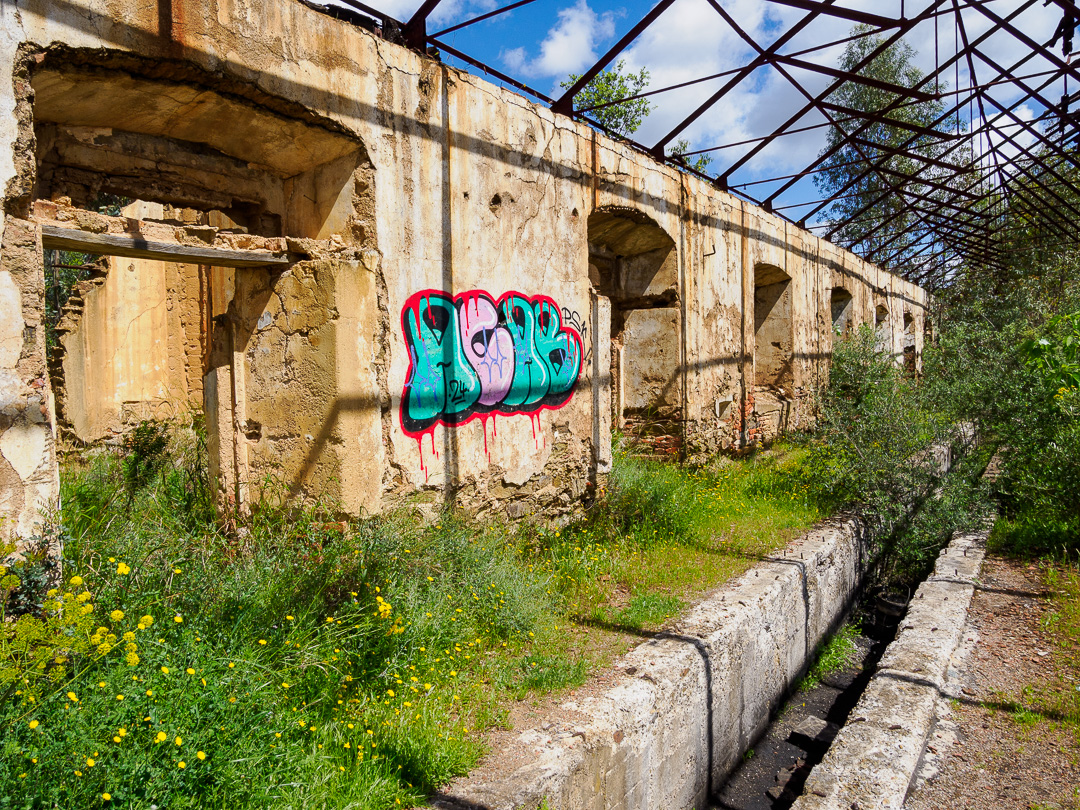
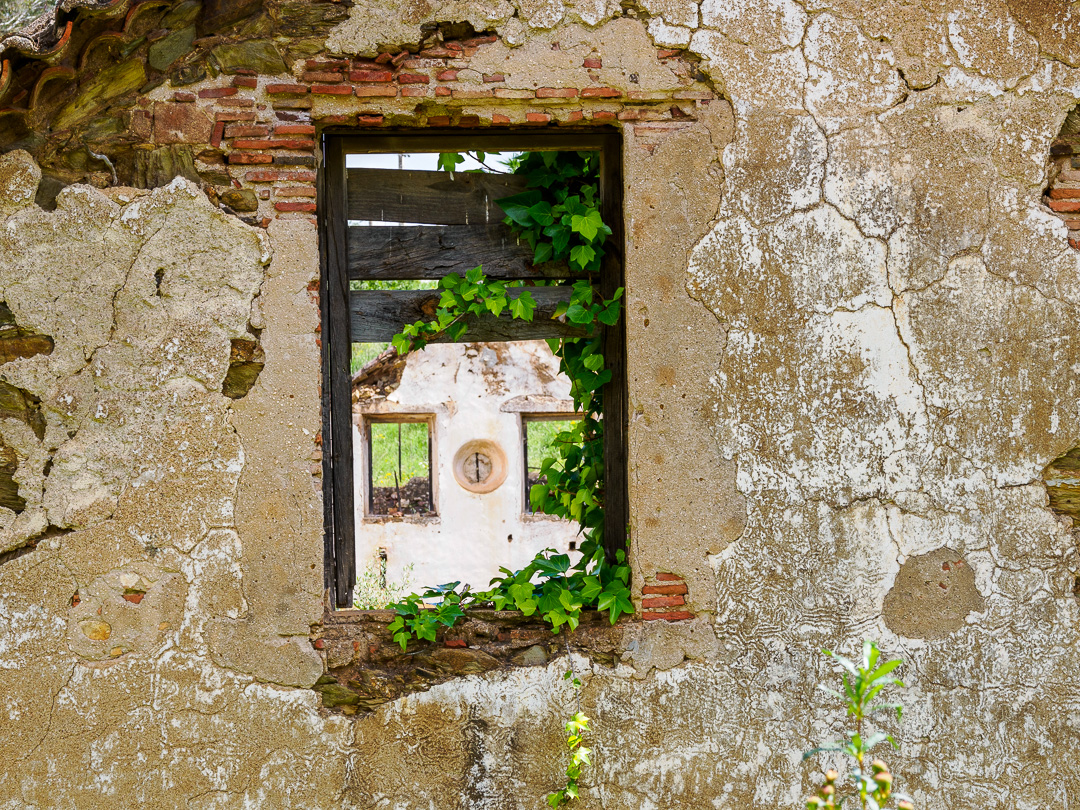
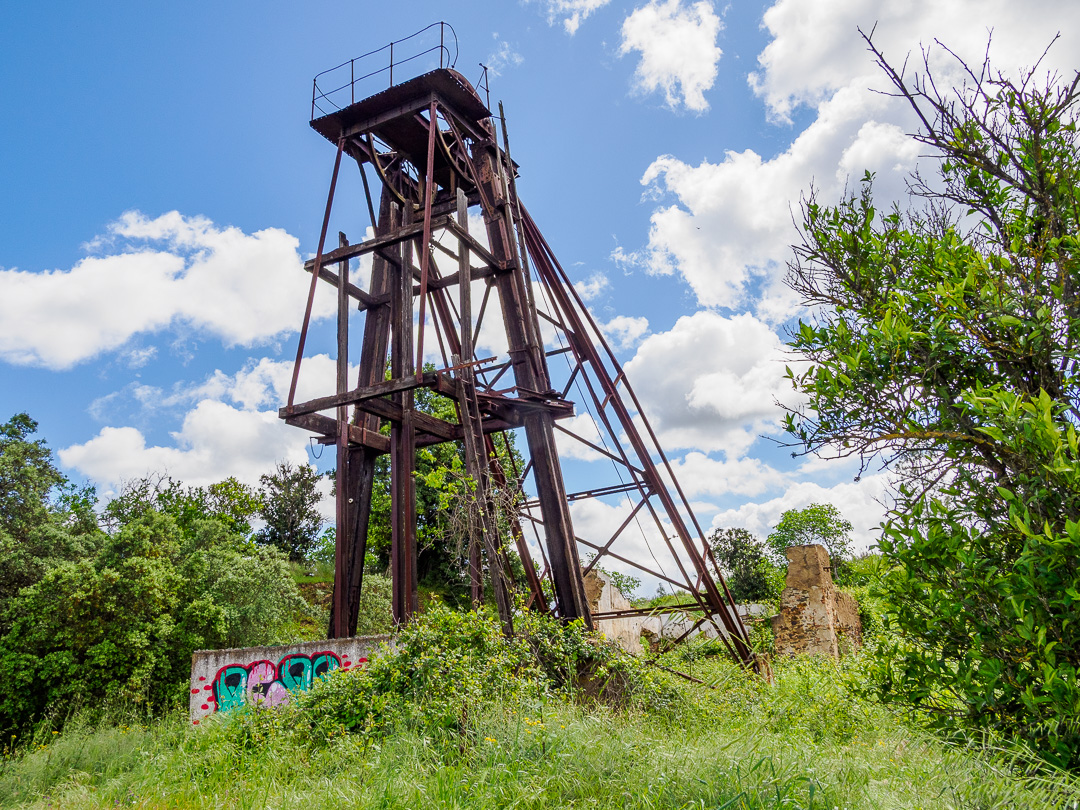
In its heyday, the industry was leased and managed by an English company. Some of the managers are buried in an adjacent cemetery, the “Cemitério dos Ingleses”.

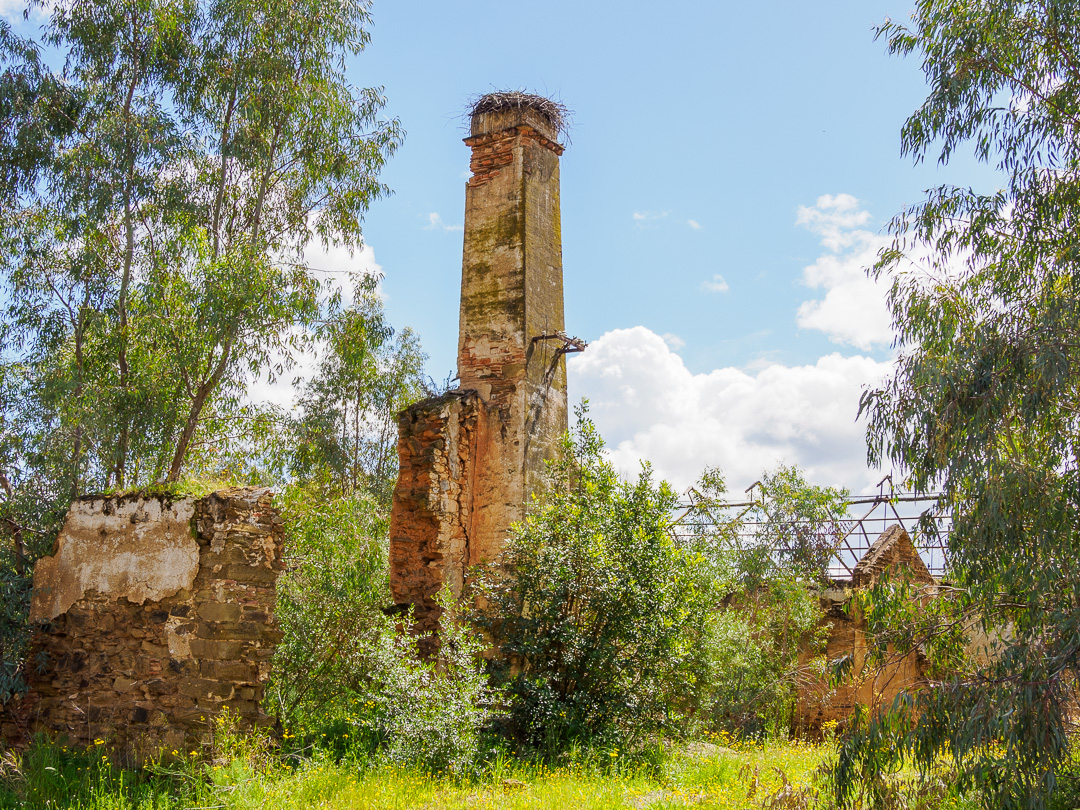
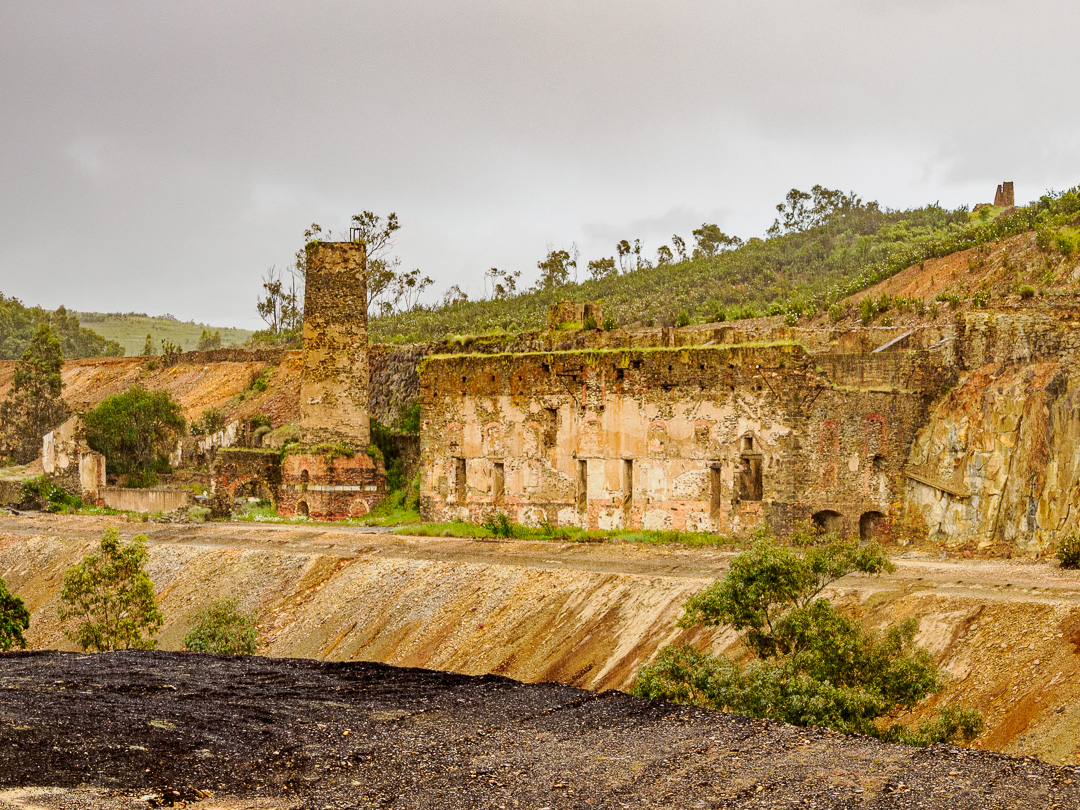
This was a huge industry which took the ore, processed it and shipped it out. Production only ceased in the mid 1960s, since then, the area has fallen into dereliction as nature has taken over:
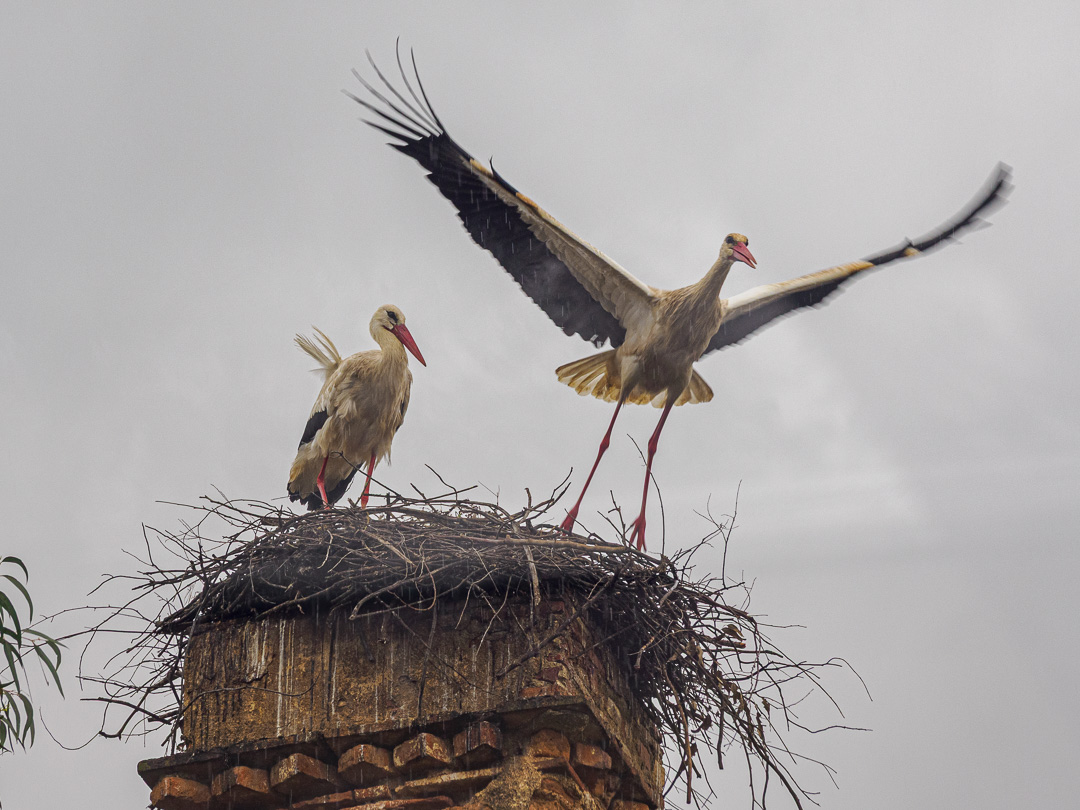
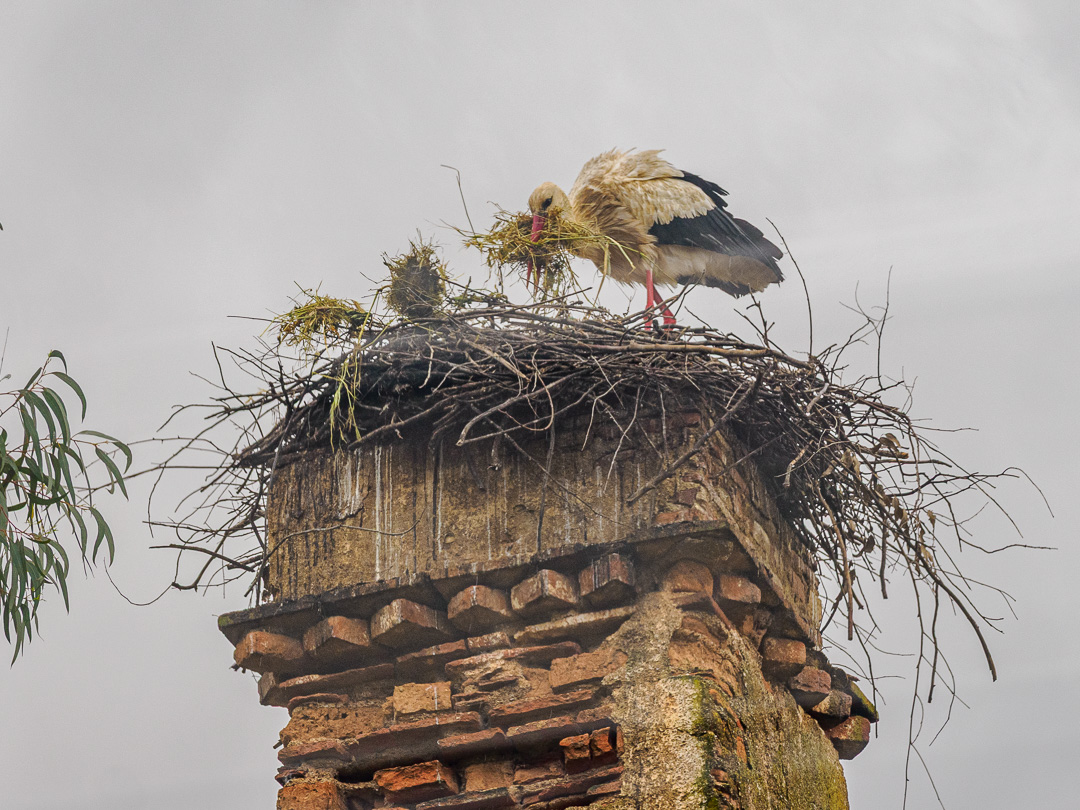
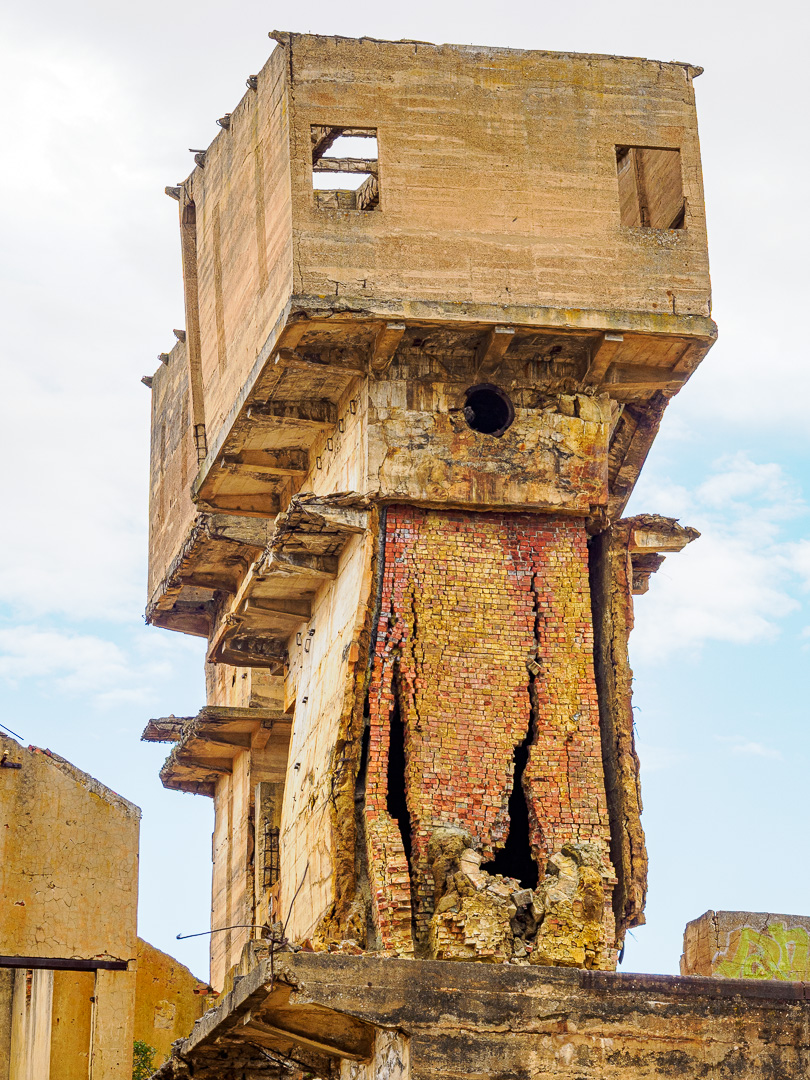
Further down the valley are the remains of the ore processing activities with the amazing, huge tall buildings which appear on the verge of collapse:
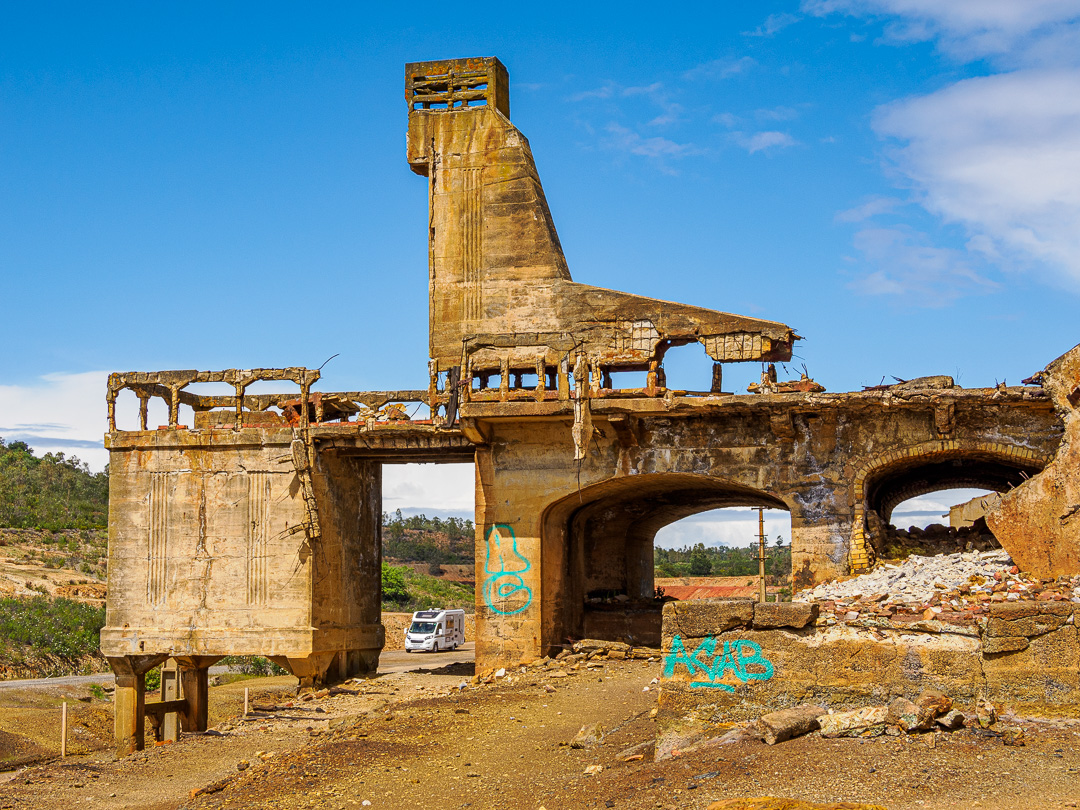
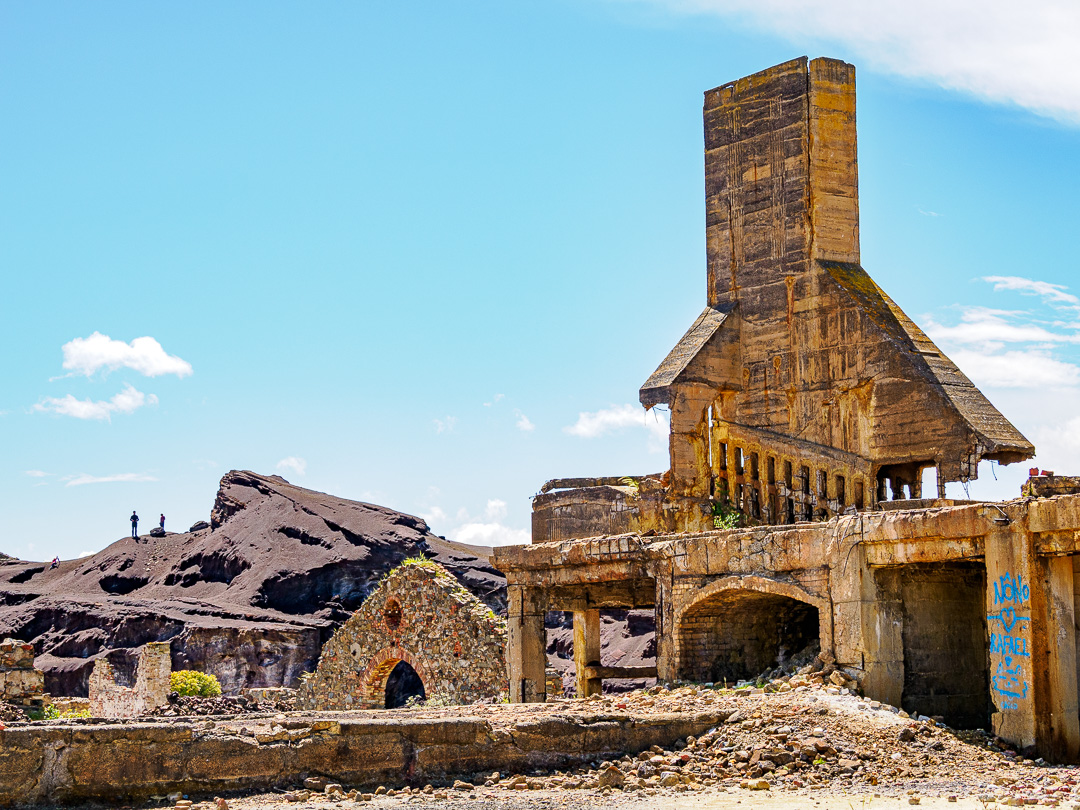
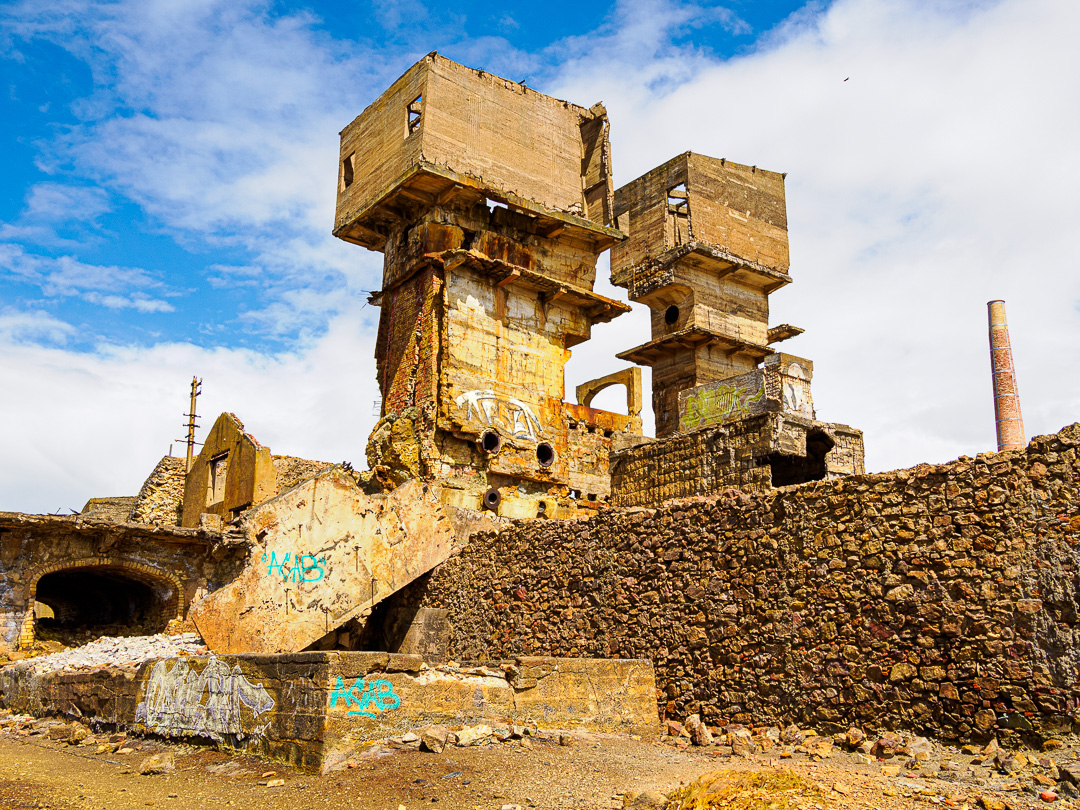
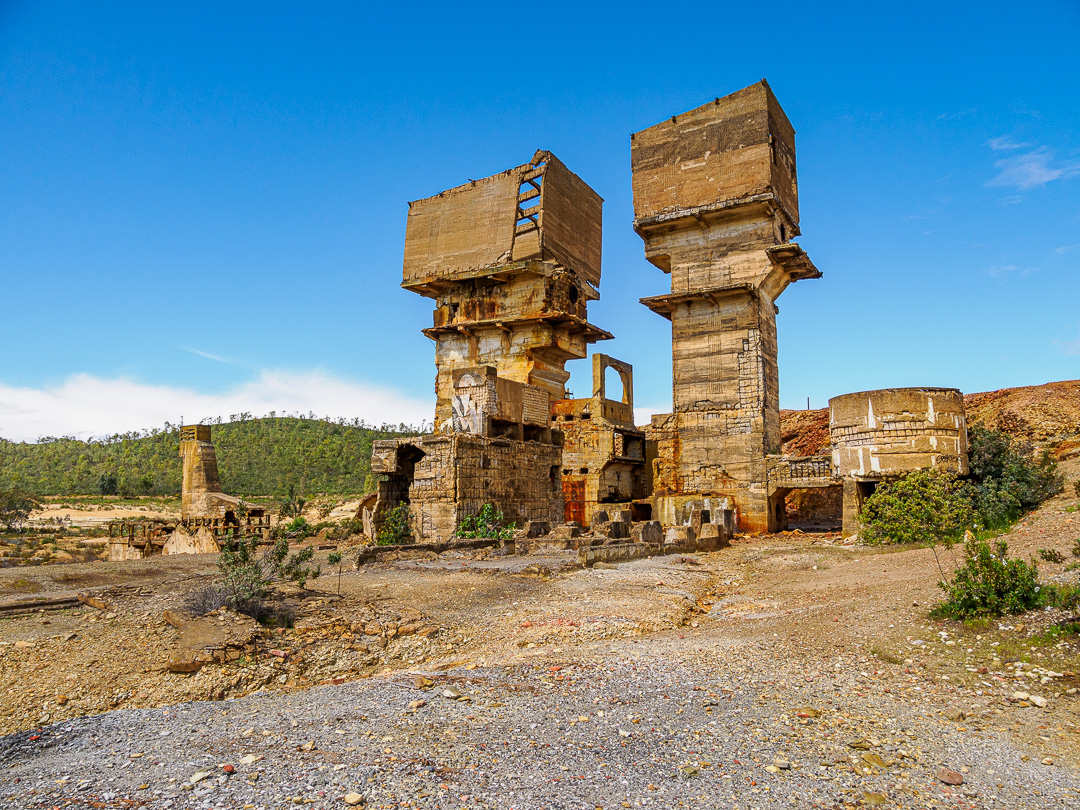
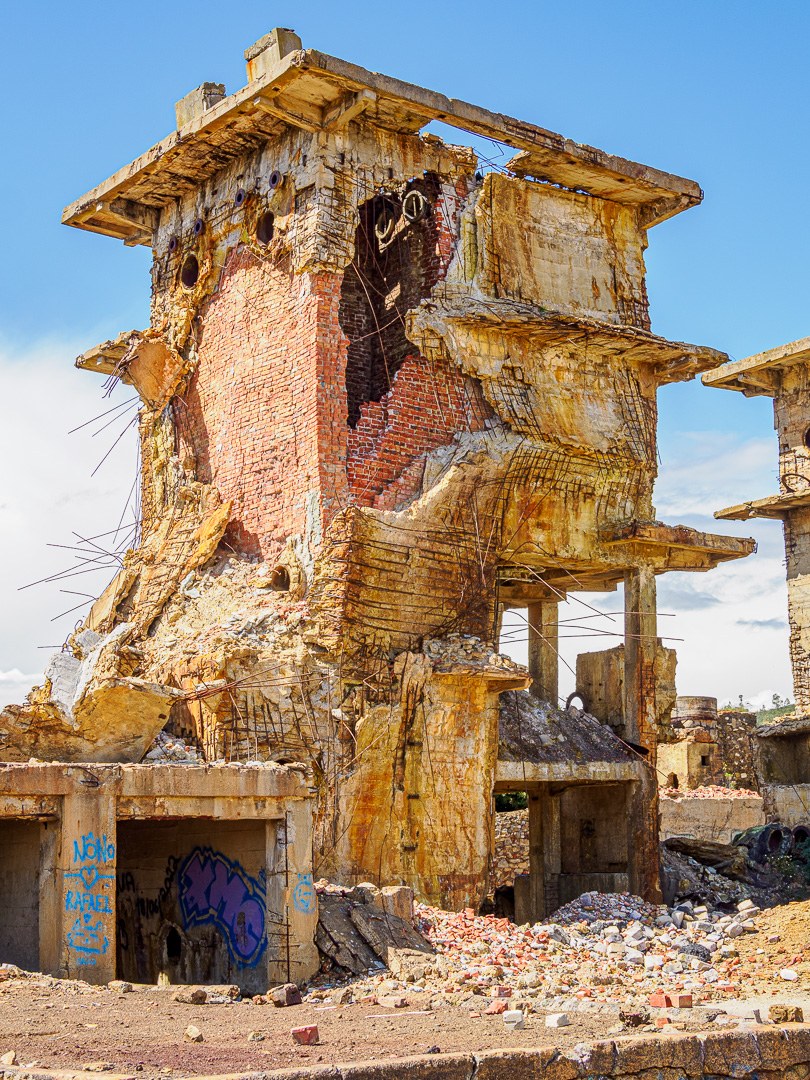

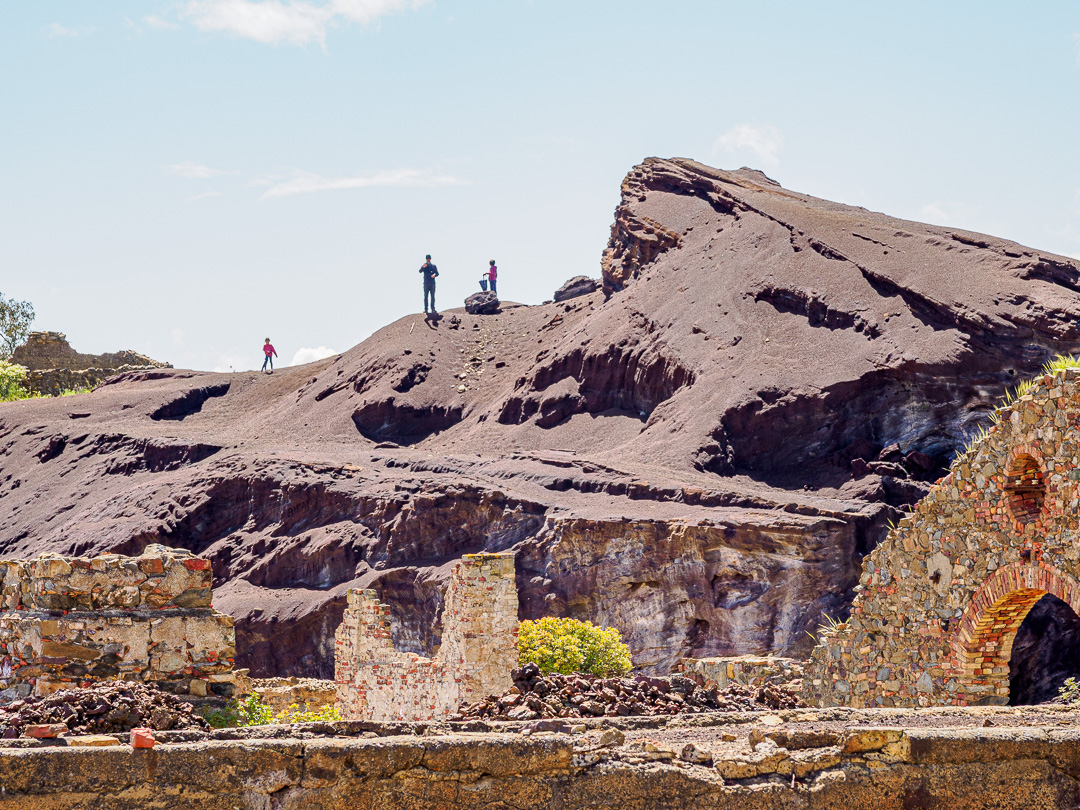
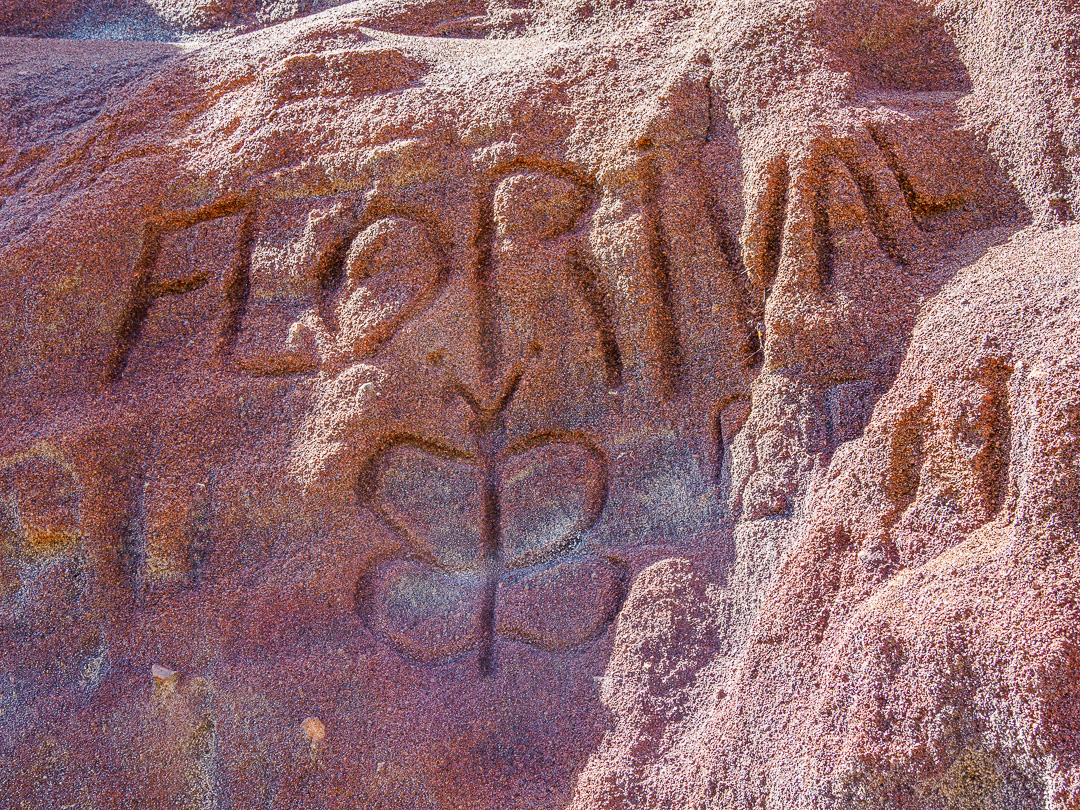
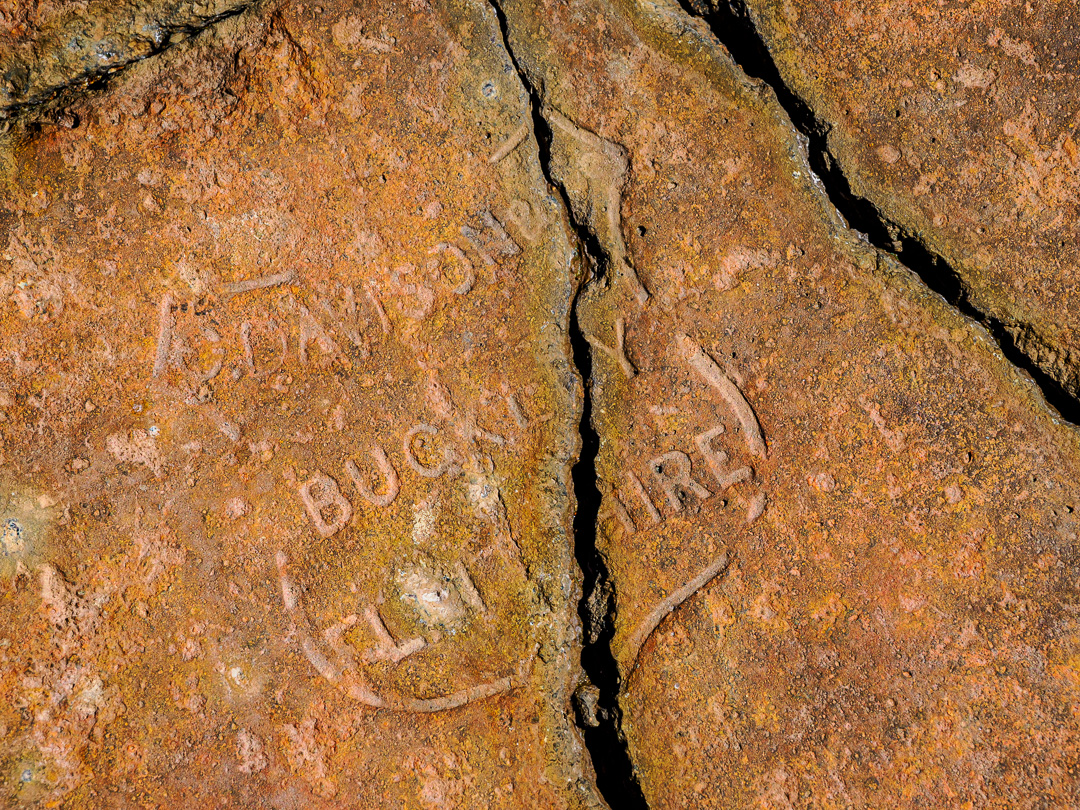
The extraction processes were very impactful on the environment. Copper ore was burned, which released highly toxic sulphurous fumes and poisoned the land. A large heap of burned ore remains on site, which has consolidated, but remains crumbly. It is seemingly used by local youth to carve their names into:
The colour of the water in the acidic lakes is blood red and seems to be contained; the water in the streams leaving the site is more of a rusty colour.
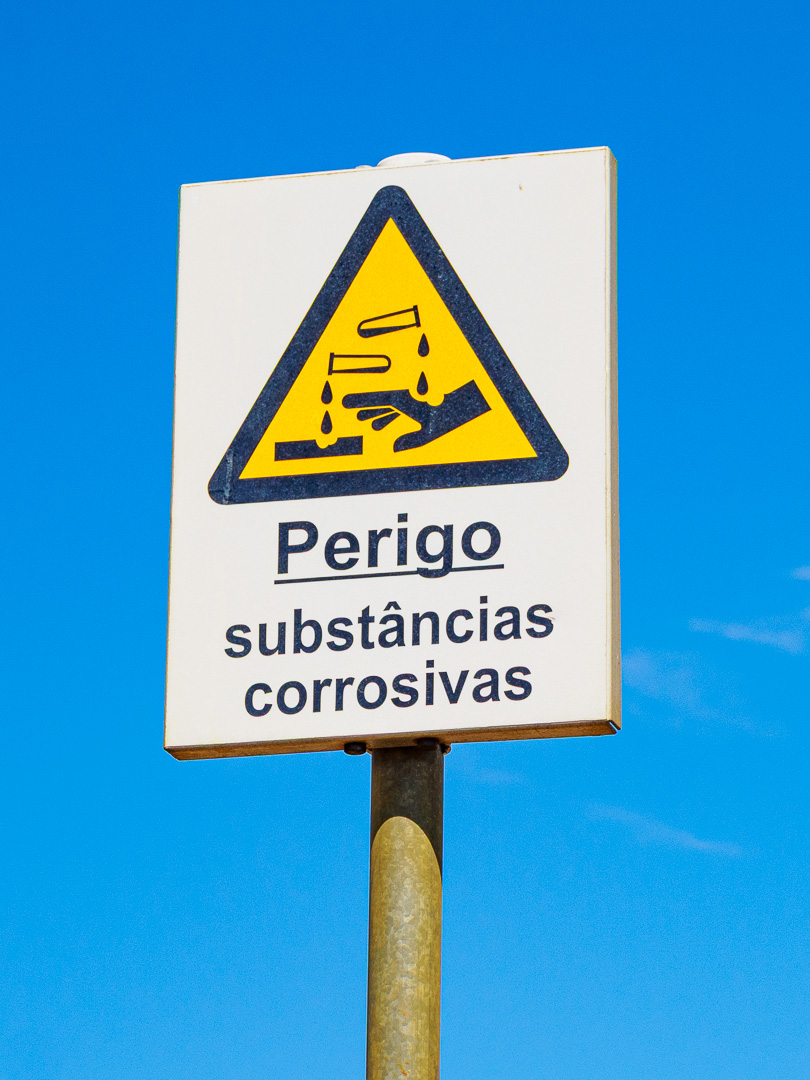


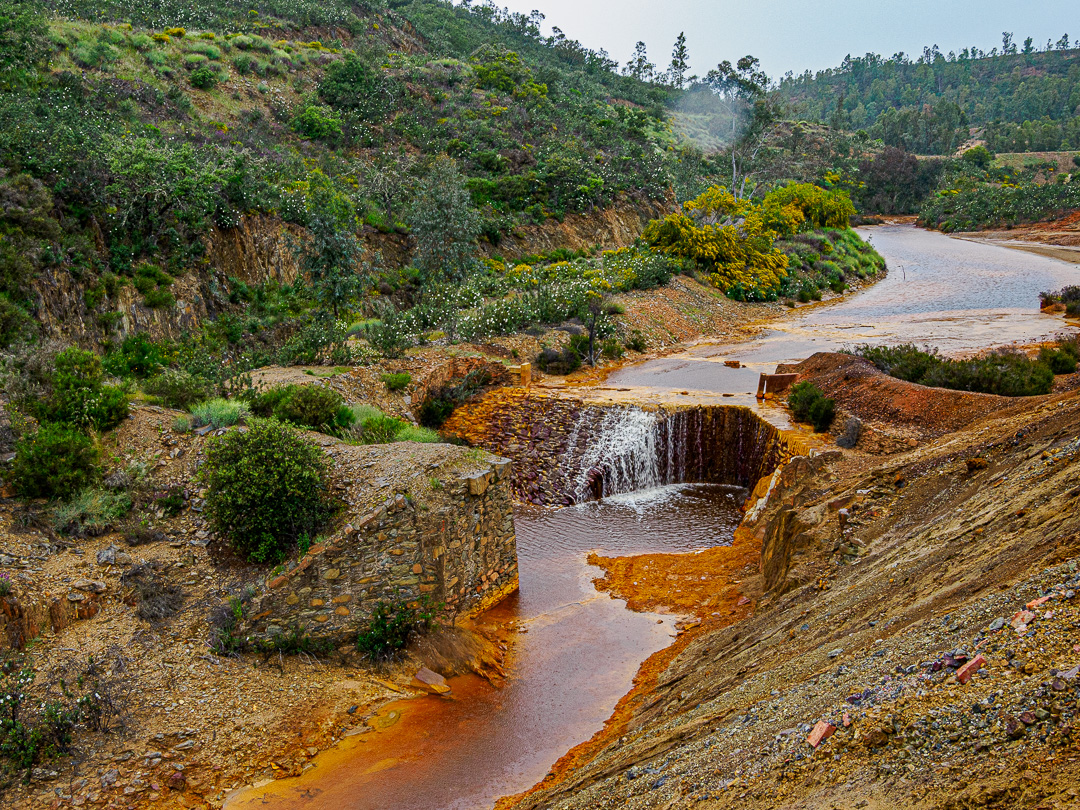
Elsewhere, the surface water is bright green, presumably from the copper content.
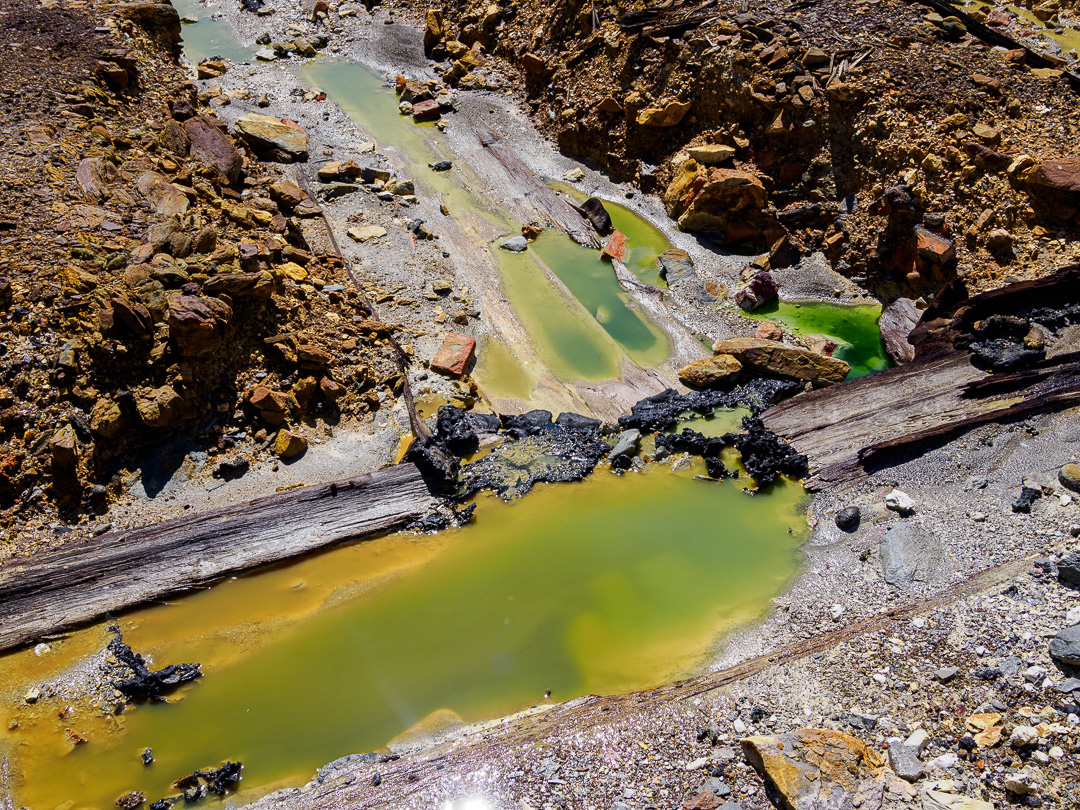
In one part of the processing area, there has been a paved floor, which is still present in places.
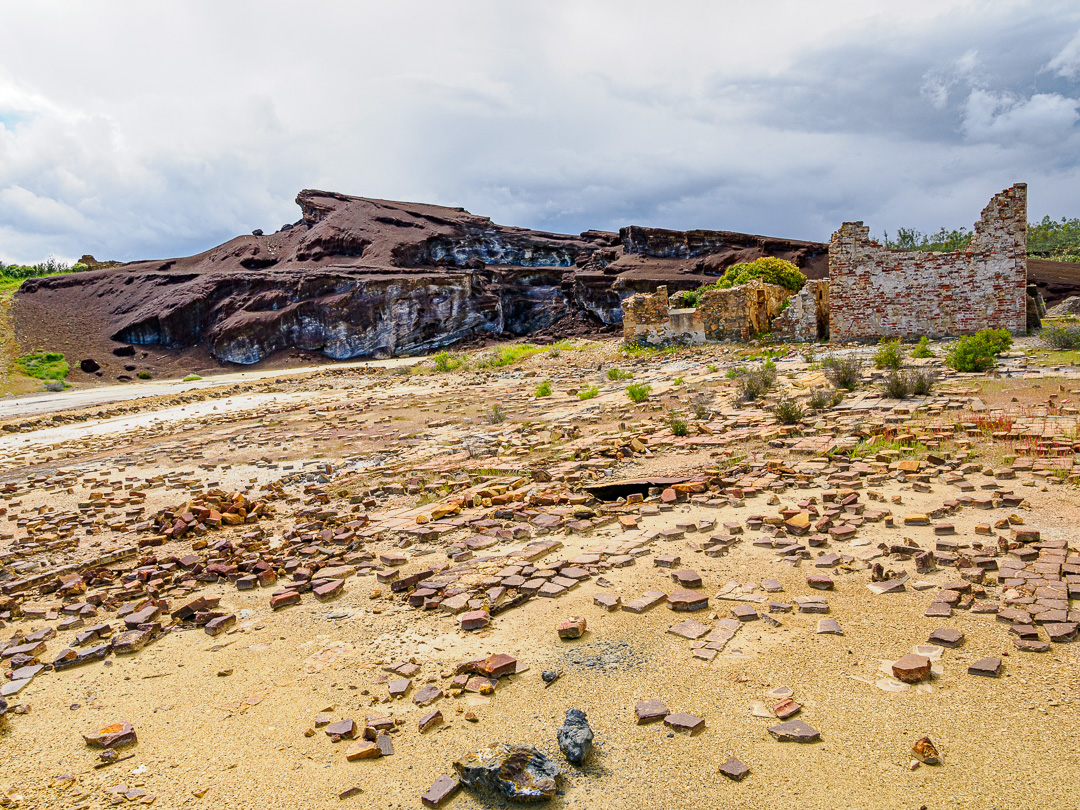
Some of the paving in this floor have clearly been imported as they bear the name of the makers, in Flintshire, Wales.


Overall, a very interesting place. That is it for today. TTFN and see-u-later.
 "See-u-Later"