
Tuesday 29th April 2025
Heading generally north-east ish, towards our overnight location at Tomar, we called in at a couple of other places, but first, before leaving Batalha we explored the Monastery.
Batalha Monastery:
We had walked around the outside last evening, but as it was closed we returned this morning, to see inside:
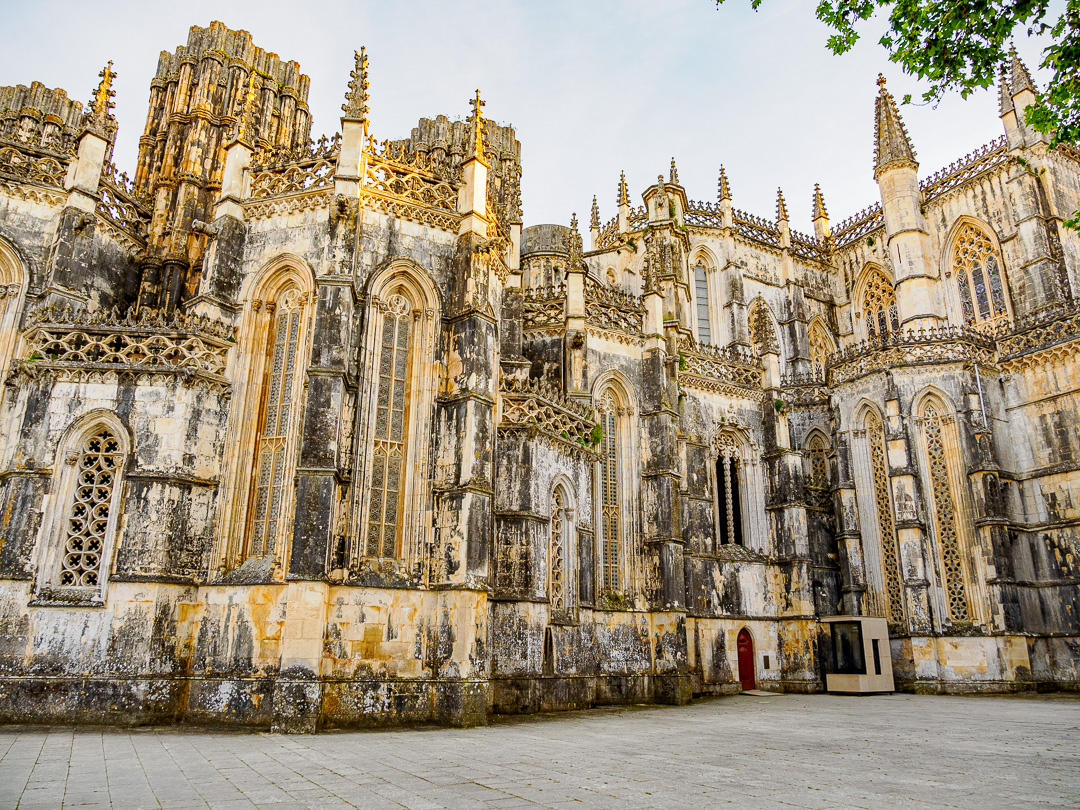
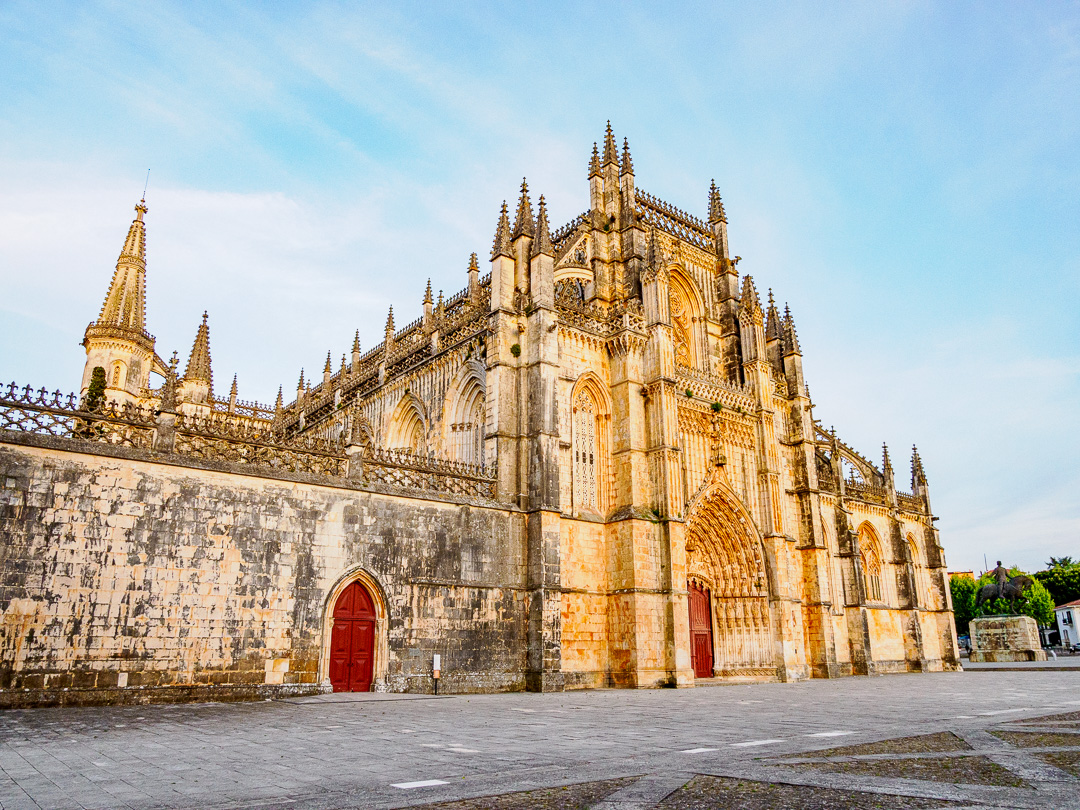
This Dominican monastery was founded in 1386 and took 200 years to build. It is considered a Portuguese National Monument.
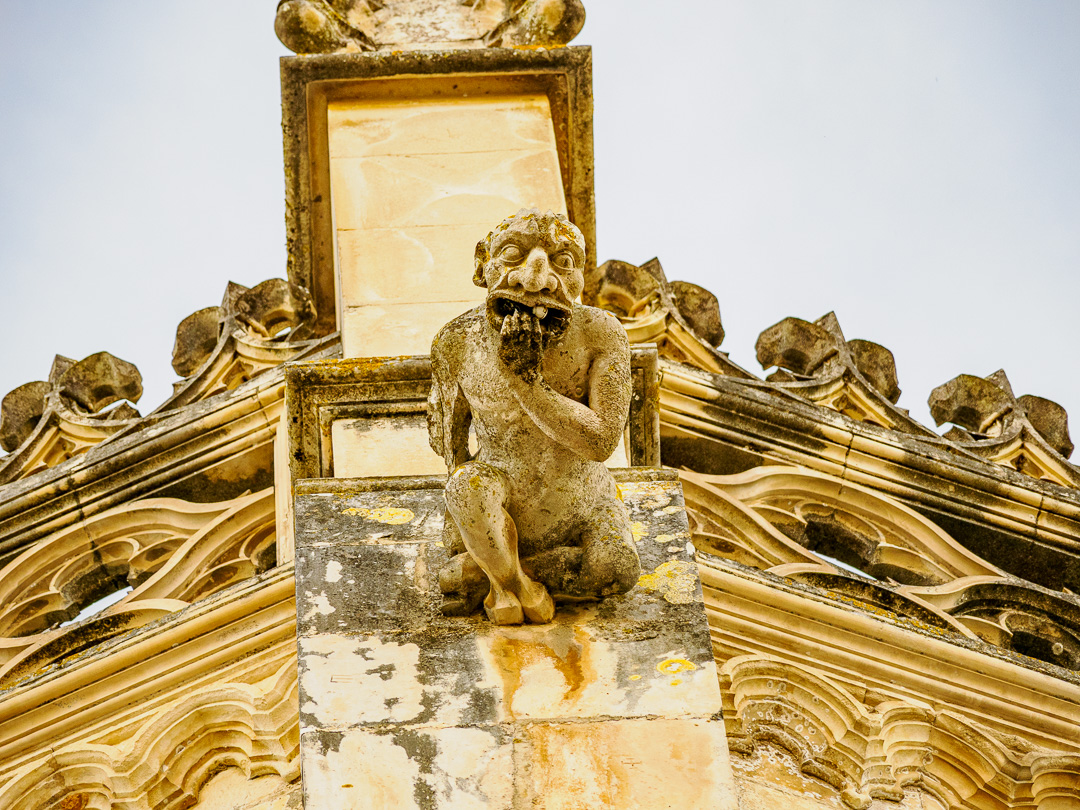

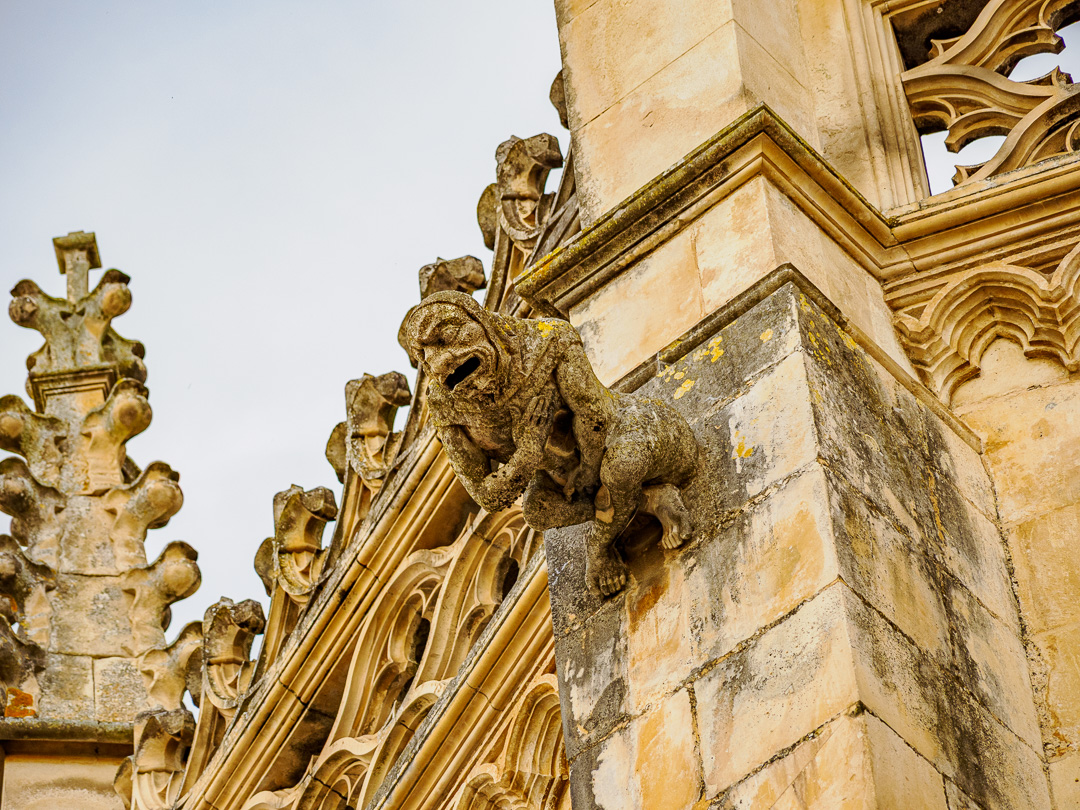

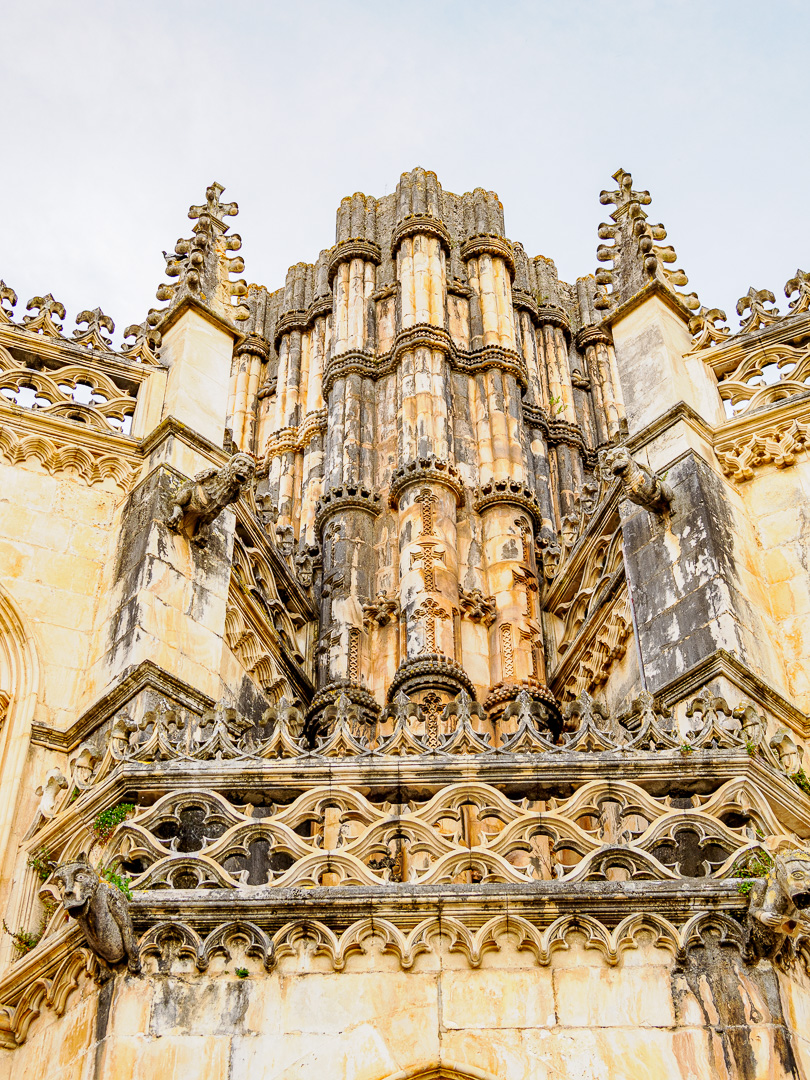
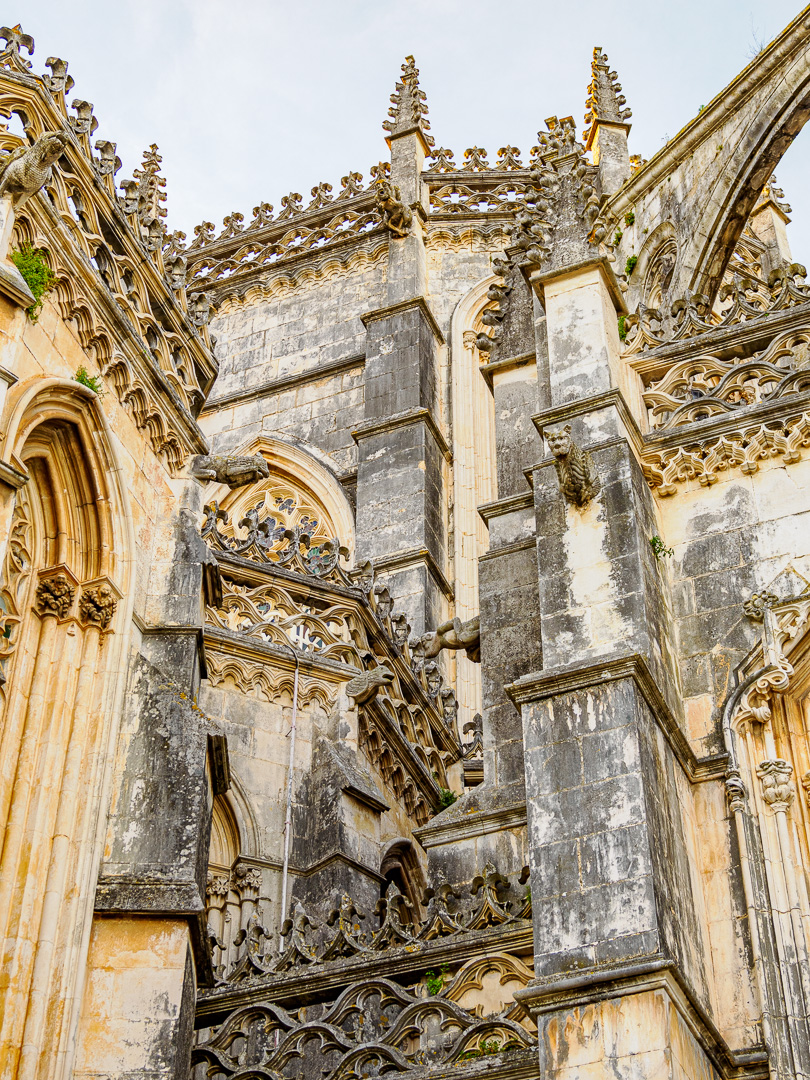
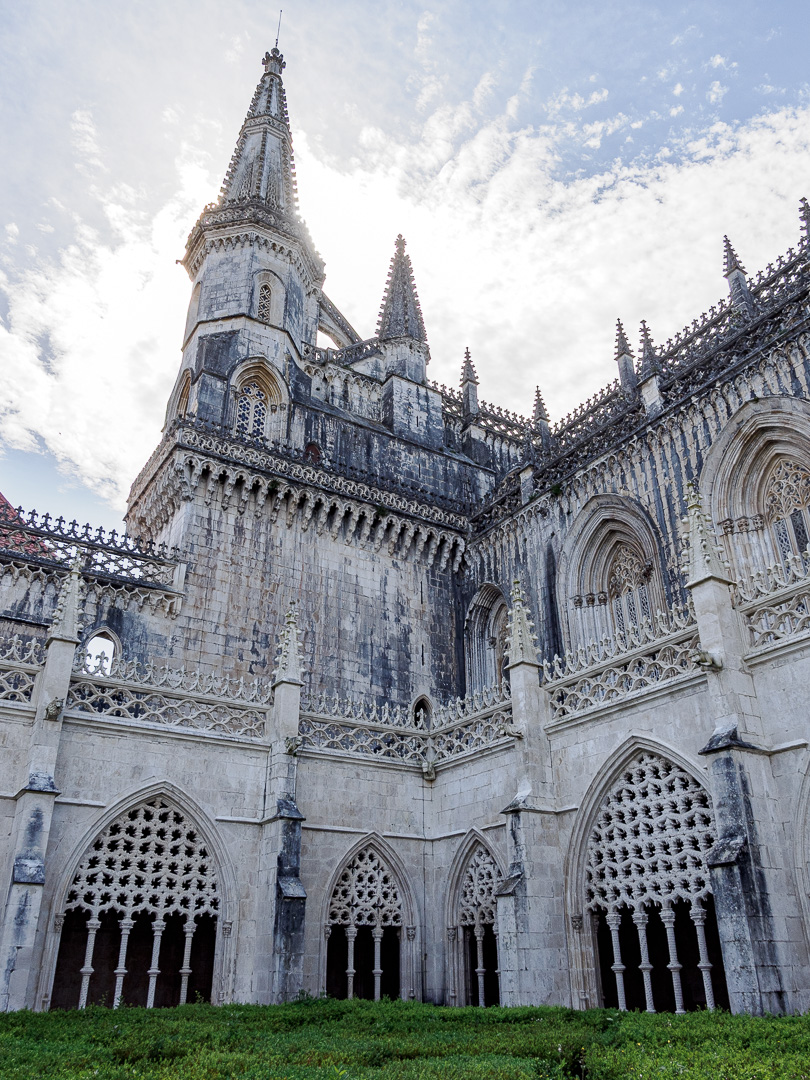
The monastery church is immense and very richly decorated outside:

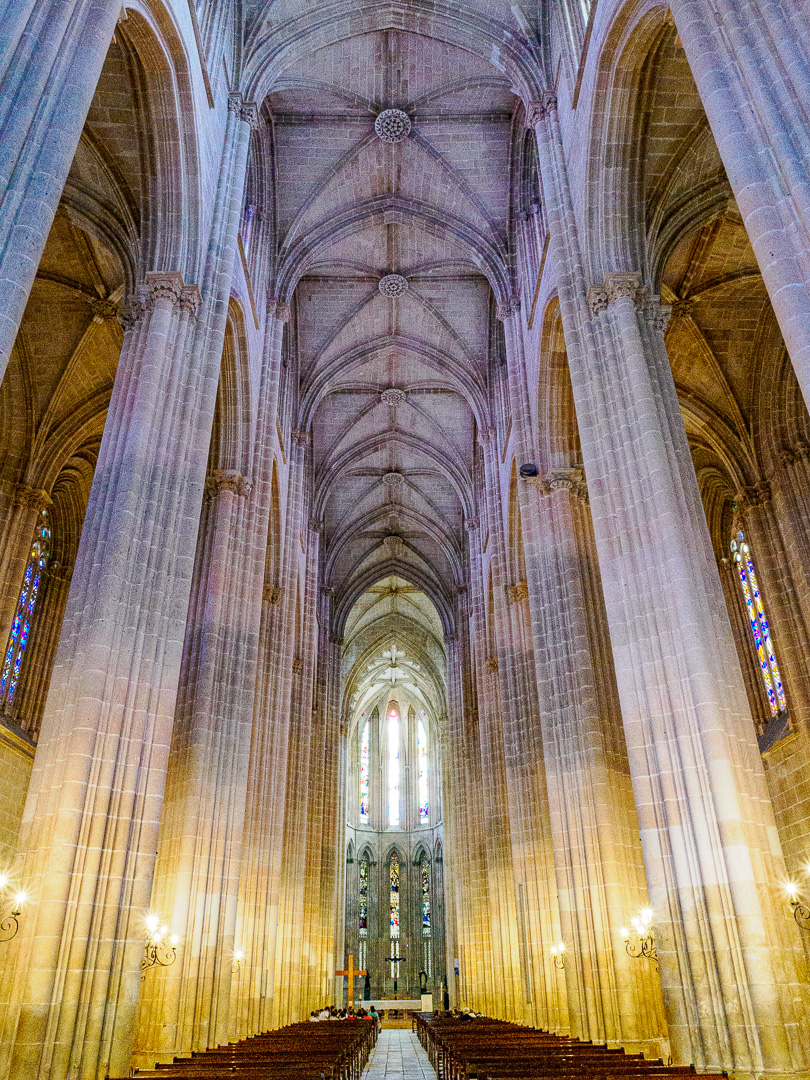
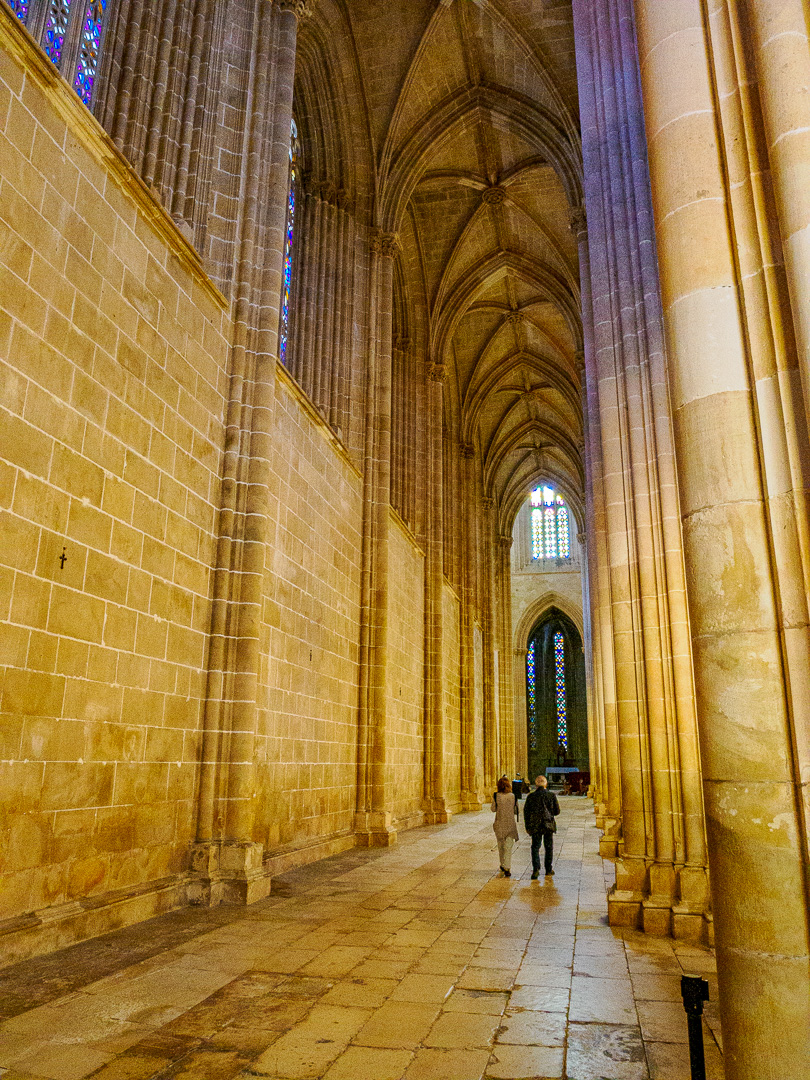
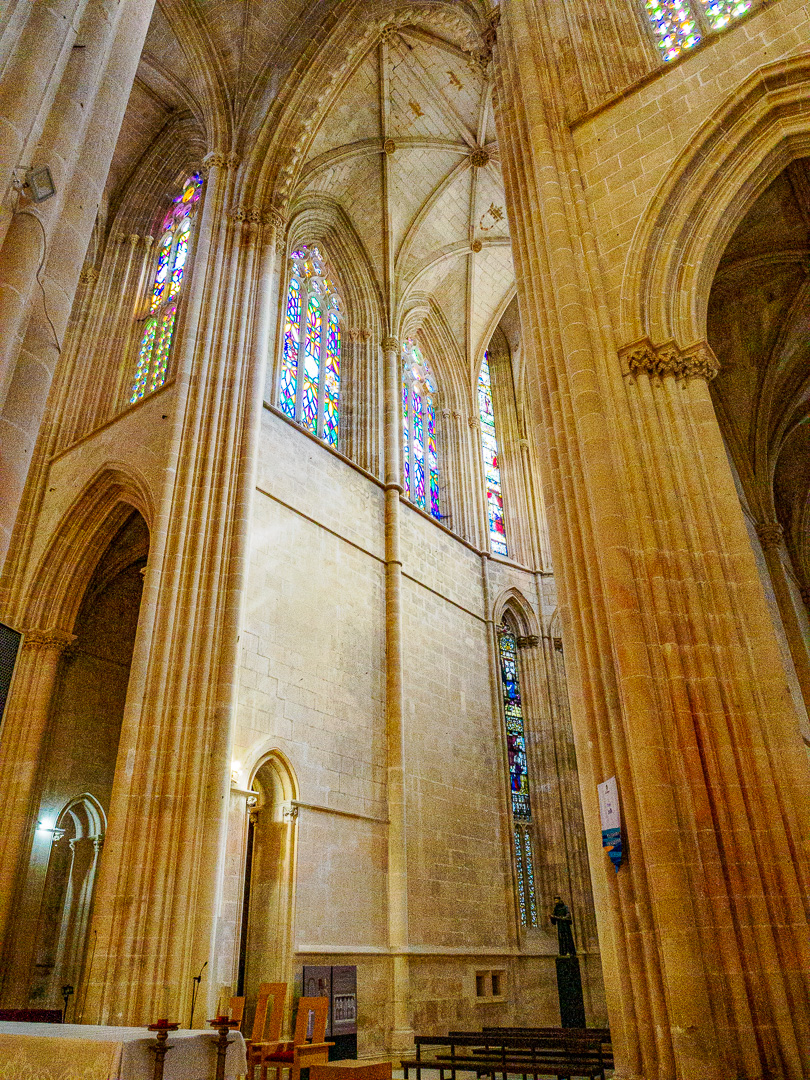
Inside the church is a stark contrast to the outside. Its size really makes you feel small, especially with its lack of ornamentation and huge open spaces.
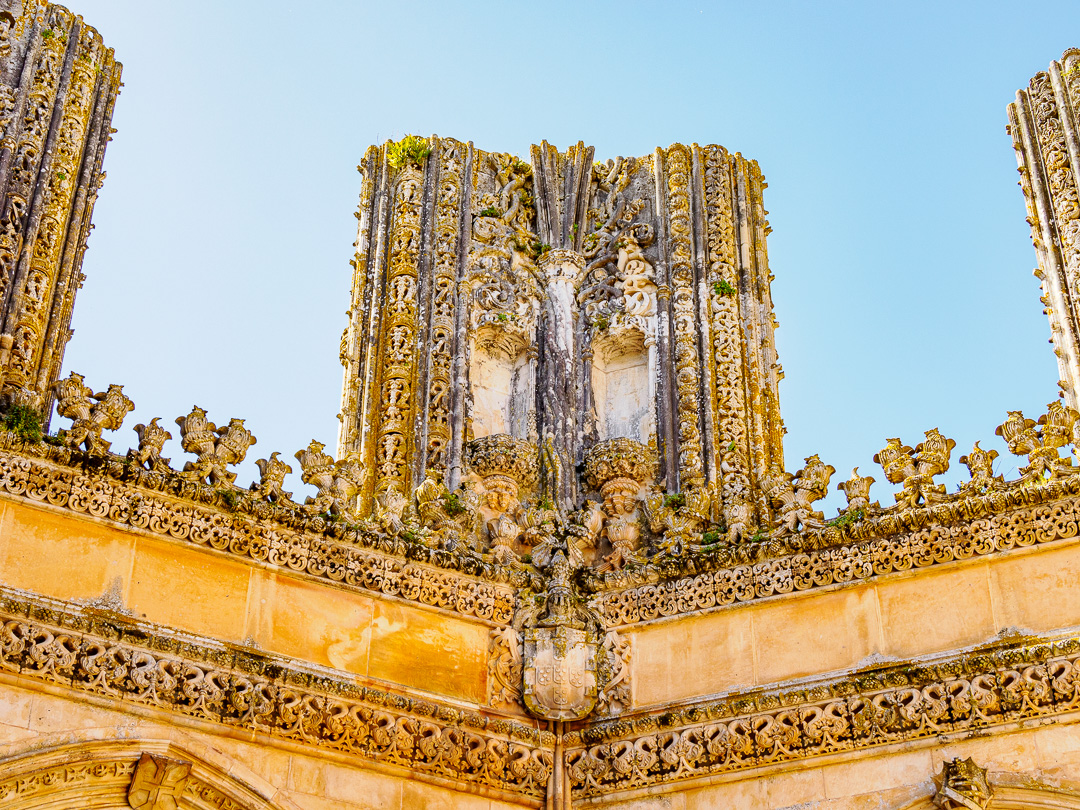
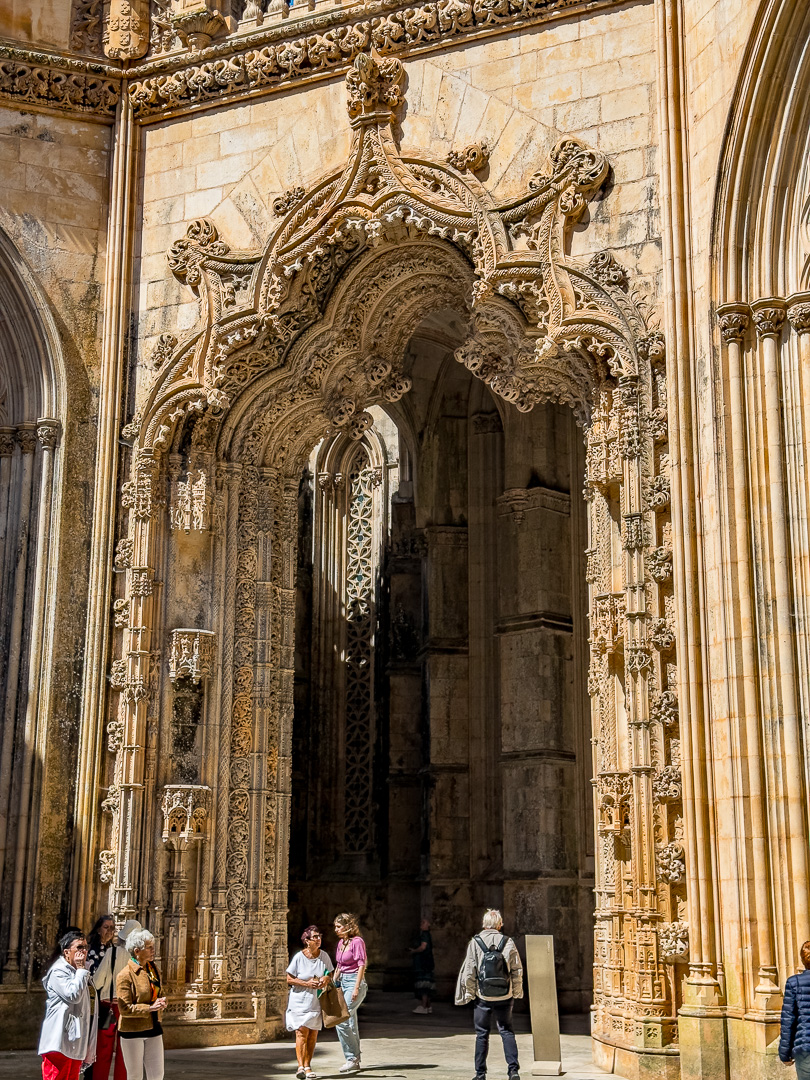
There are some chapels on the side of the church which are called “unfinished” as they are open to the sky. These are as ornate as the rest of the outside and look as if they have just been abandoned, part way through construction:

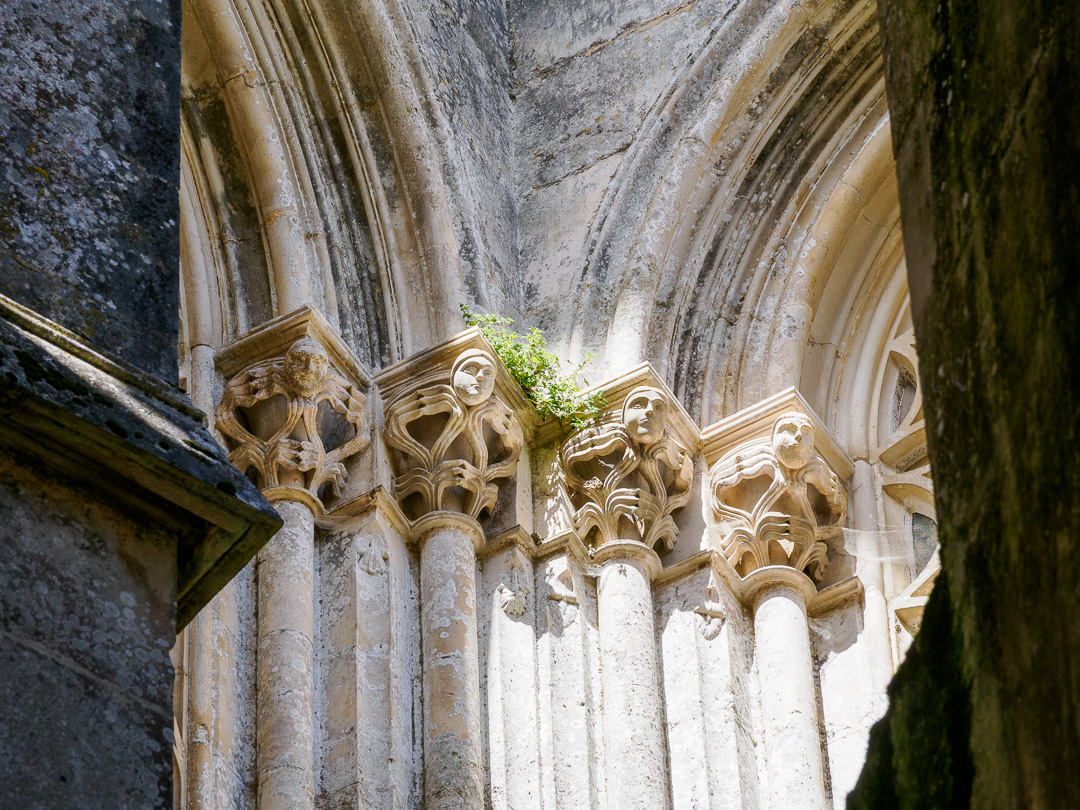
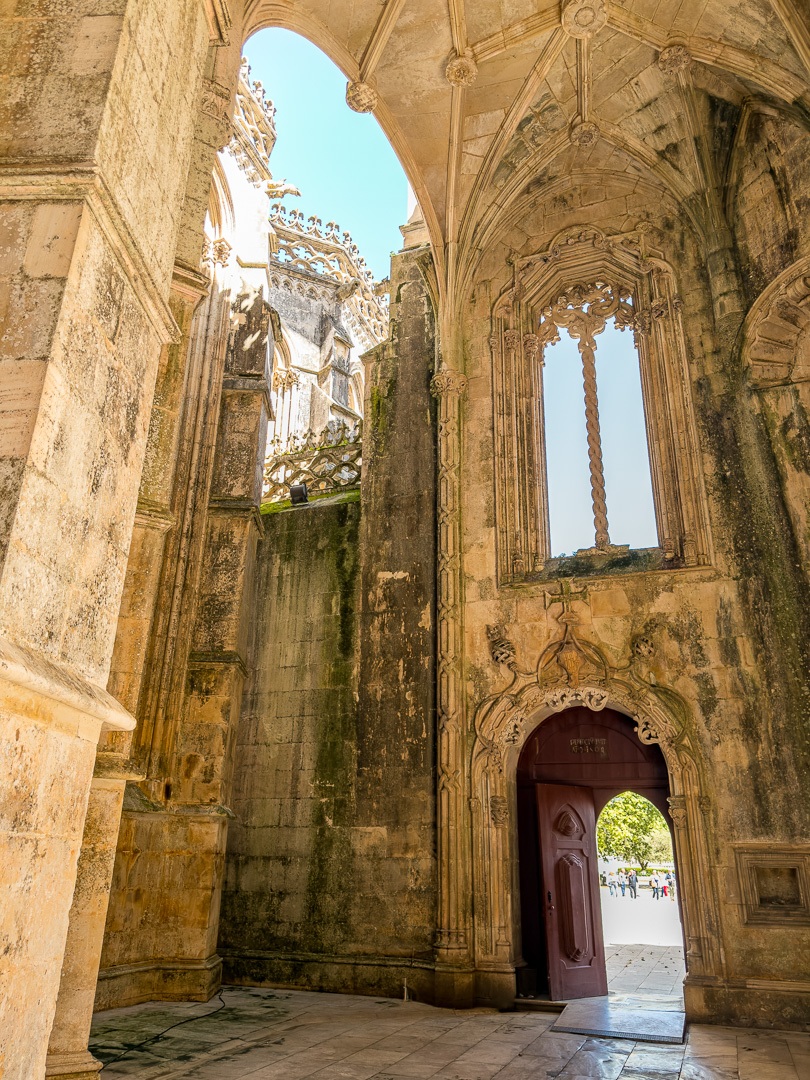
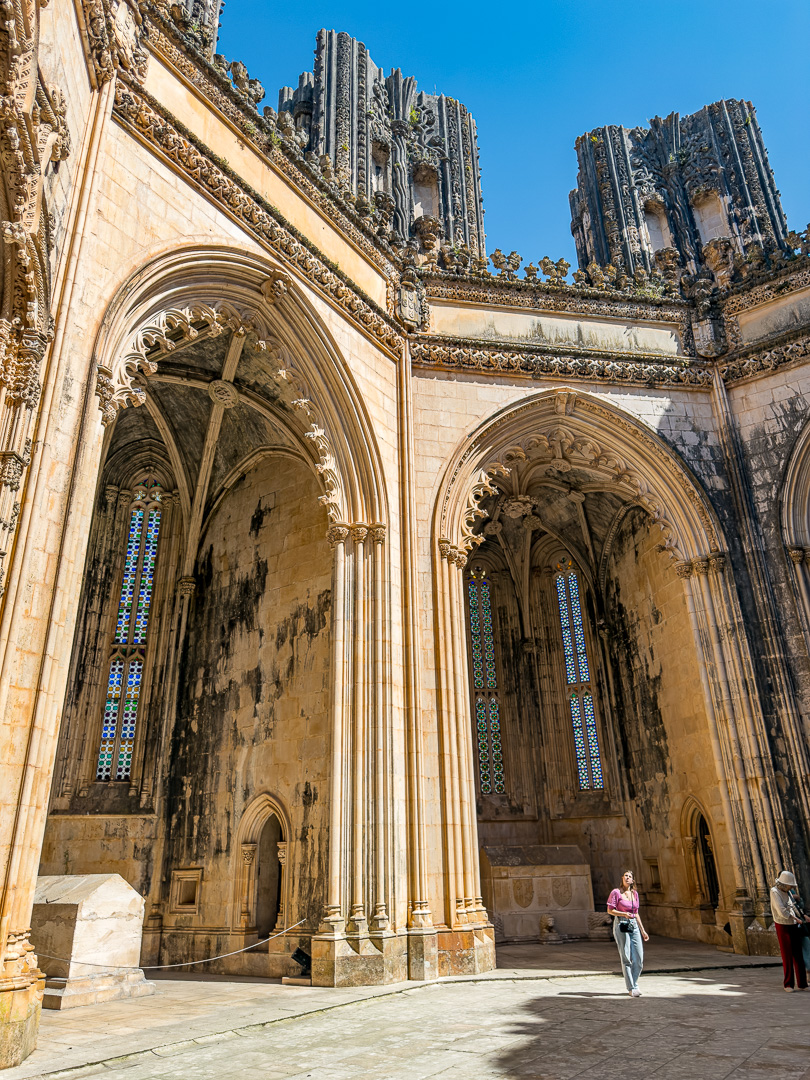
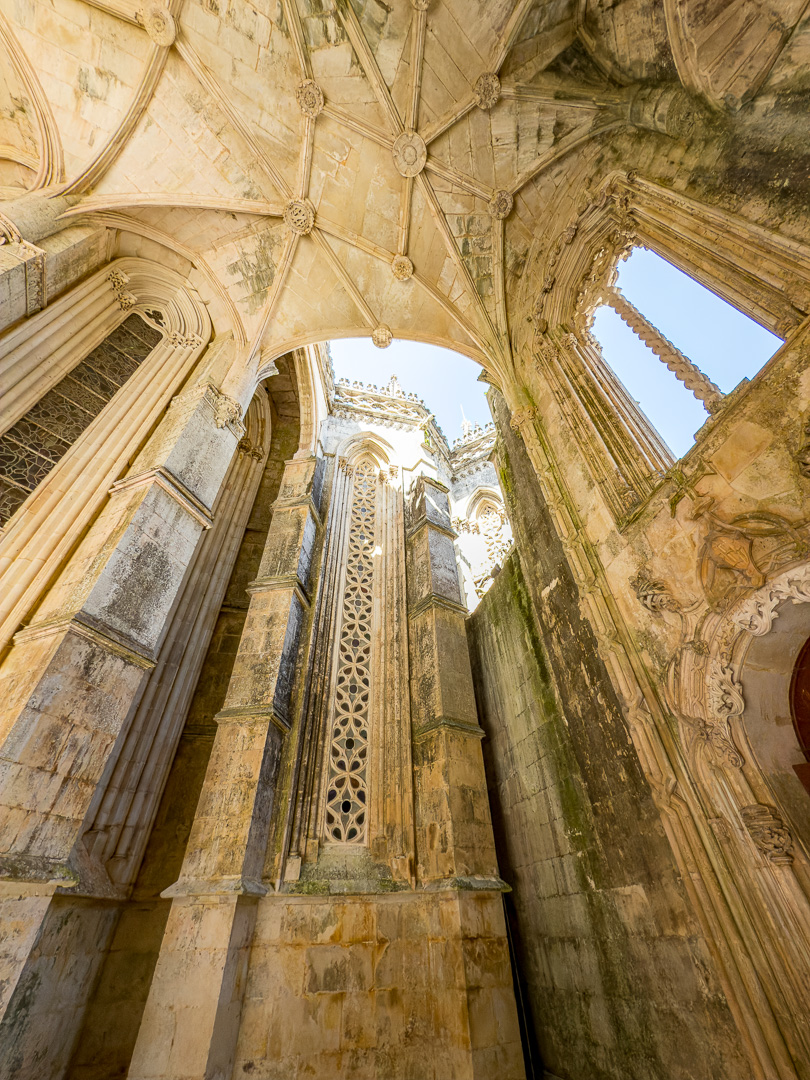
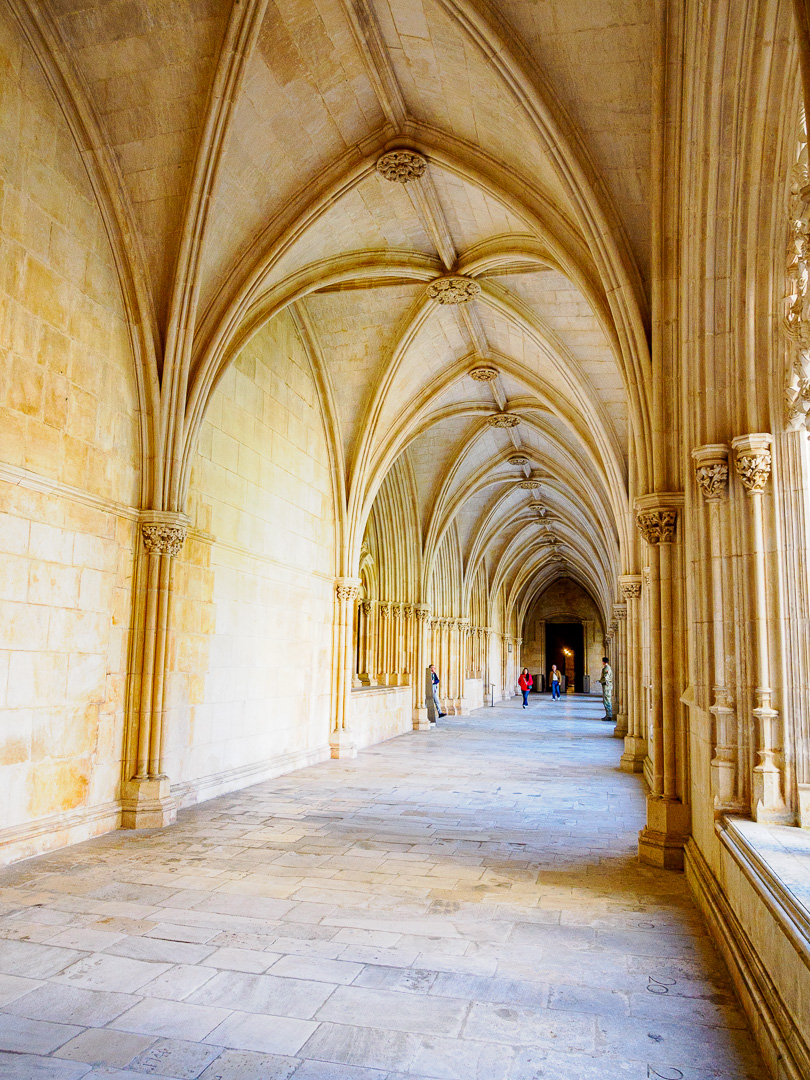
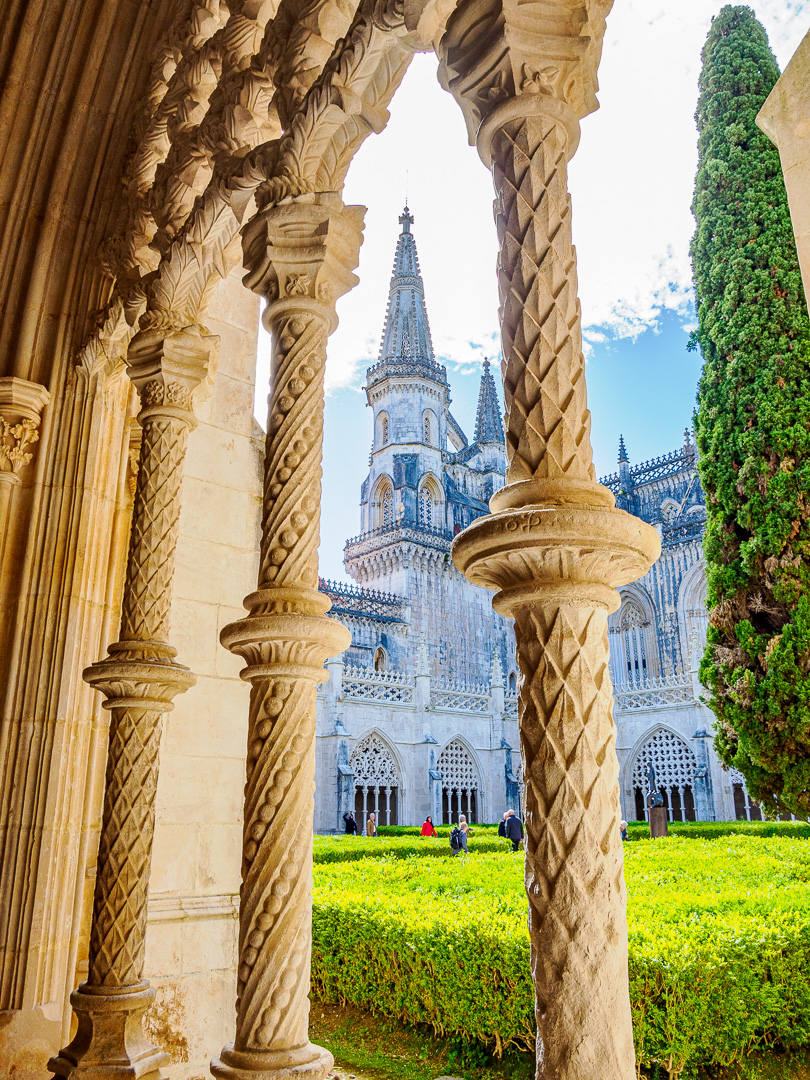
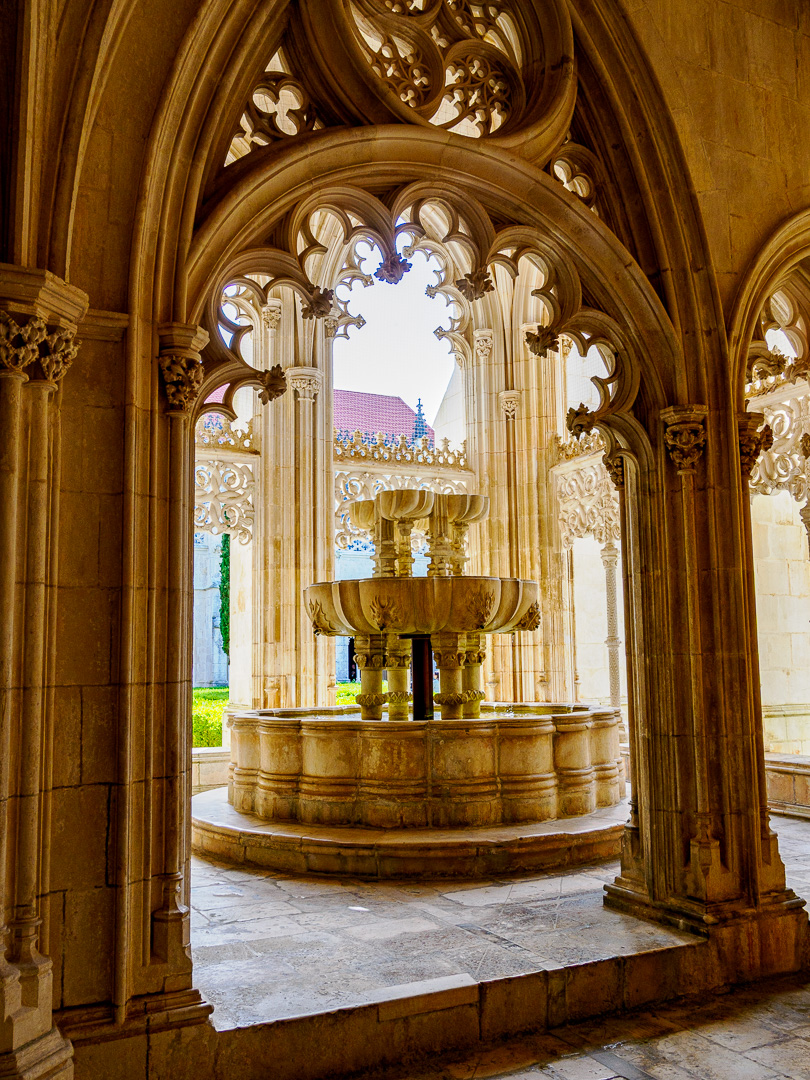
In the monastery, there are the usual cloisters, but these are exceptional. Each arch has a very ornate screen, which is unique. No two designs are identical:


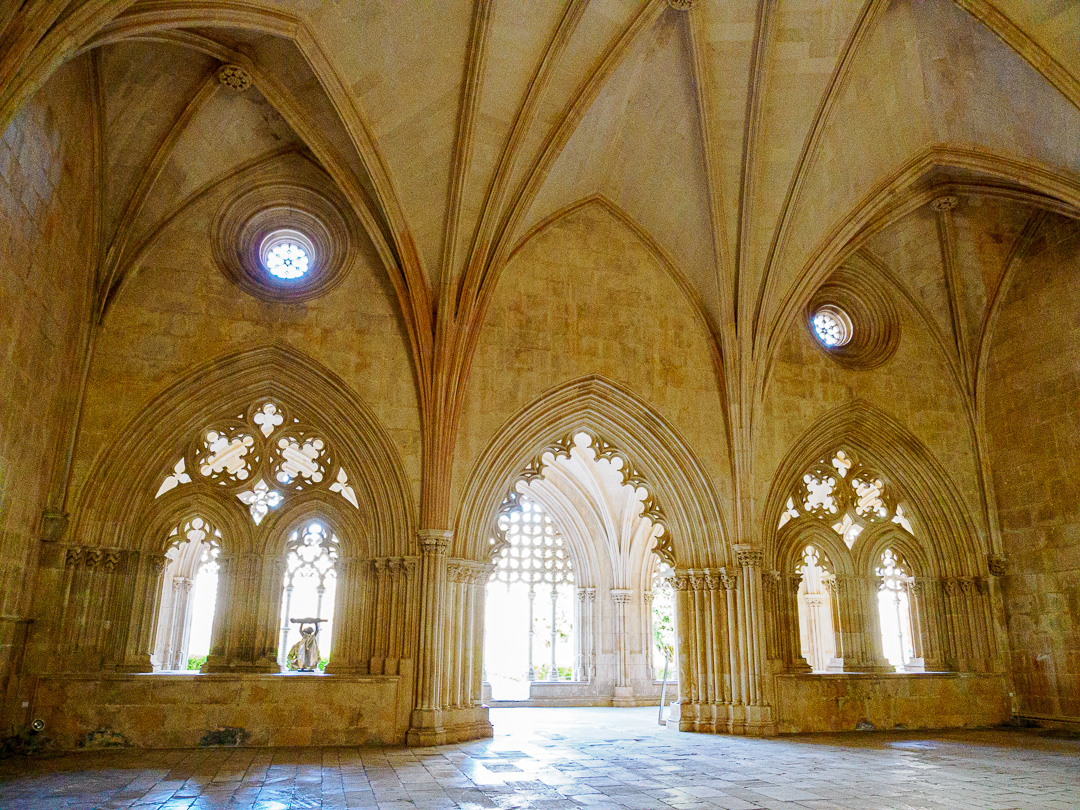
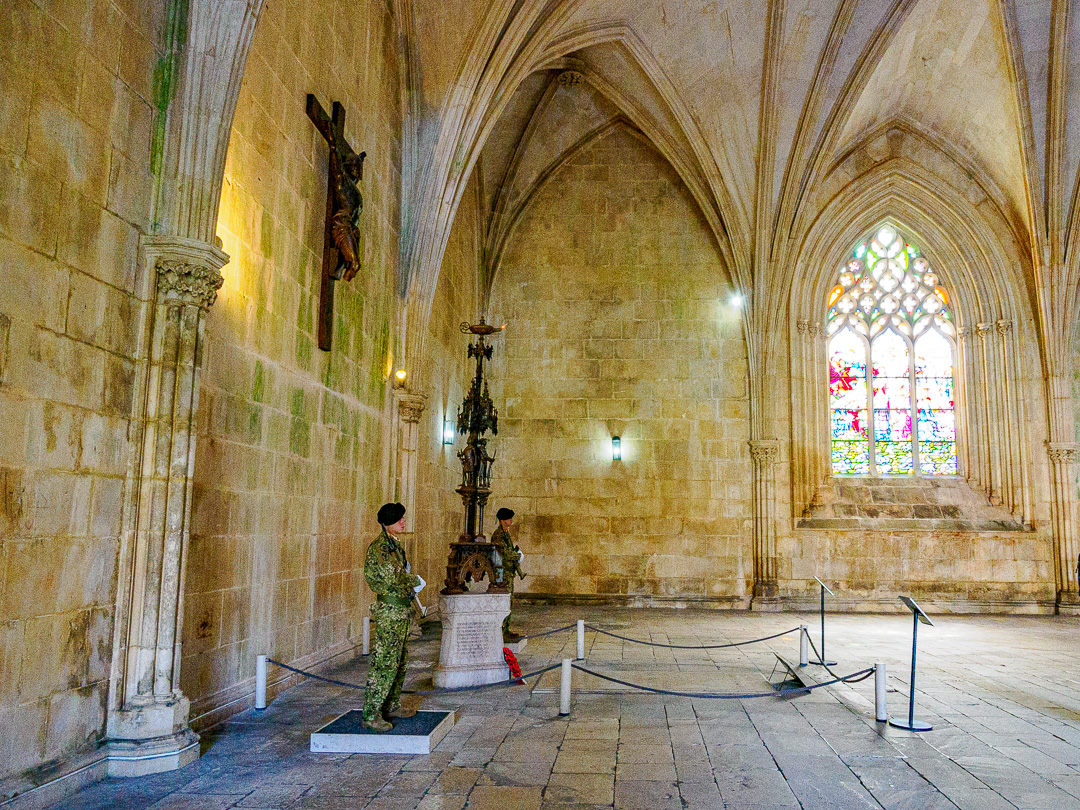
Off the main cloister, is the chapter house, which has an enormous unsupported roof. It also houses the tomb of the unknown soldier, which is guarded by two armed soldiers:
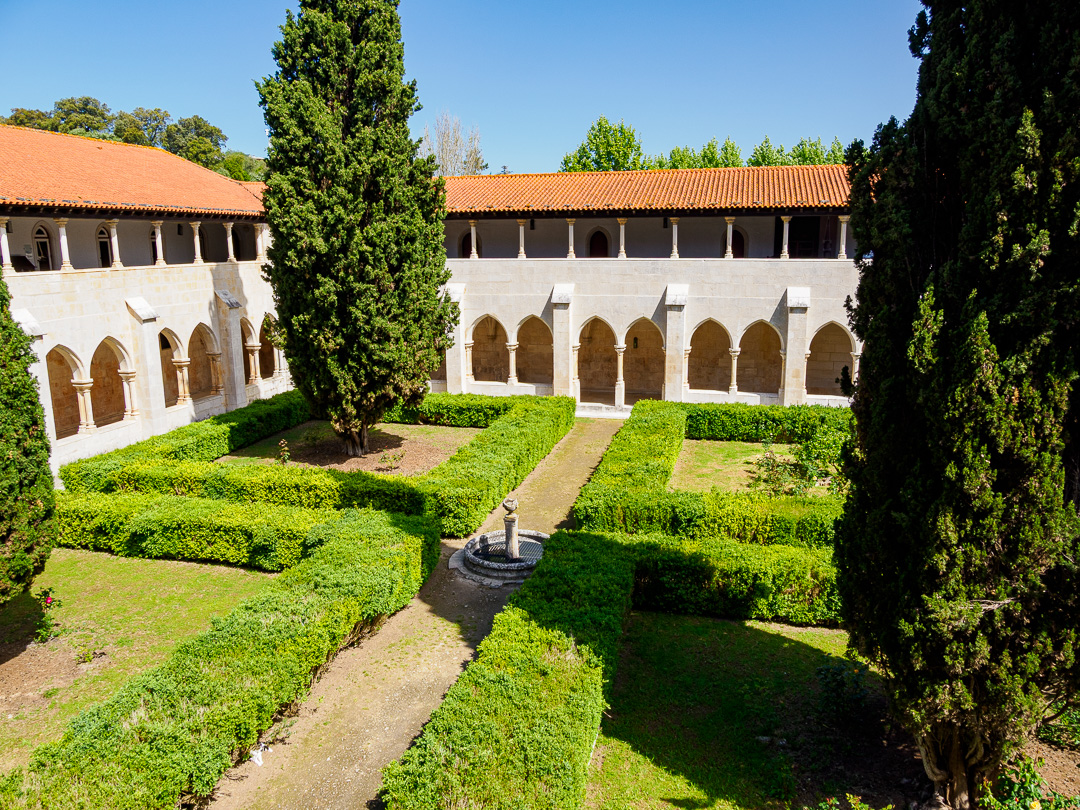
There is also a second cloister, in which we were able to go to the first floor:
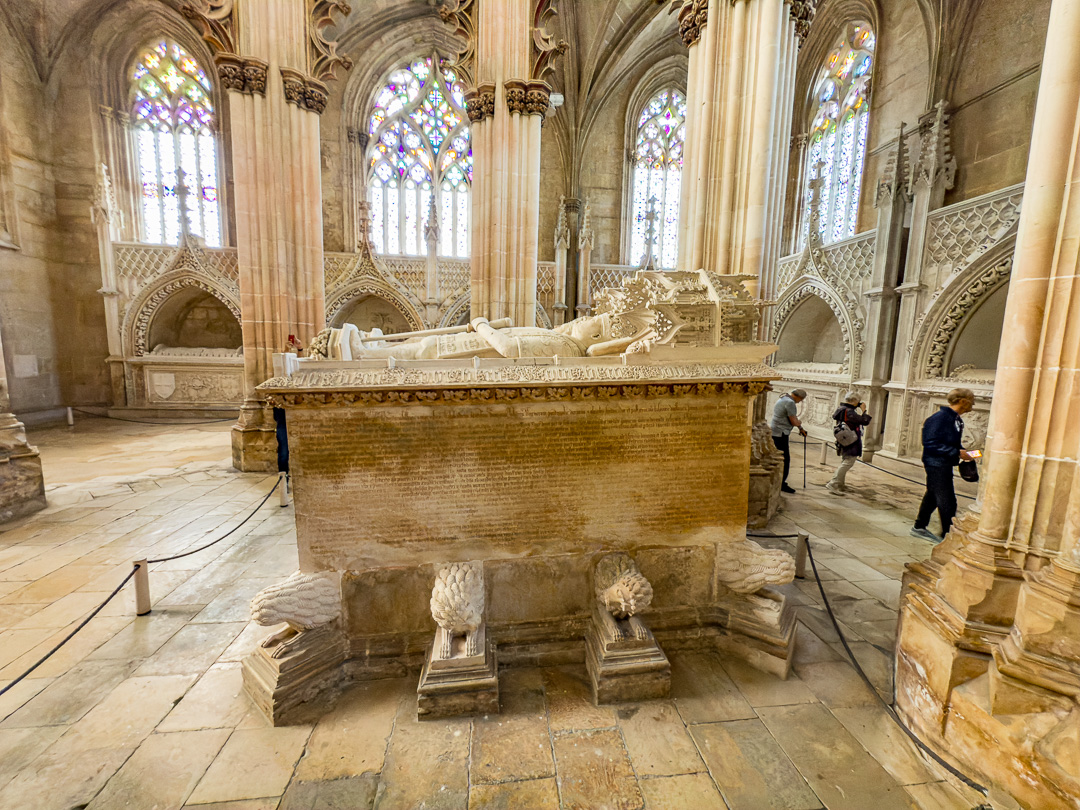
The monastery houses the tombs of some of the Kings of Portugal, including The joint tomb of King John I of Portugal (d. 1433) and his wife Philippa of Lancaster (d. 1415). Their statues lie in full regalia, with clasped hands (expressing the good relations between Portugal and England).
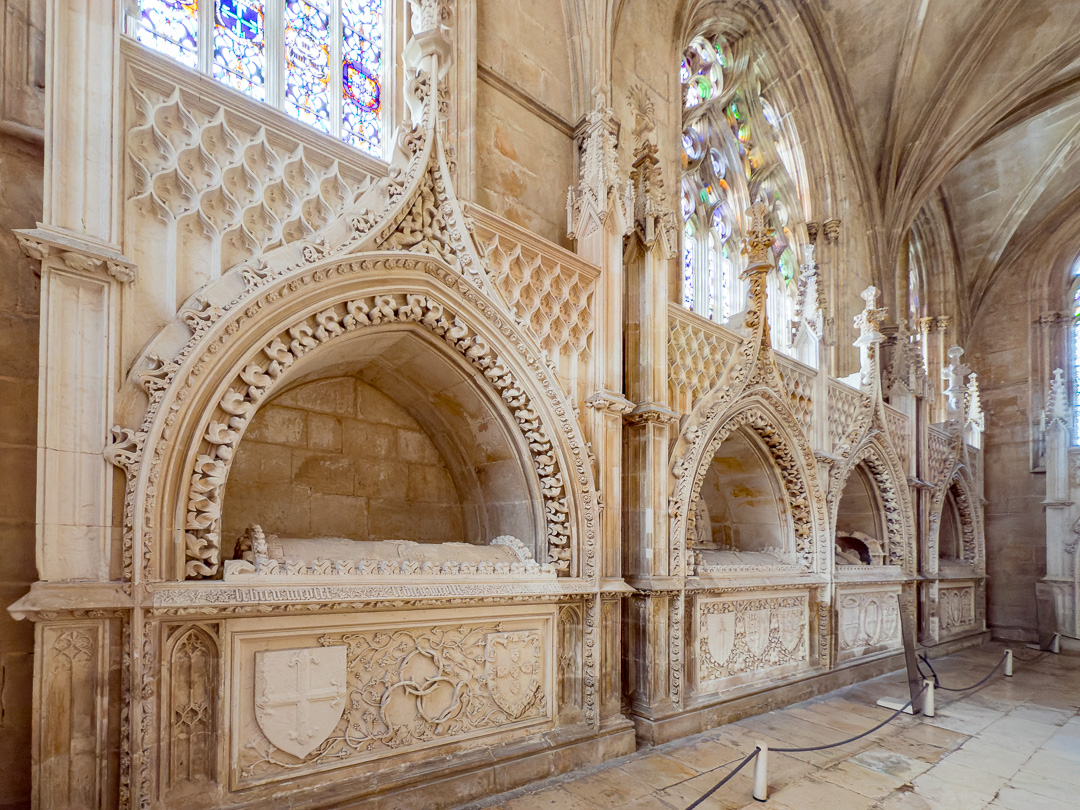
Many of their descendants are also entombed here, in wall alcoves:
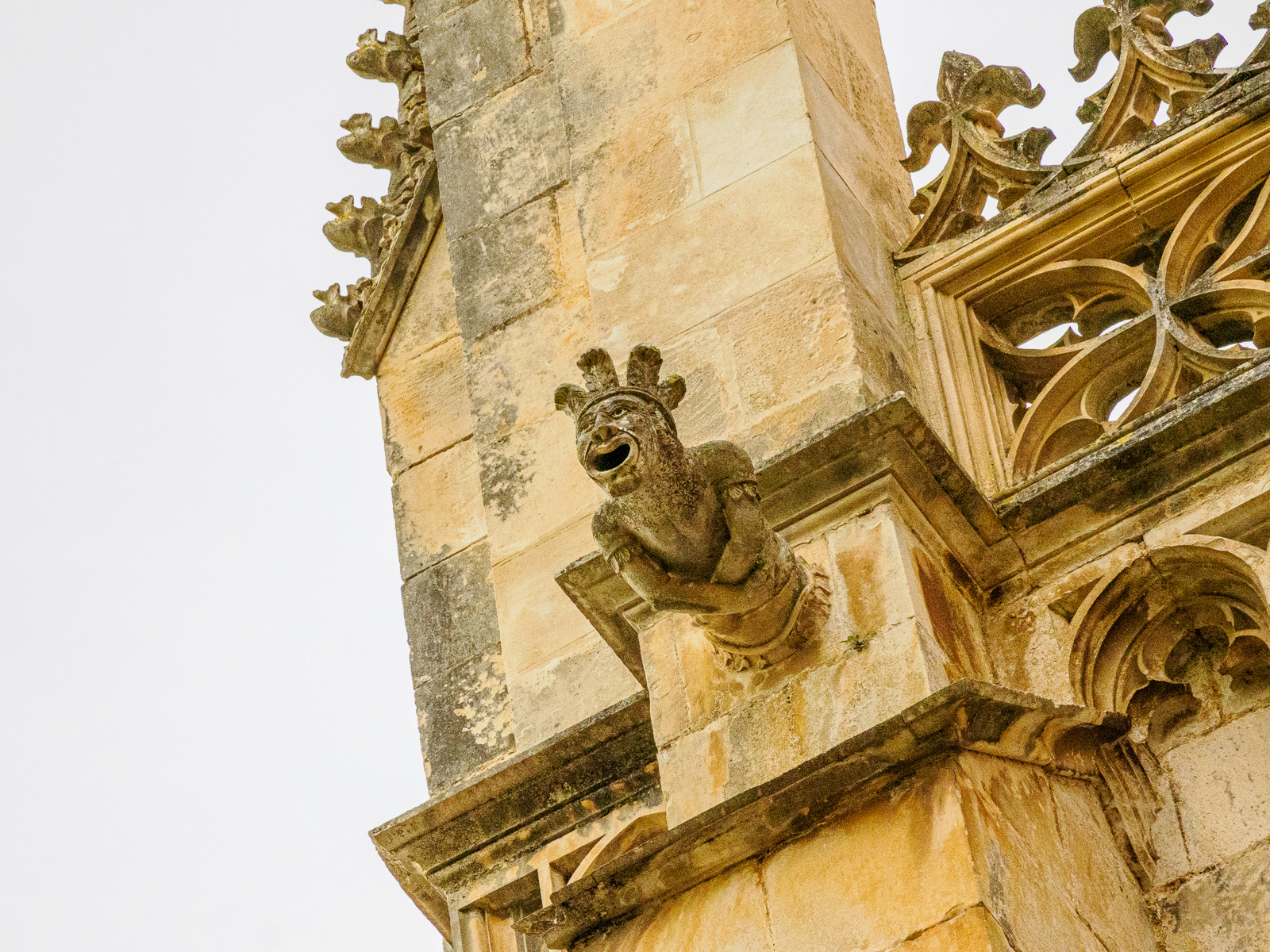
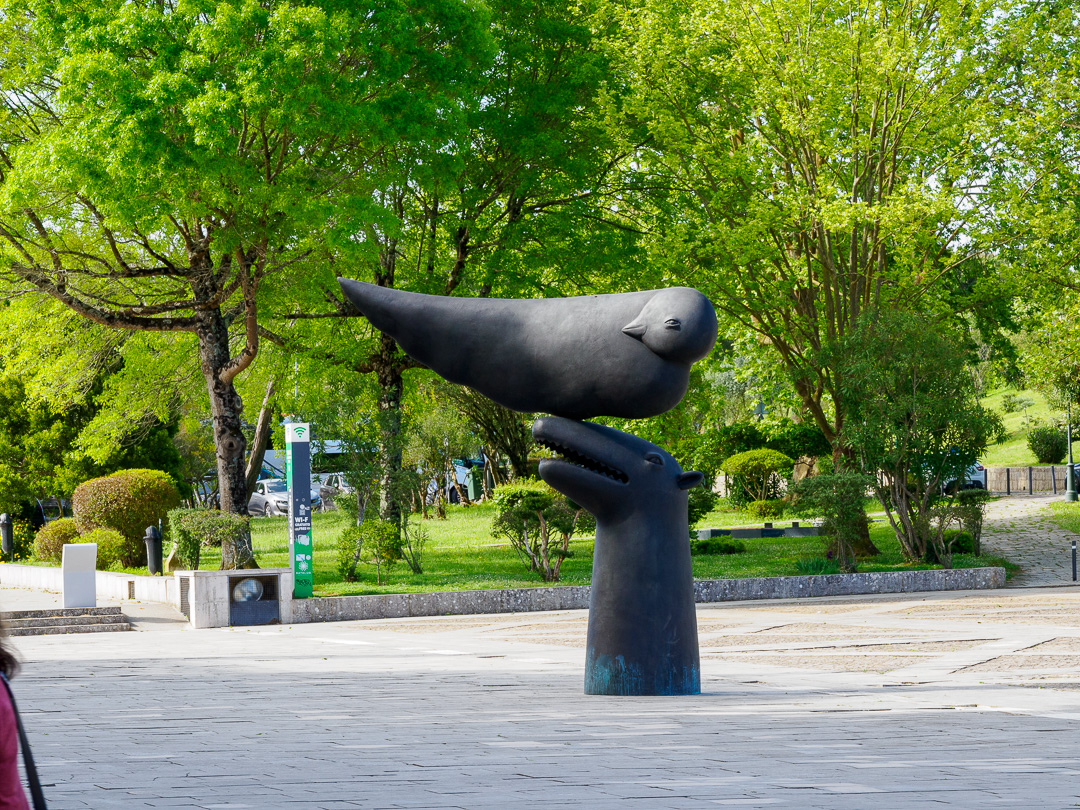
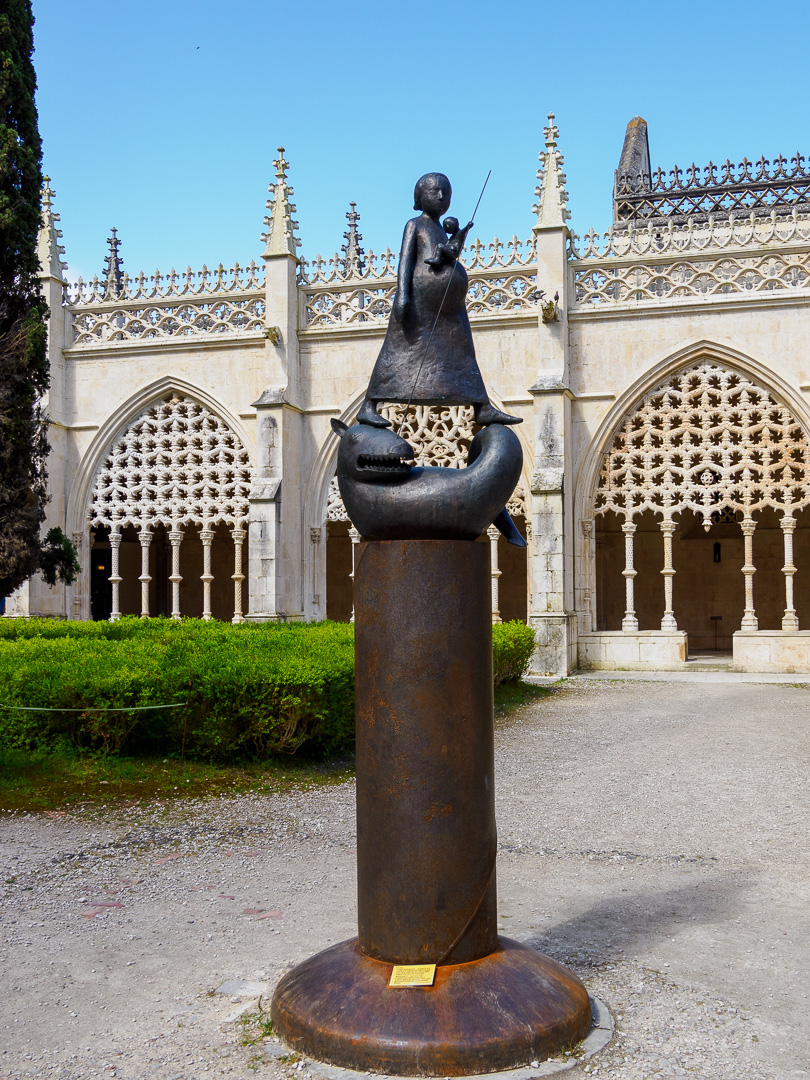
Around the monastery, there are many sculptures, all by the same artist, a Romanian sculptor Virgil Scripcariu. Some of them are pictured below:



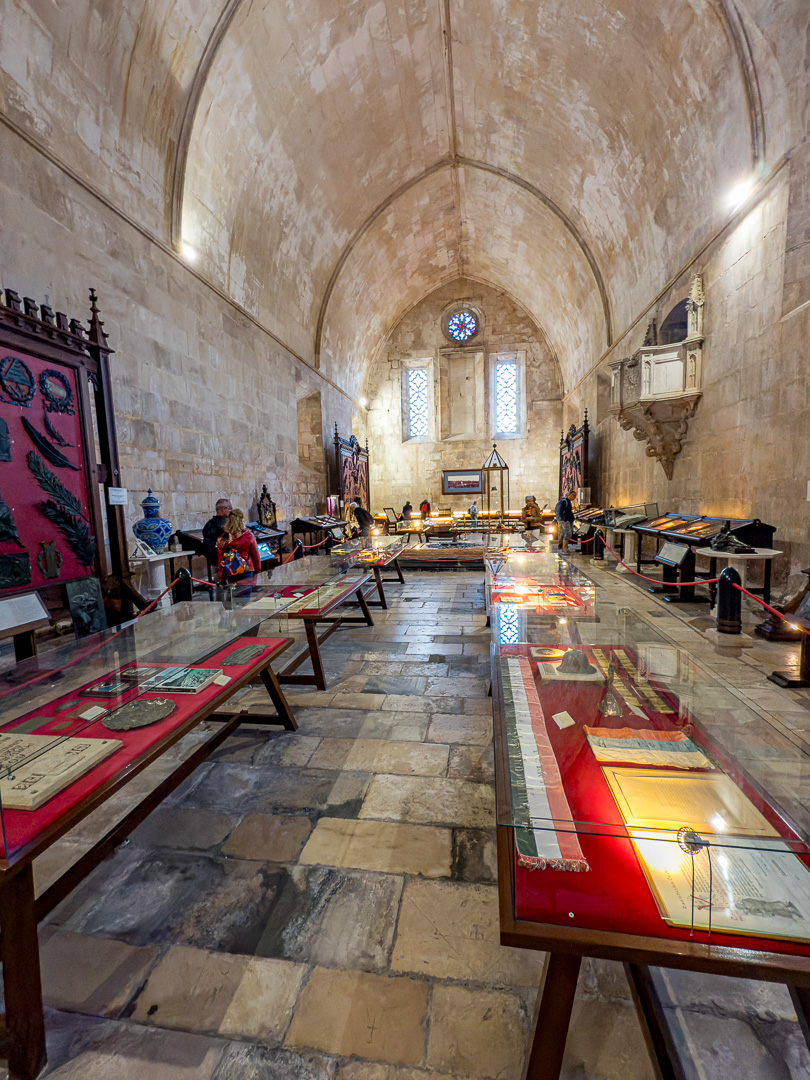
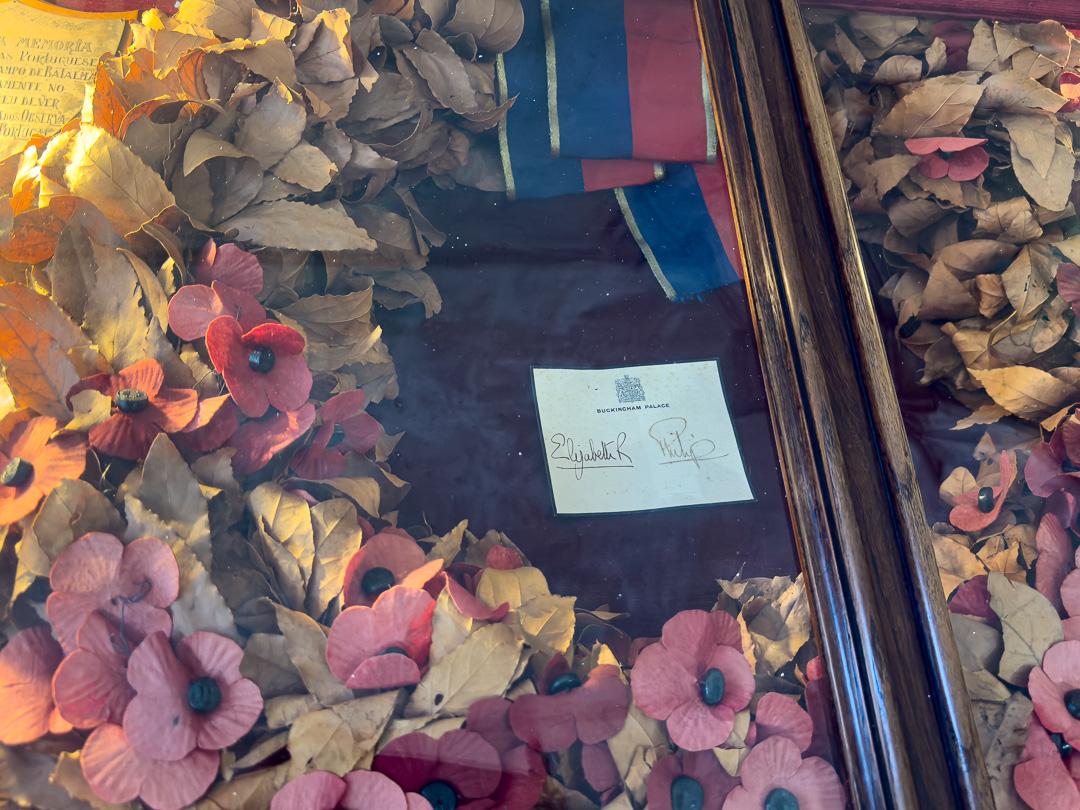
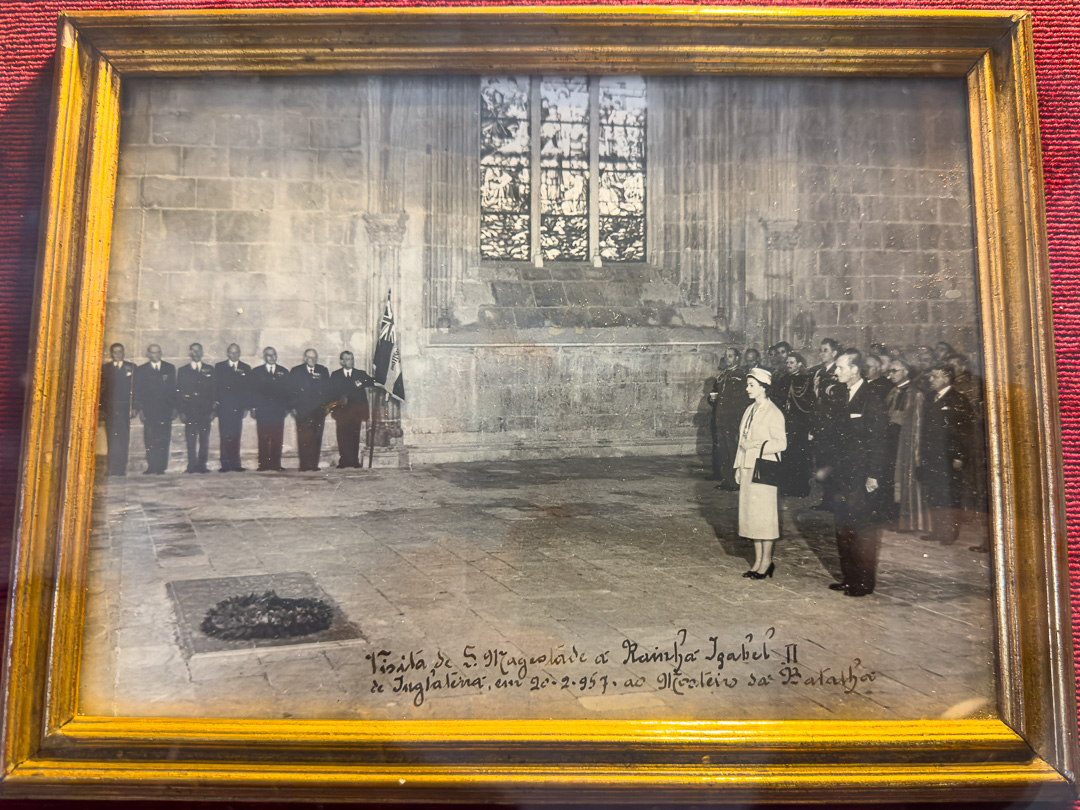
There is also a military museum, which includes the wreath laid on the tomb of the unknown soldier, by Queen Elizabeth II and Prince Philip when they visited in 1957:
Grutas da Moeda (Coin Caves):
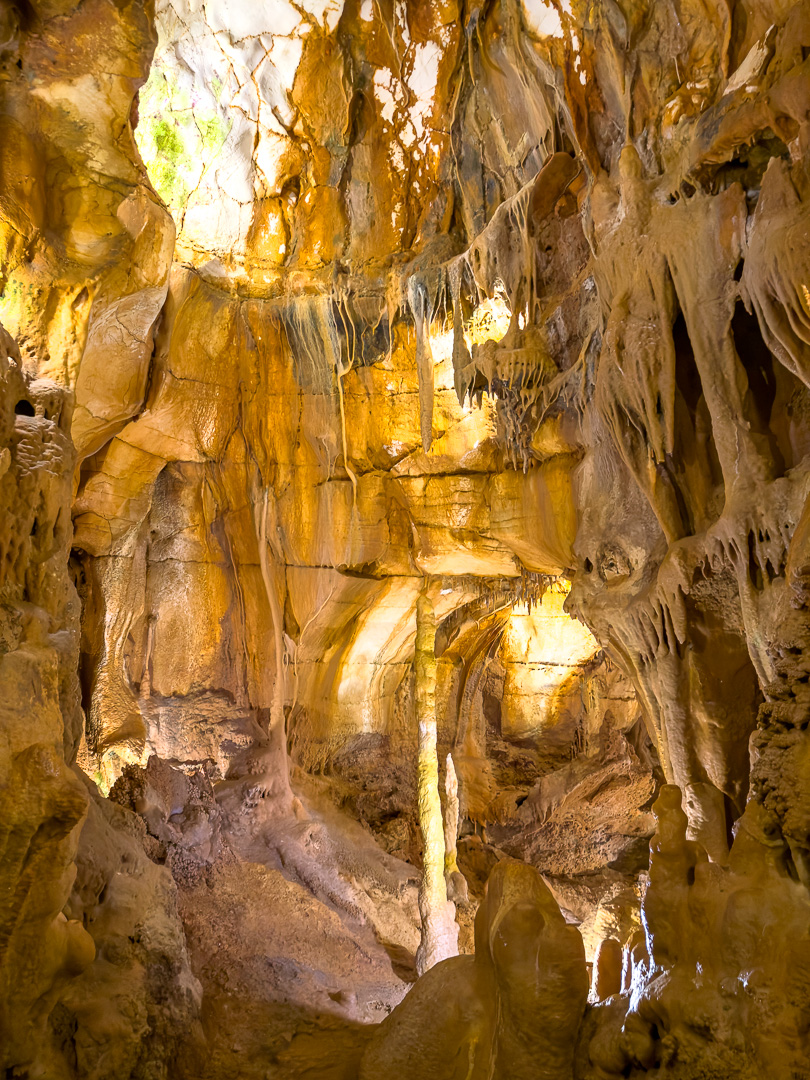
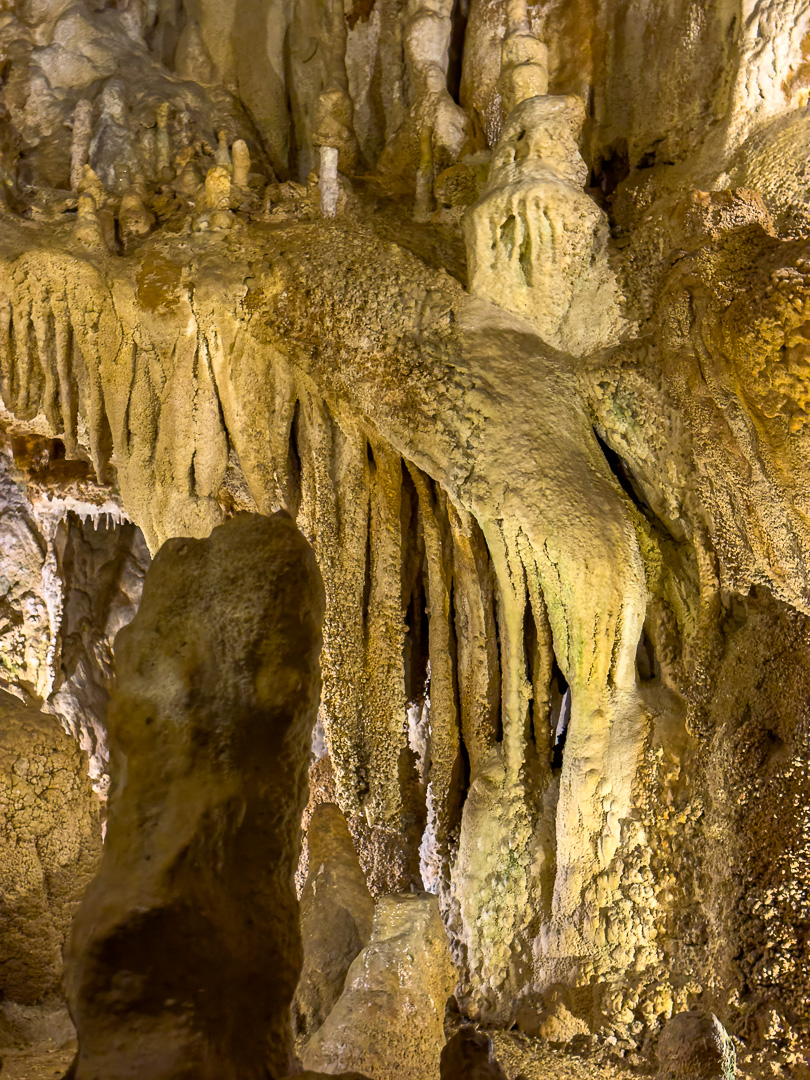
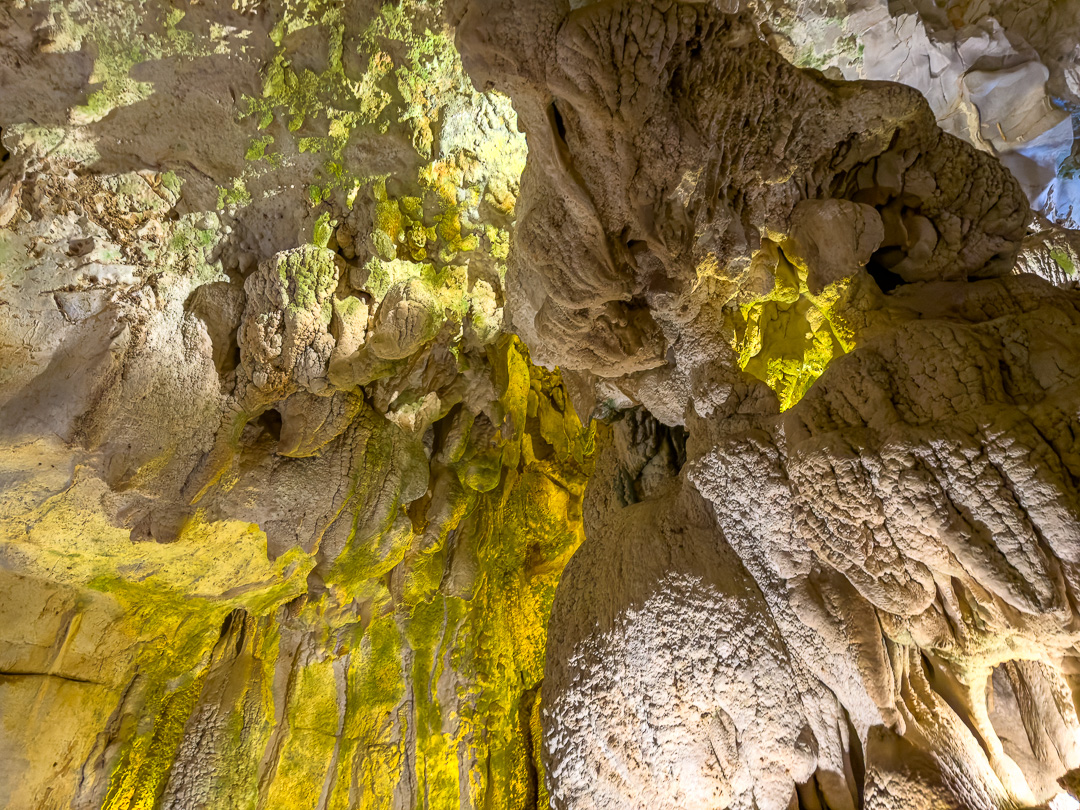
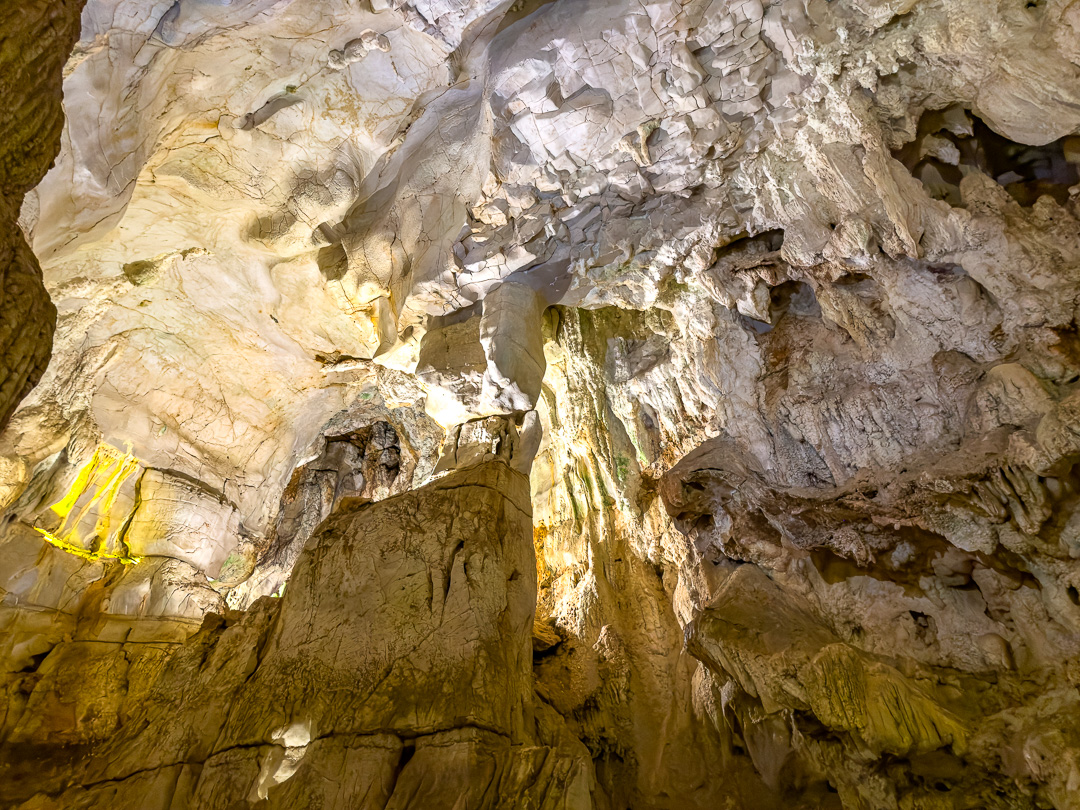
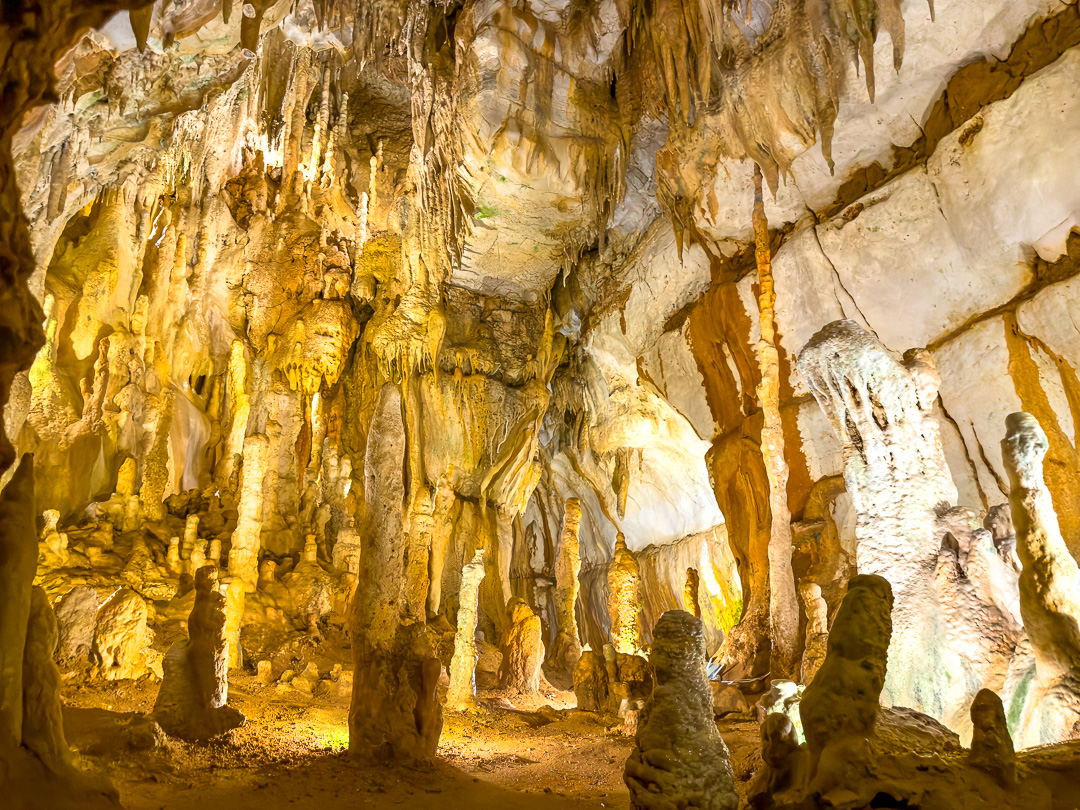
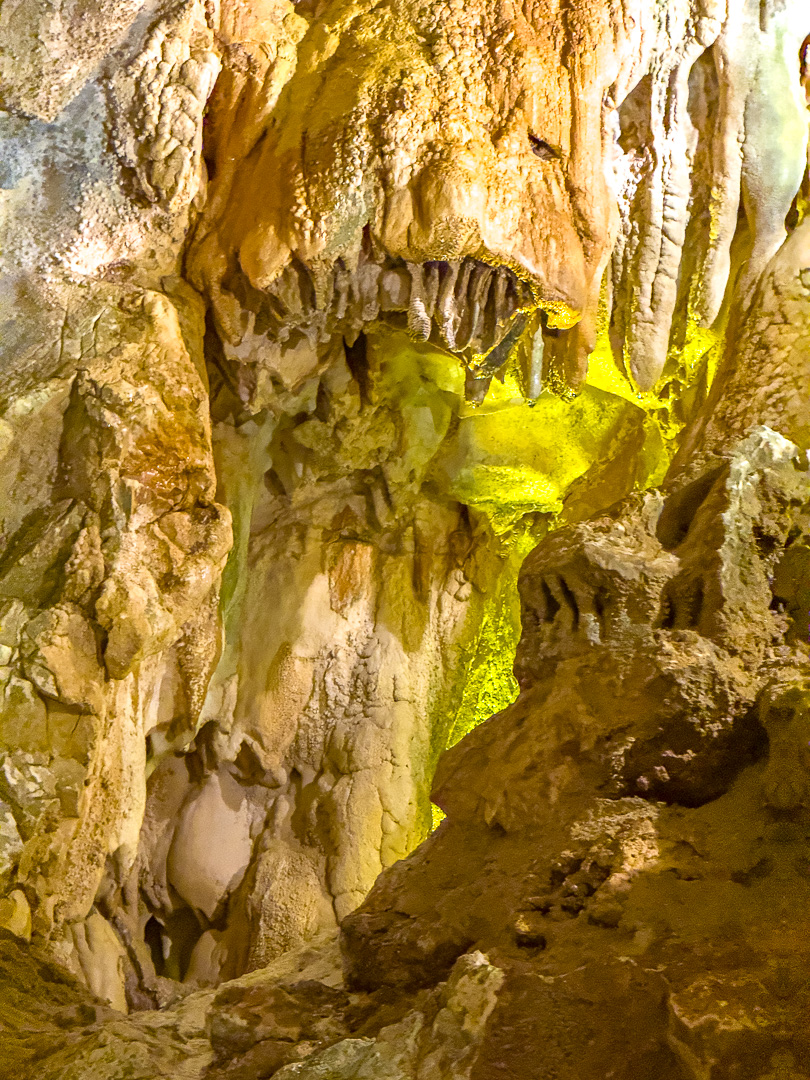
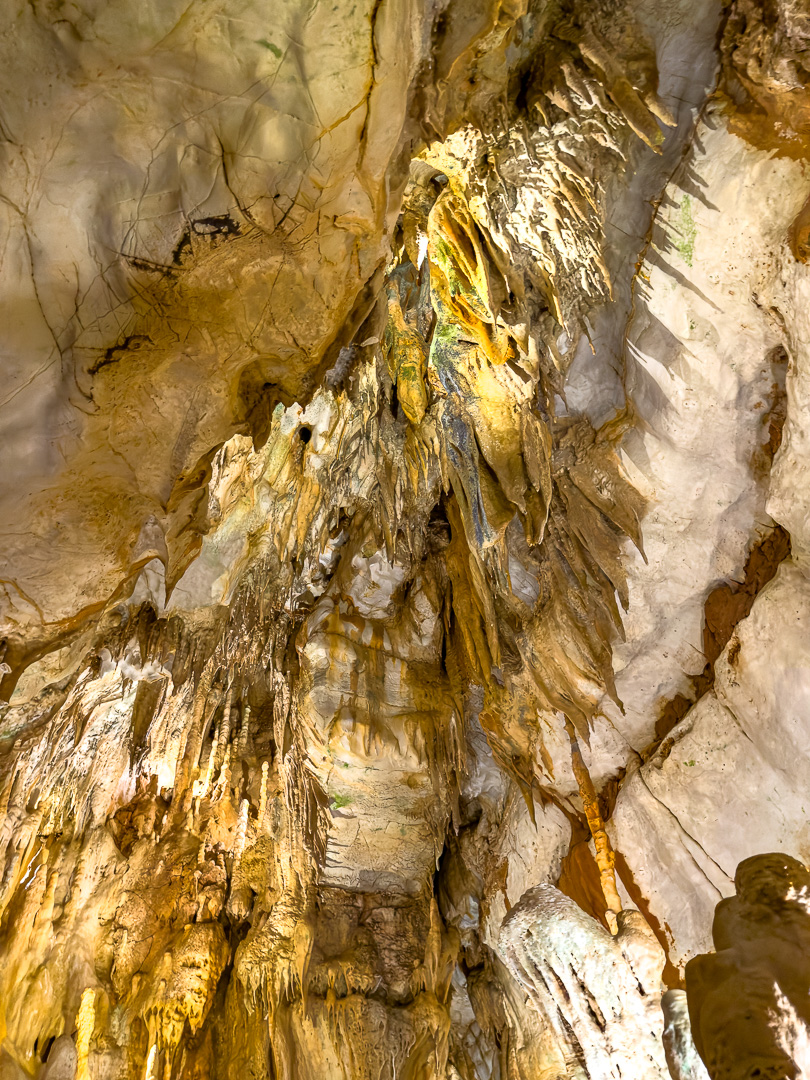
The Grutas da Moeda, or “Coin Caves” presented a nice, enjoyable interlude in our journey. They were not too expensive to visit (adults are 9 € or thereabouts) and they were well-lit through an easy route. They were also very pretty and the photographs really do not do them justice:
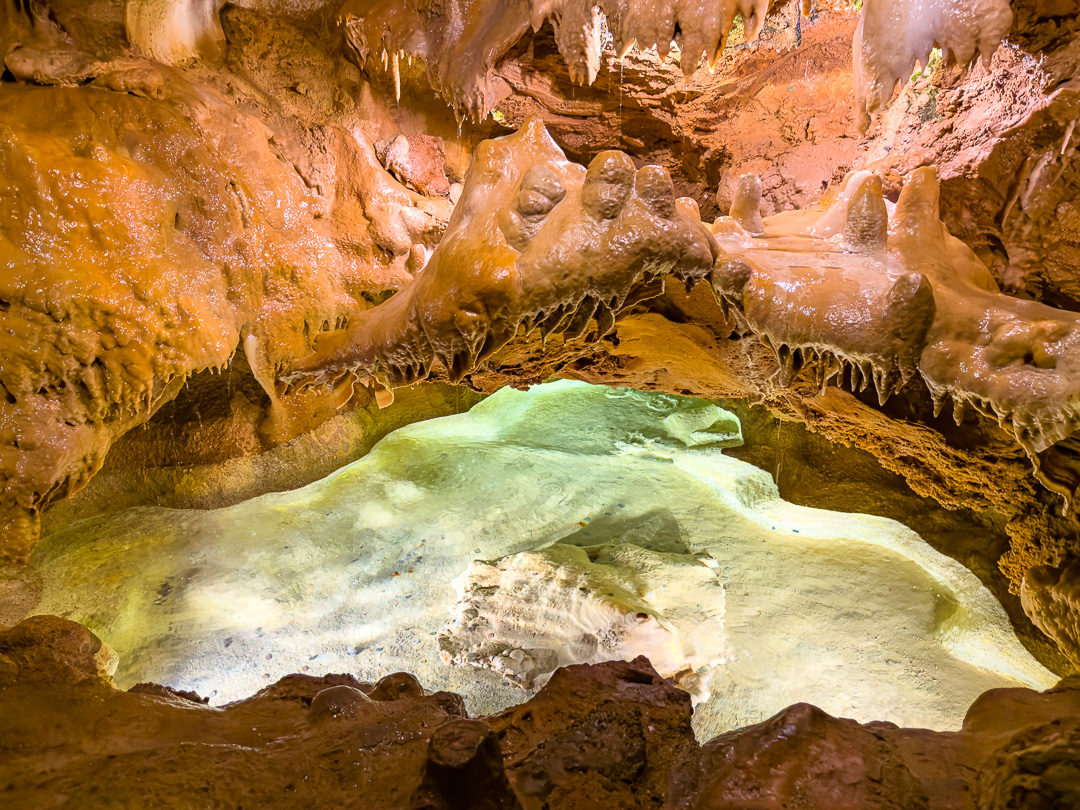
The caves are named, not because of the number of coins thrown by visitors into the various pools, but because legend has it that a man carrying coins was attacked by robbers and in the struggle, he fell into a sink-hole taking the money with him,


The Sanctuary of Our Lady of Fátima:
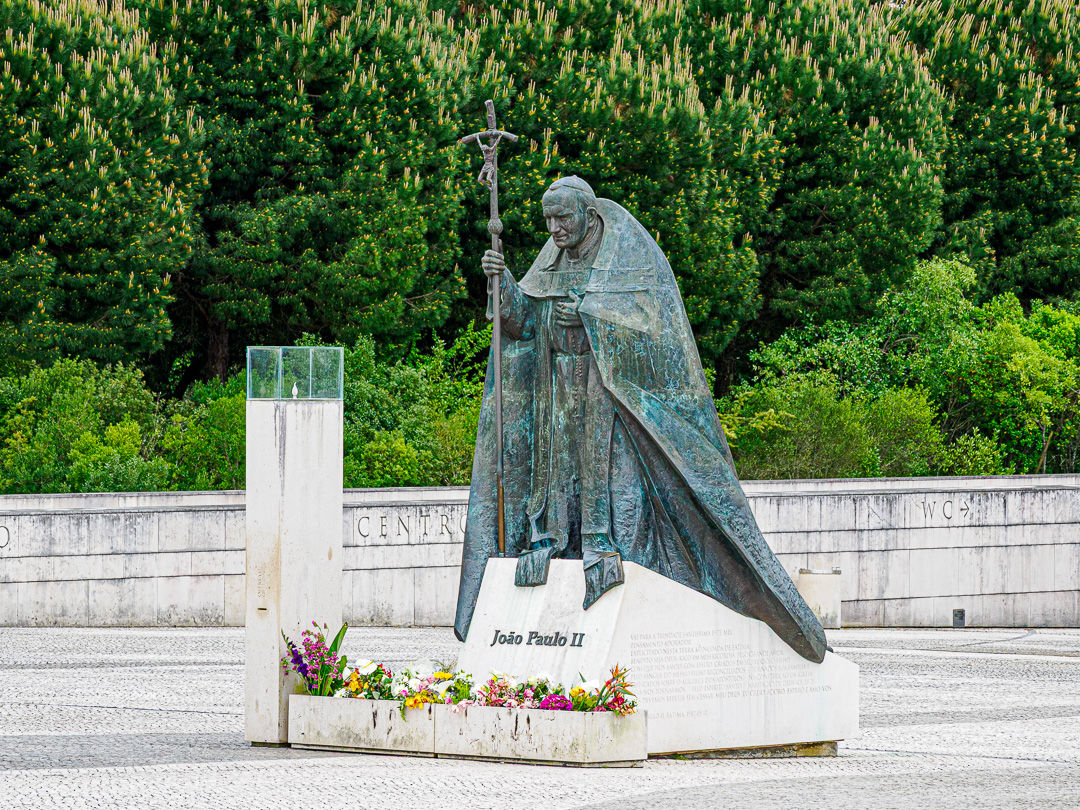
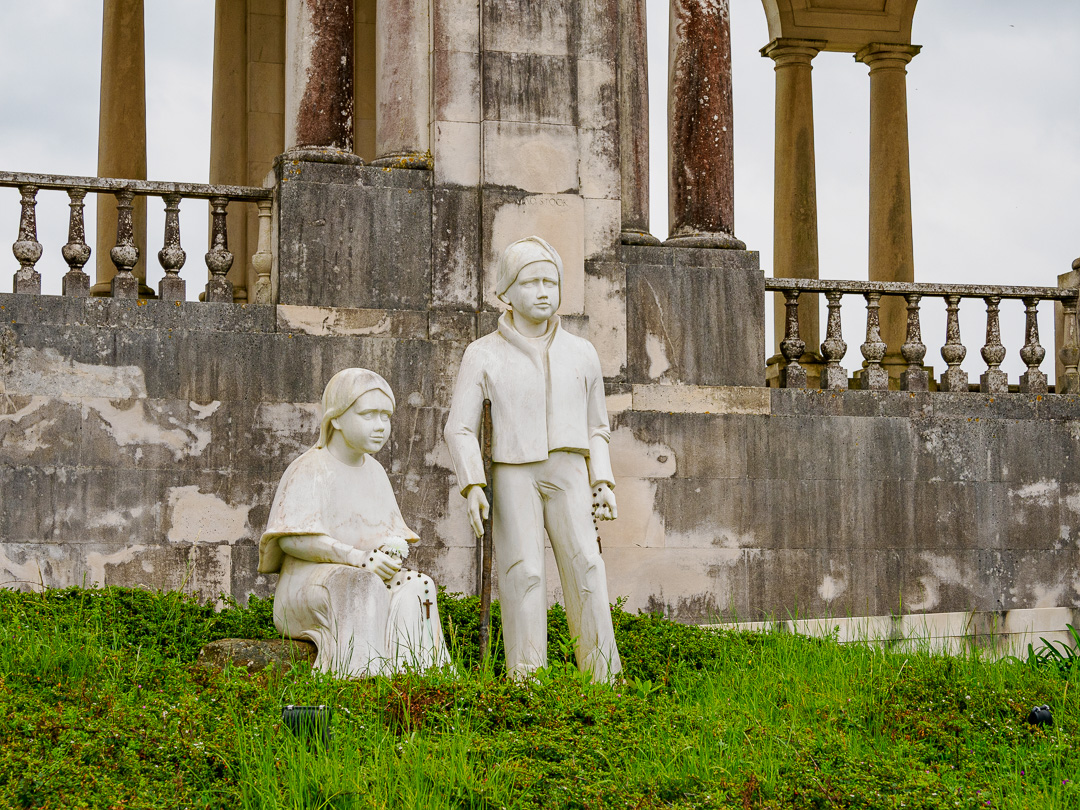
Fatima is a town which has developed as a site of pilgrimage, associated with Our Lady of Fatima, which was a series of apparitions of the Virgin Mary by three local shepherd children, which was later recognised by the Roman Catholic Church.
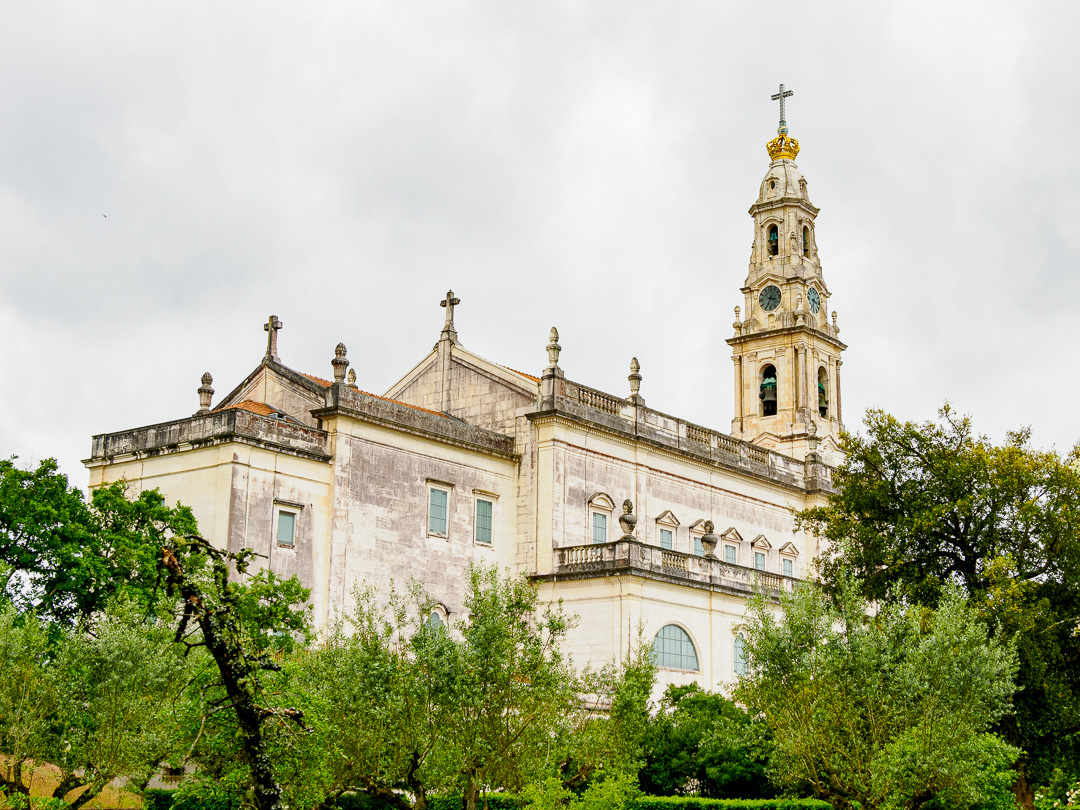
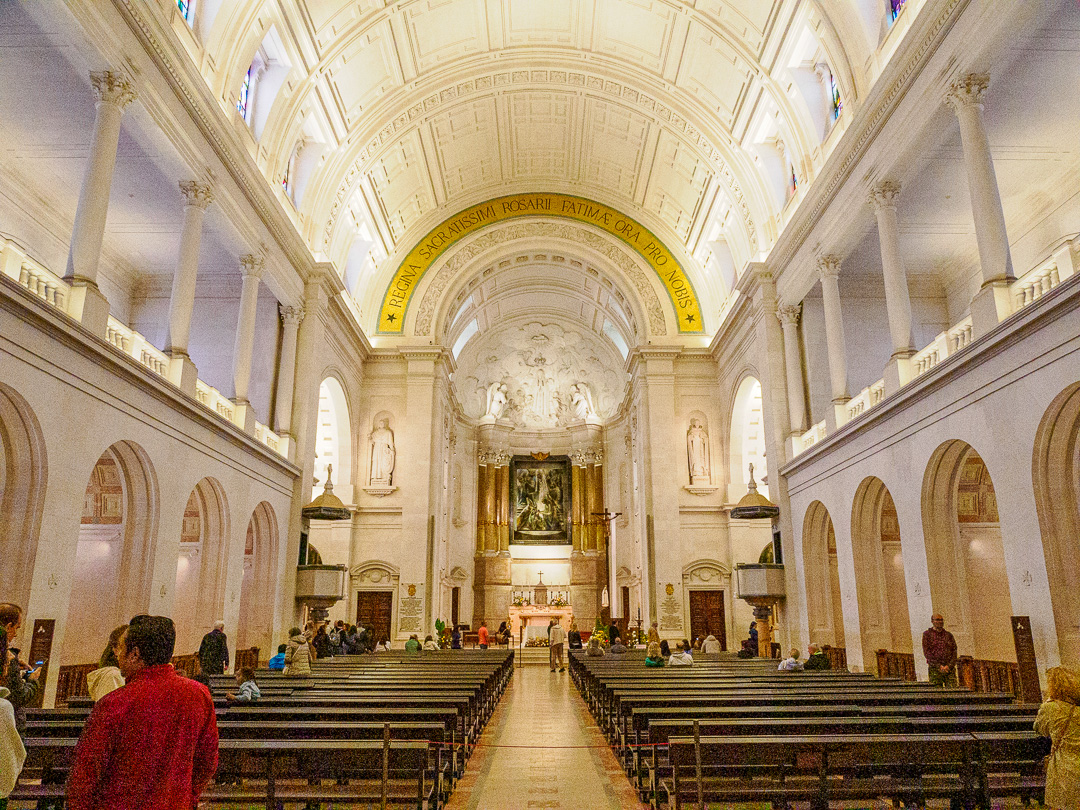
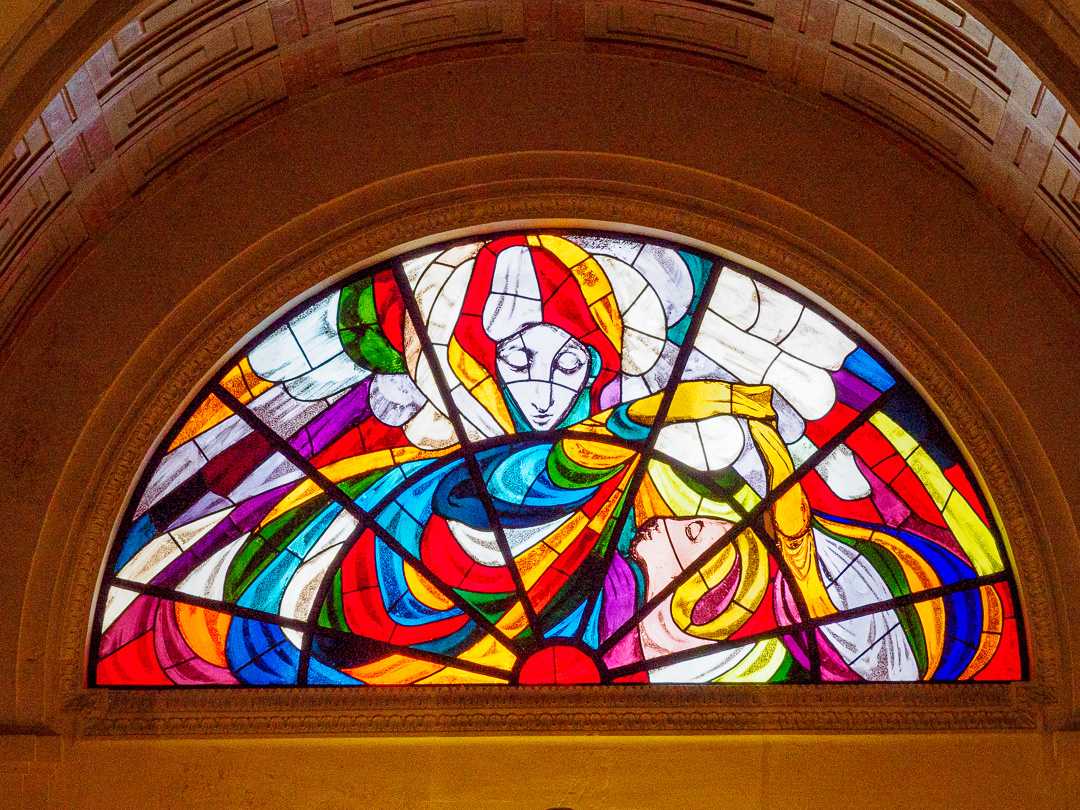
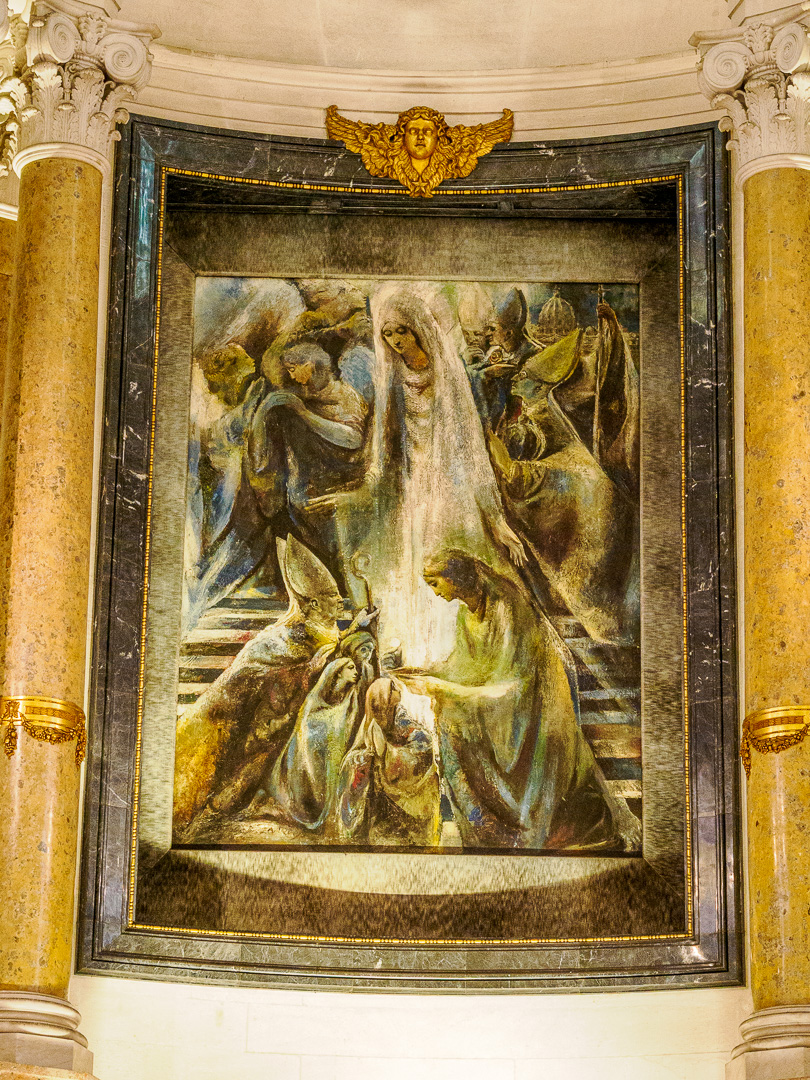

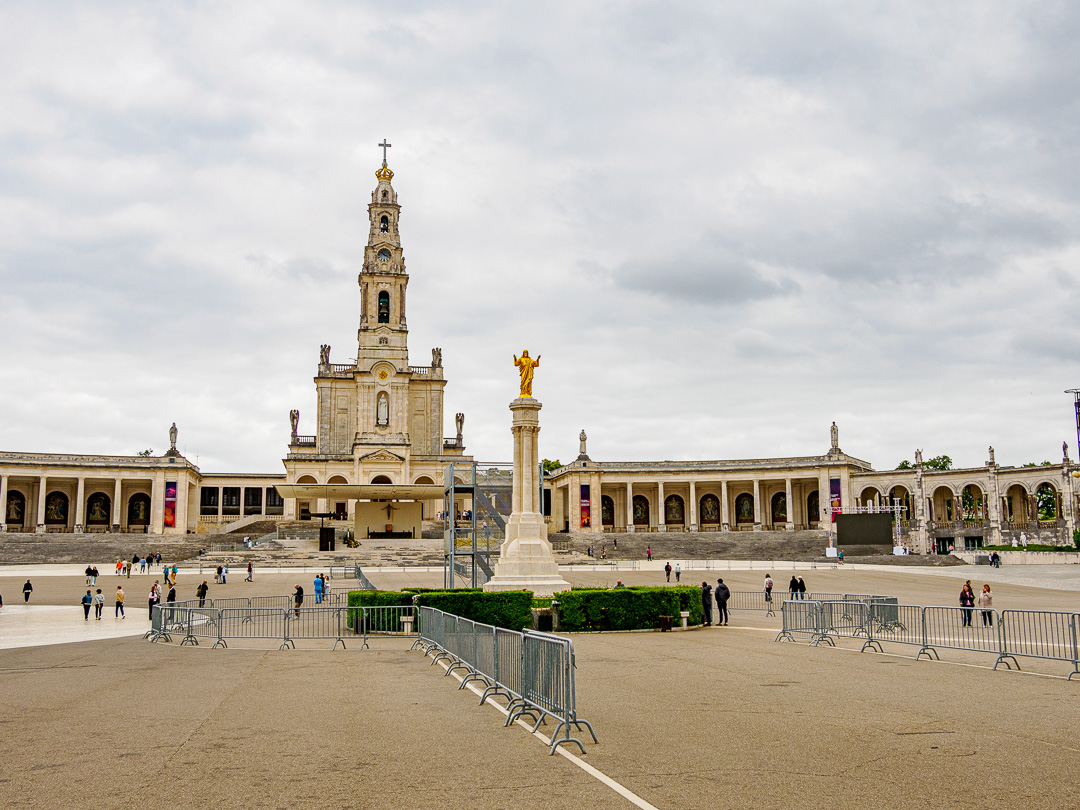
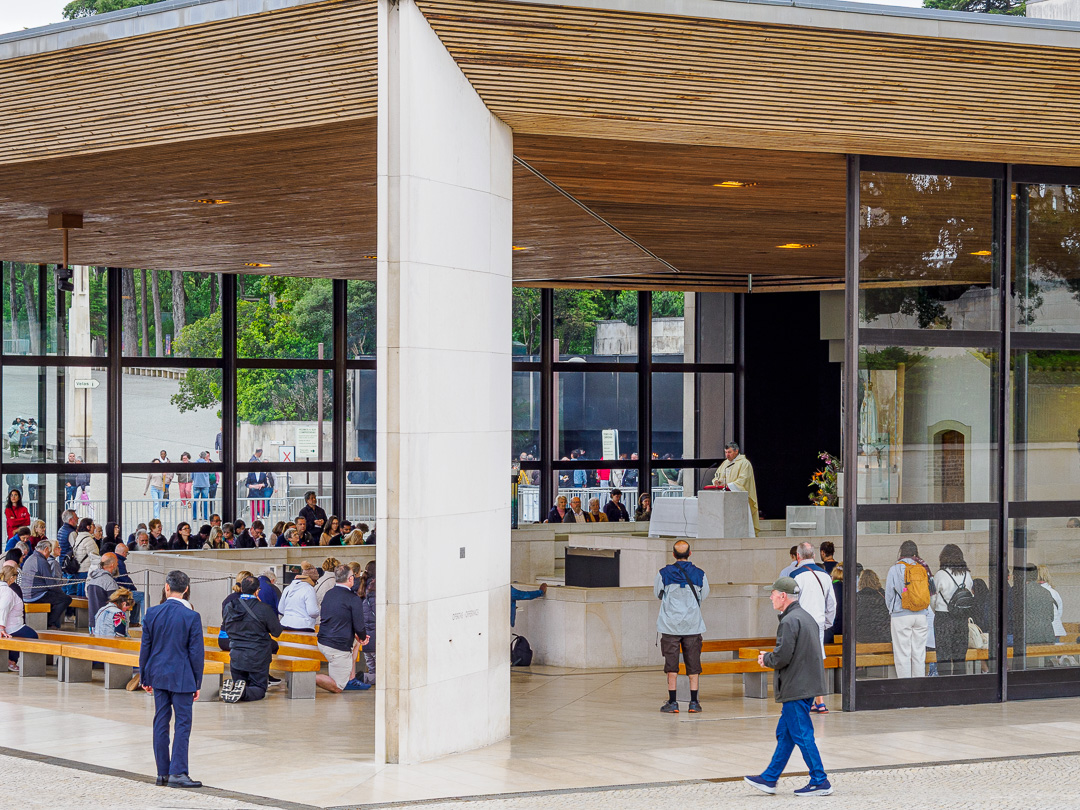
The site now houses a basilica and in front, a huge devotional space, where semi-open air masses are held and people traverse on their knees, with a prayer said at each step.

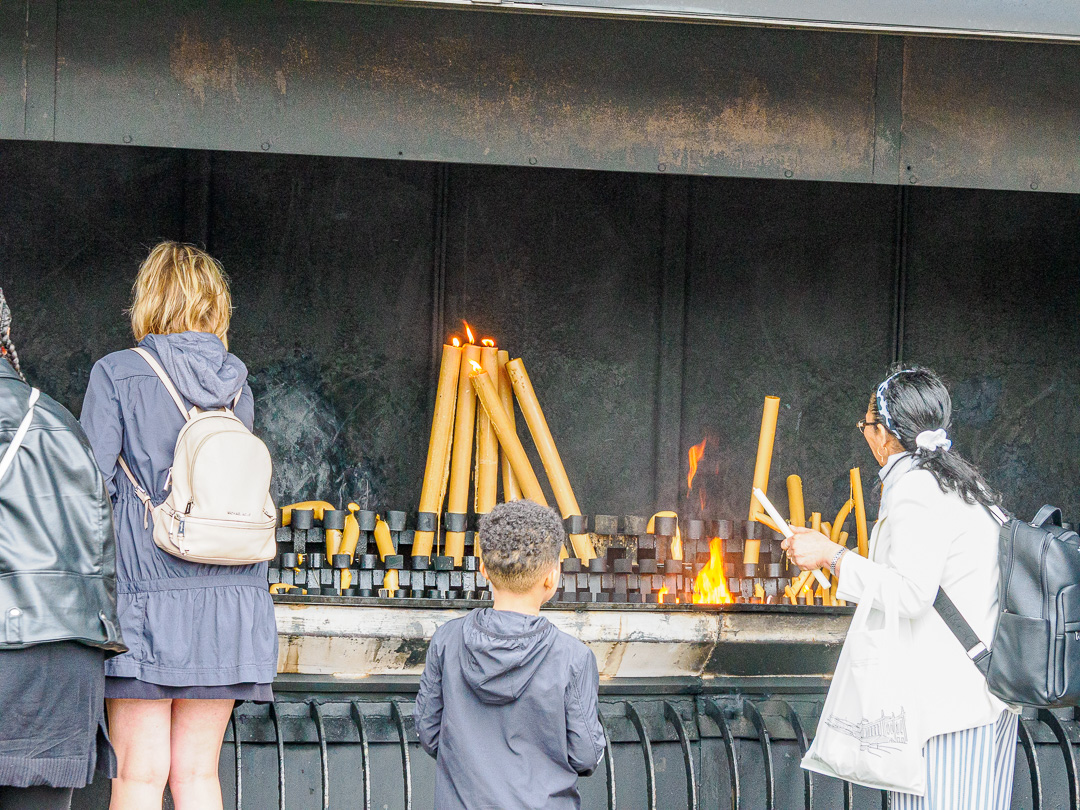
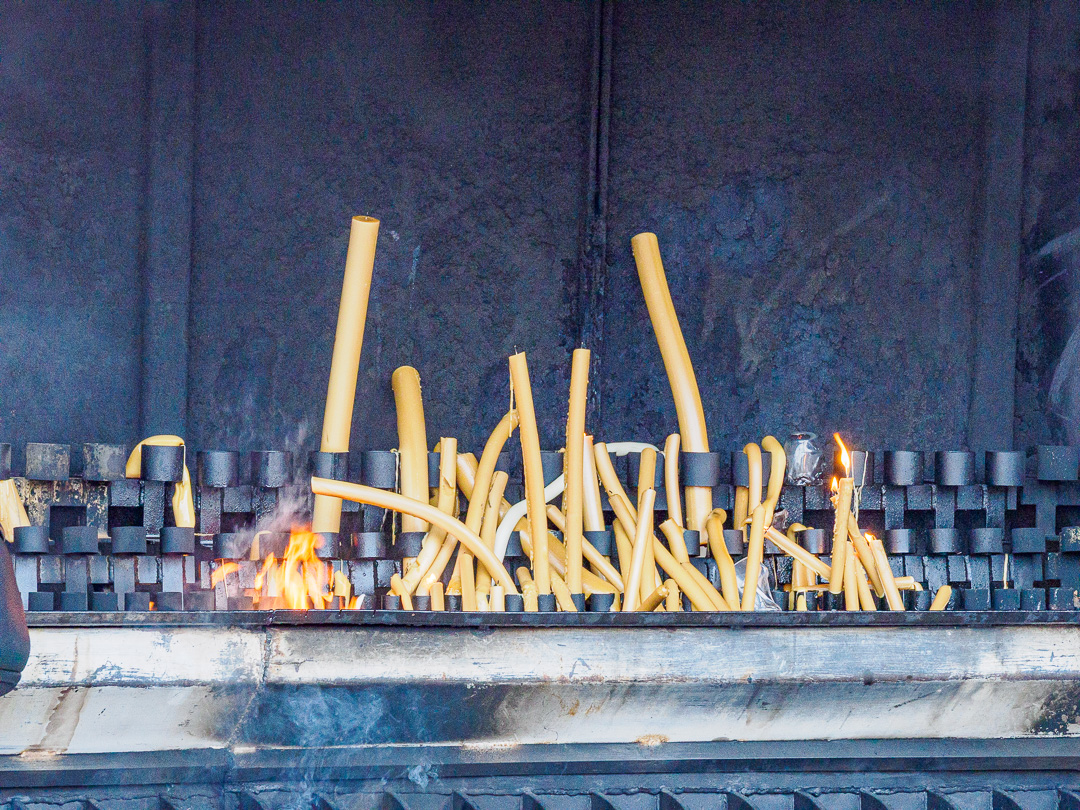
Many people were buying armfuls of candles and there was a huge hearth where these were being burned. Such was the heat, that most were melting and burning together, resulting in fire and smoke.
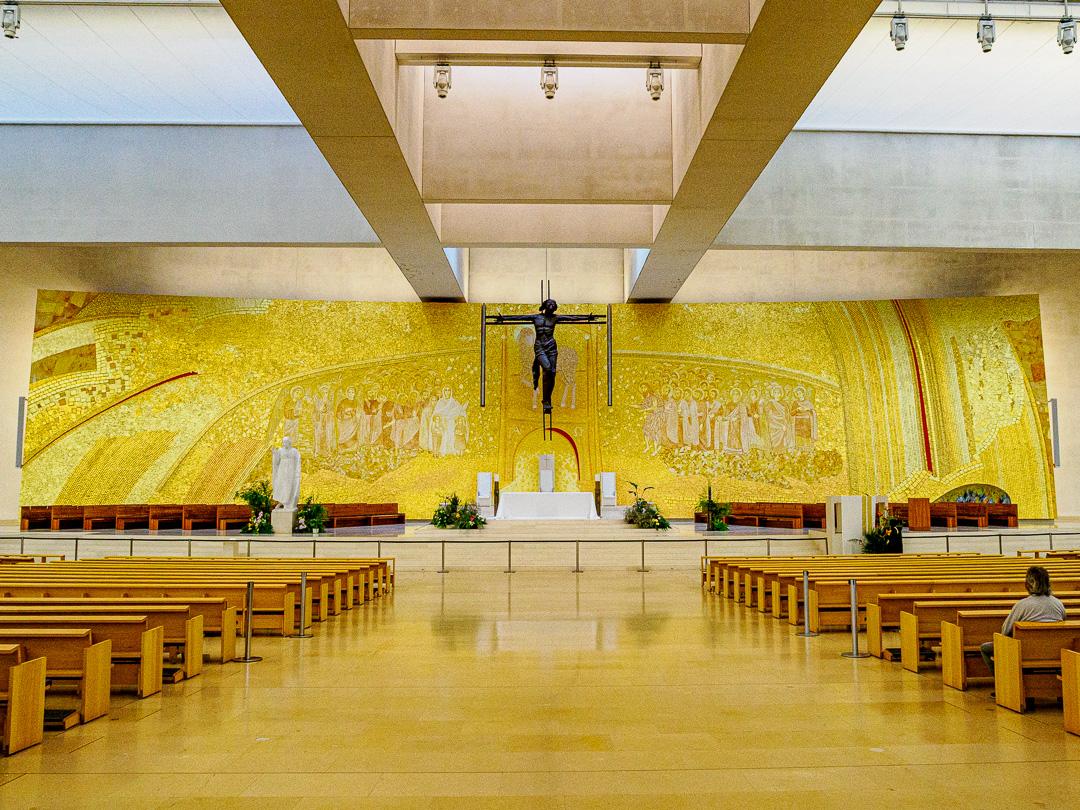
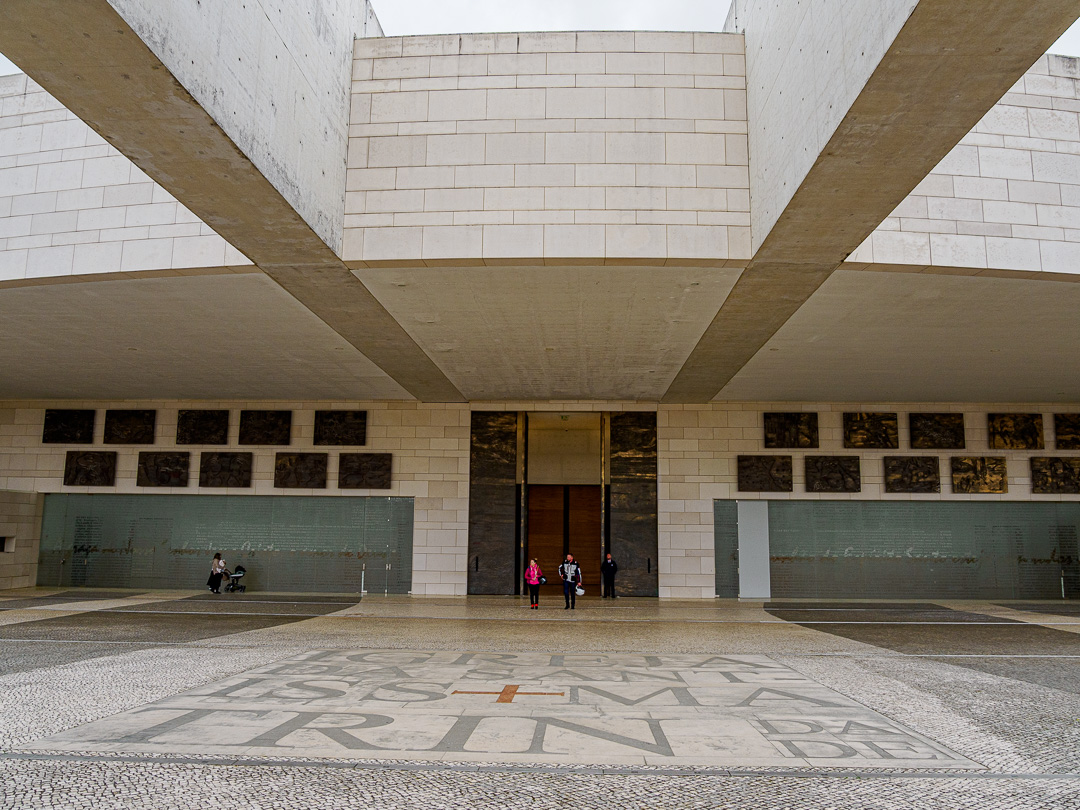
Beyond the open space is another, huge, very modern church, built in a large arc facing the altar:

That is it for today. See u Later, TTFN.
 "See-u-Later"