Tuesday 22nd August 2023
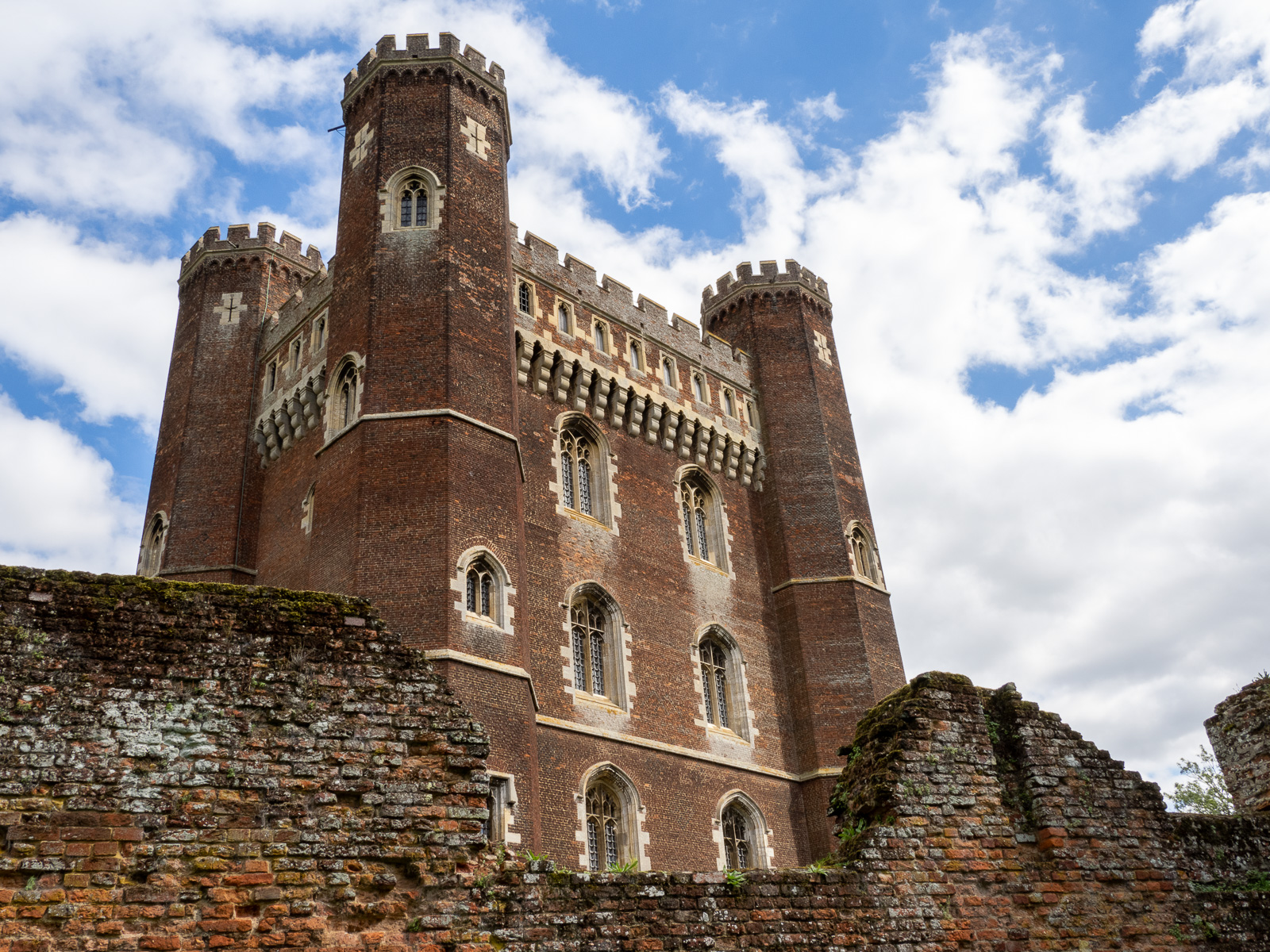
We stopped to visit the impressive Tattershall Castle, after leaving Hose on our way to Woodhall Spa a little further north. It is a moated castle that is unusual in that is is built of brick. An earlier building, probably built of stone in around 1231 by Robert de Tattershall, was replaced by the current structure between 1430 and 1450 by Lord Cromwell, Treasurer of England. At nearly 600 years old, it is one of the most impressive brick built buildings of medieval times.
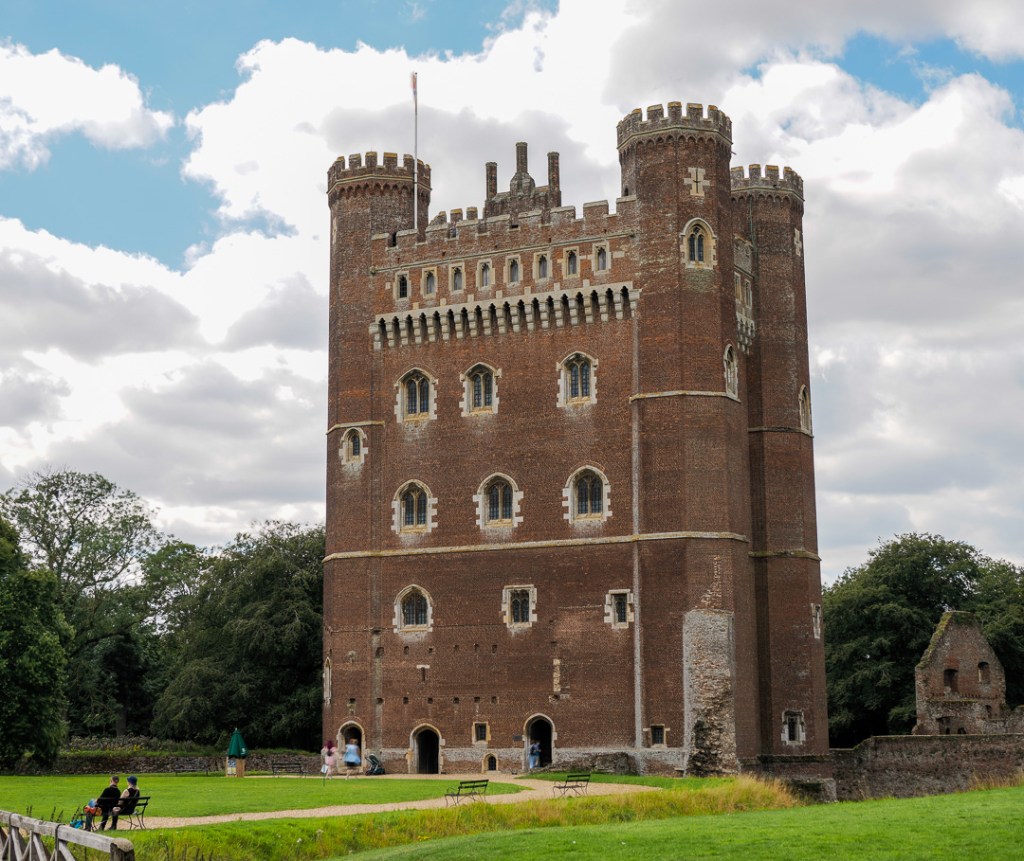
There is a bridge across the moat which you cross to access the tower which has seven levels, accessed via three separate entrance doors. The door on the left, leads immediately to a spiral staircase providing access to all the upper floors. The right hand door leads through to the ground-floor “Parlour” and the middle door to a staircase down to the cellar which was used for storage:
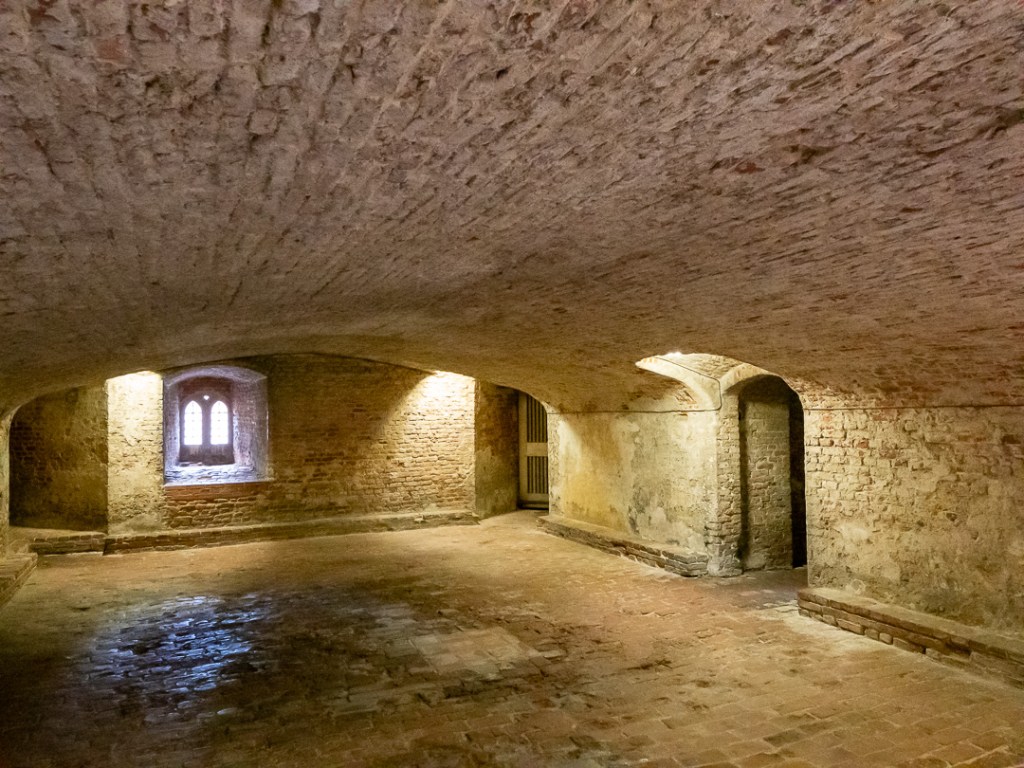
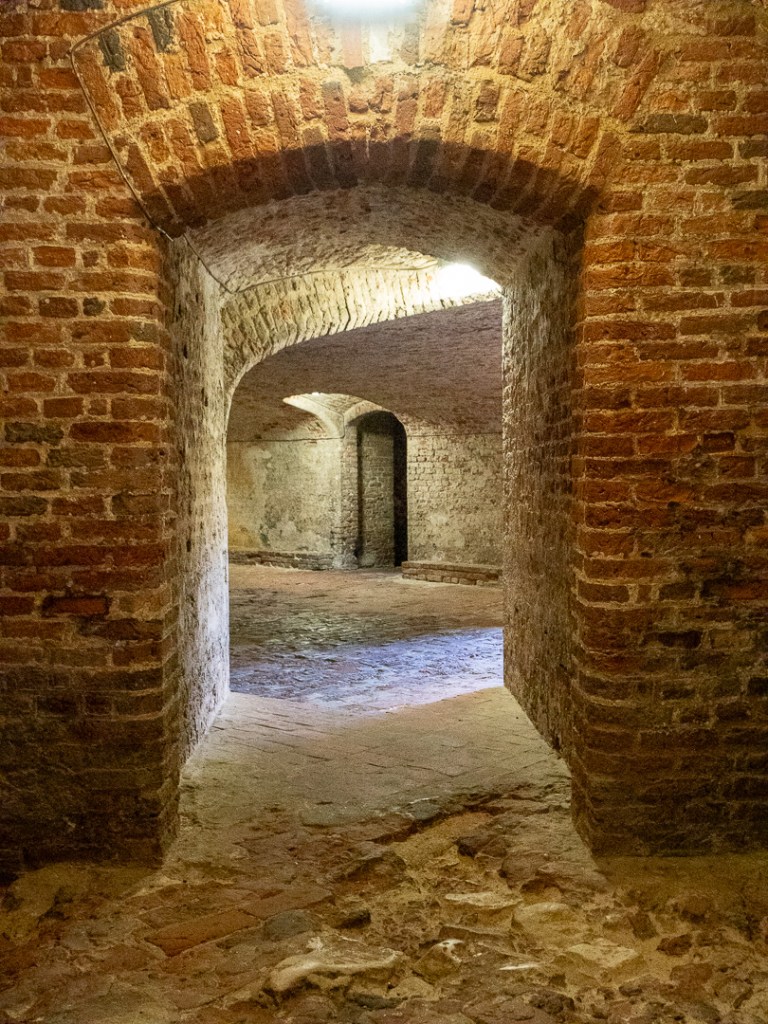
The Parlour has its own entrance to the castle and is not linked to any of the other levels. This is where the High Steward would run the estate from, with the collection of taxes and rent, buying goods etc.
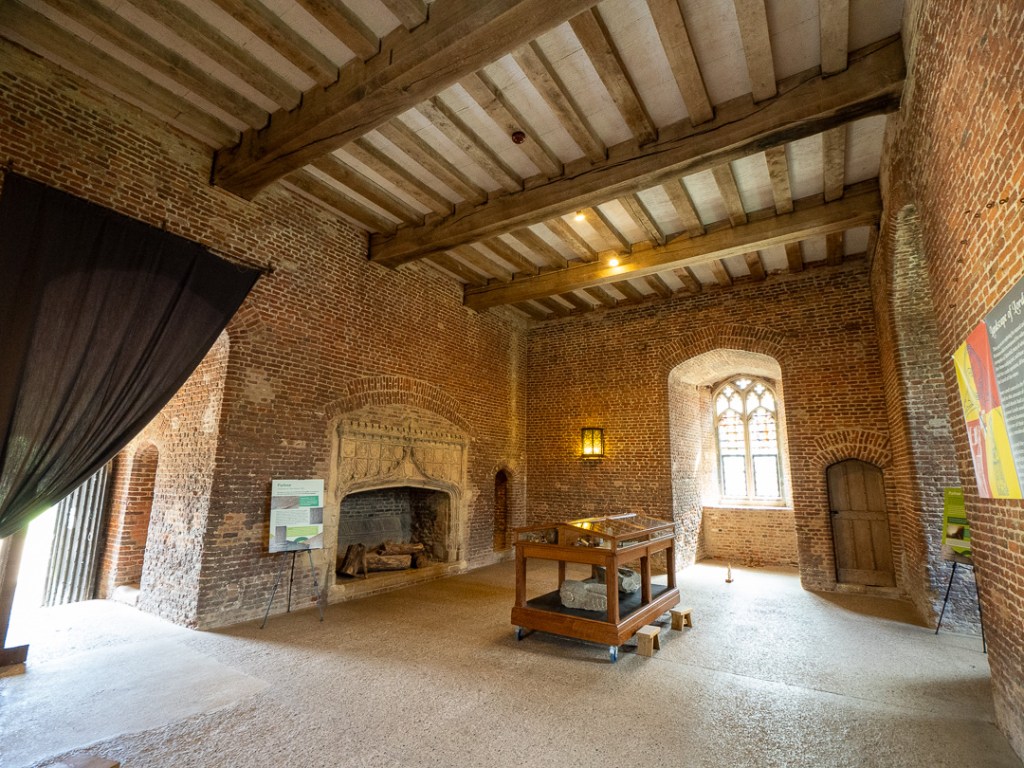
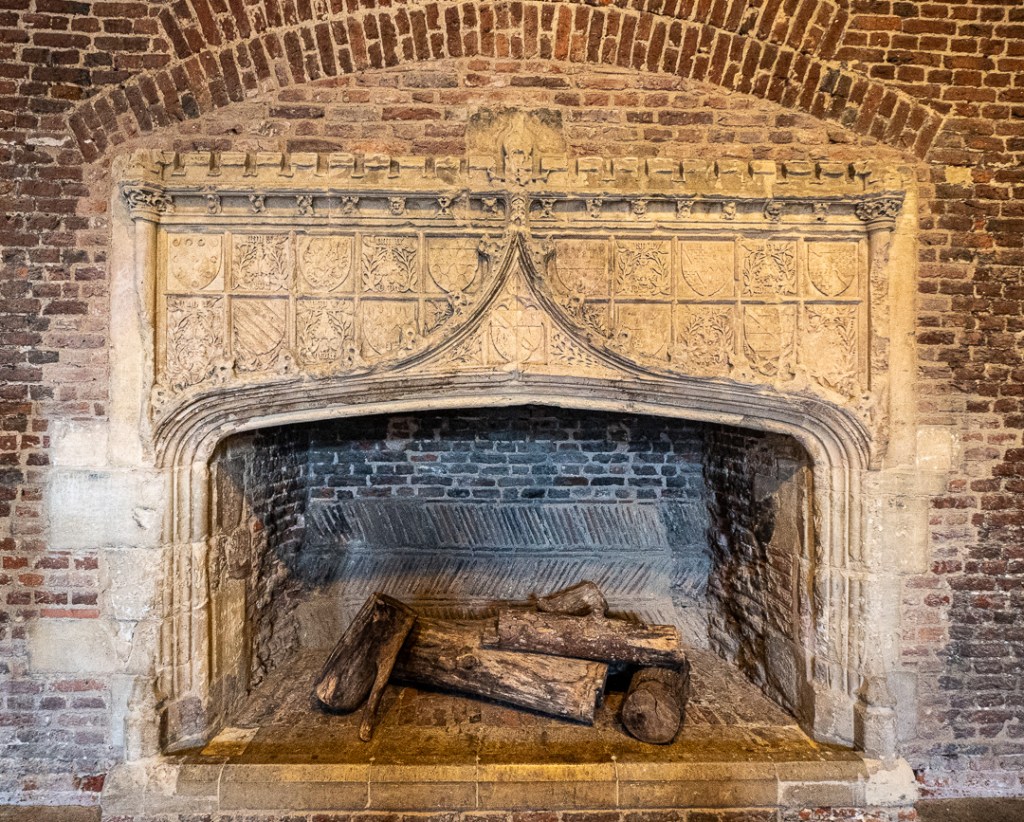
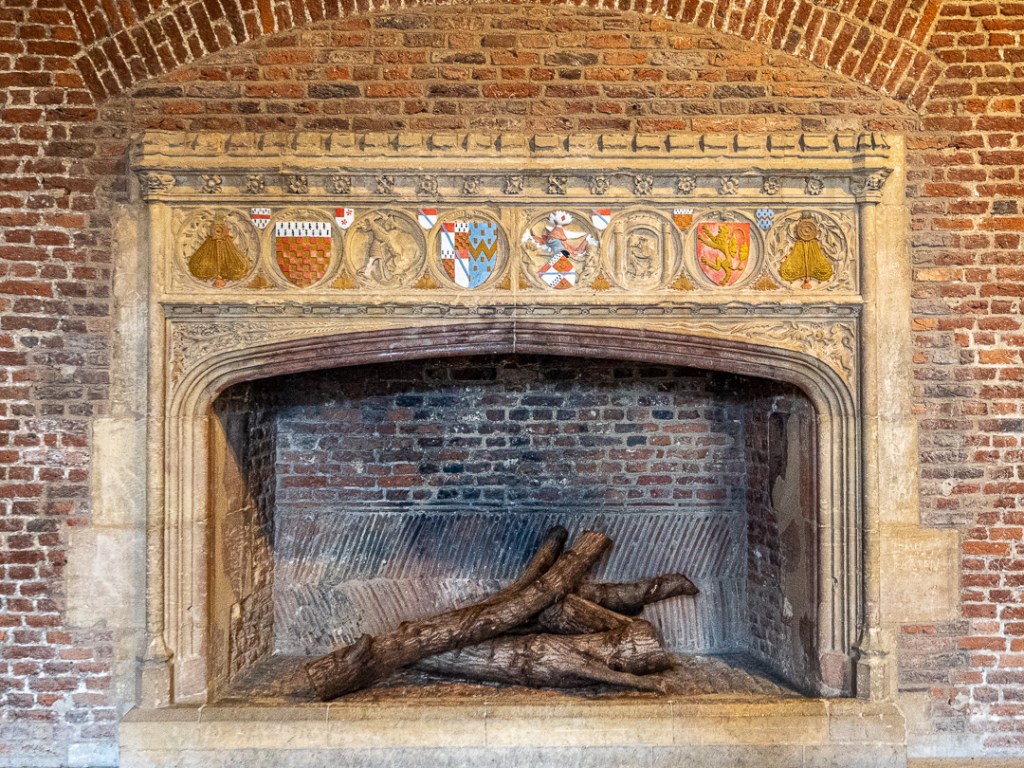
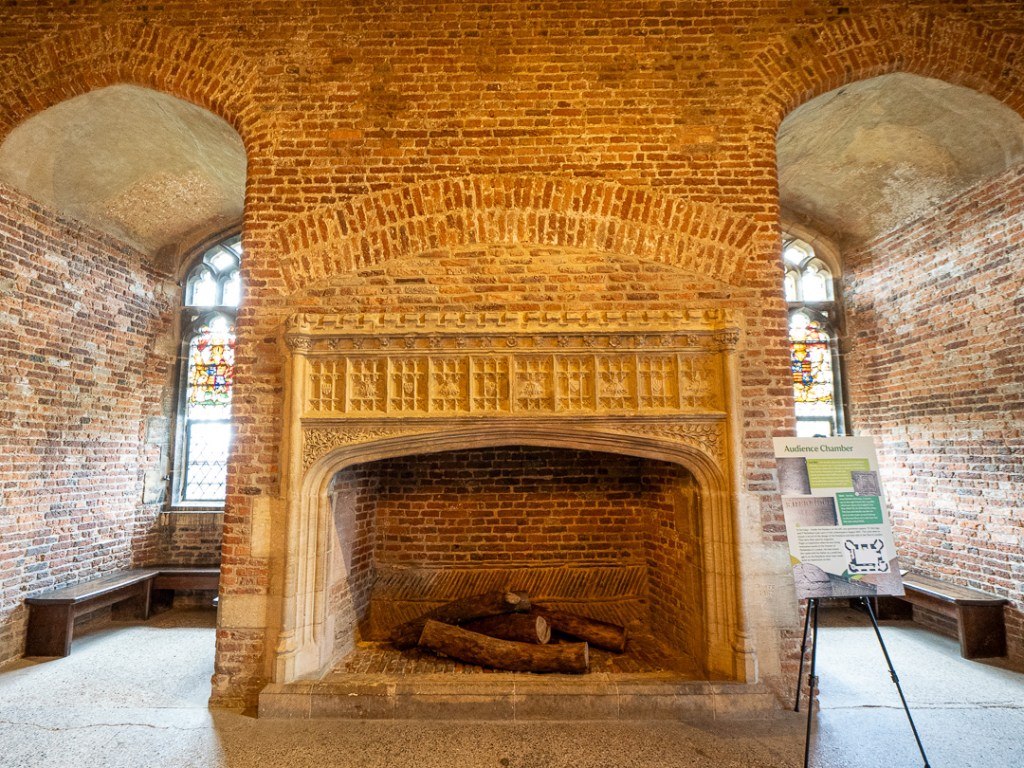
Each floor has a fireplace and the one in this room was designed to impress any visitors. It displays the coats of arms of past owners of the castle and Lord Cromwell’s personal symbol of the Treasurer’s purse, with his motto, translated as “Have I not the right”.
The tower has an overall rectangular footprint, with a turret at each corner. The front left hand turret contains a spiral staircase, but the other turrets provide additional small rooms at each level.
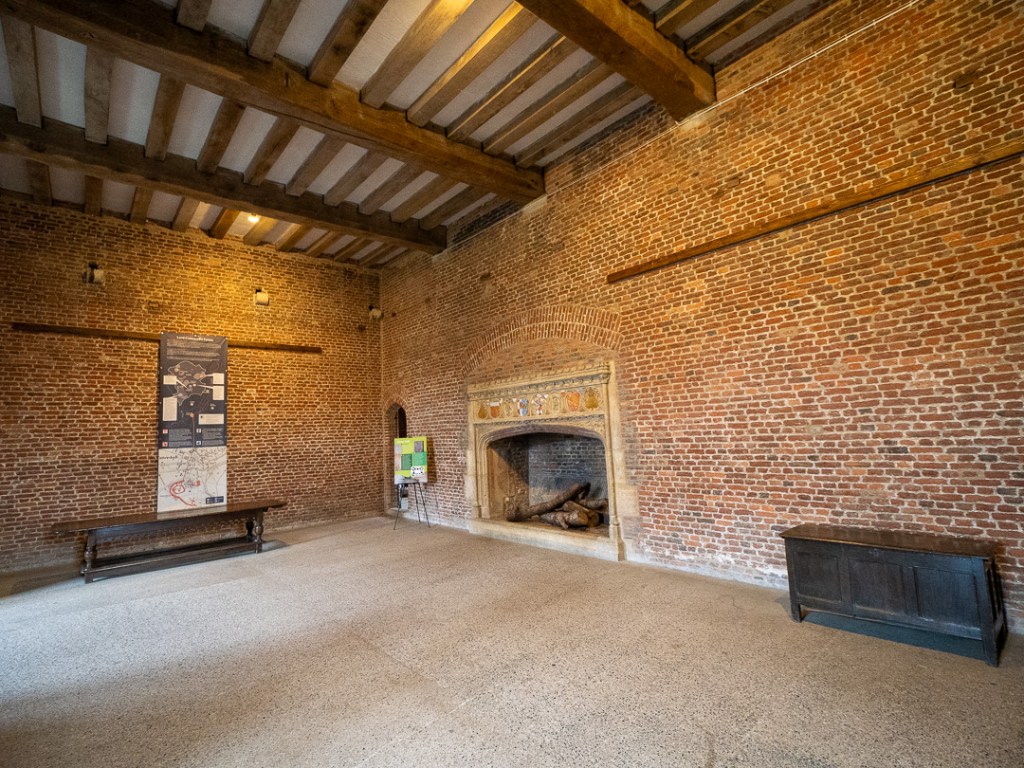
The first floor accessed by the staircase is the Great Hall which was Lord Cromwell’s dining room, used for family and guests; it linked across the staircase to the kitchen, a separate building alongside the tower. It was built this way as kitchens were a constant fire risk. The kitchen is no longer there, so the access is now closed.
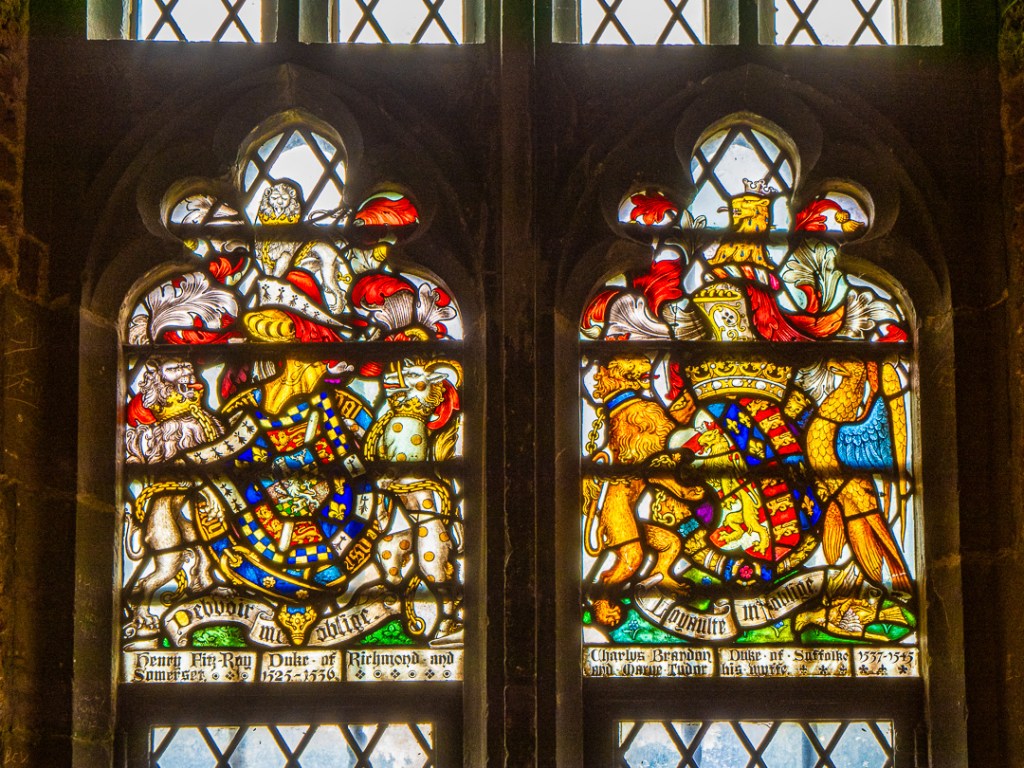
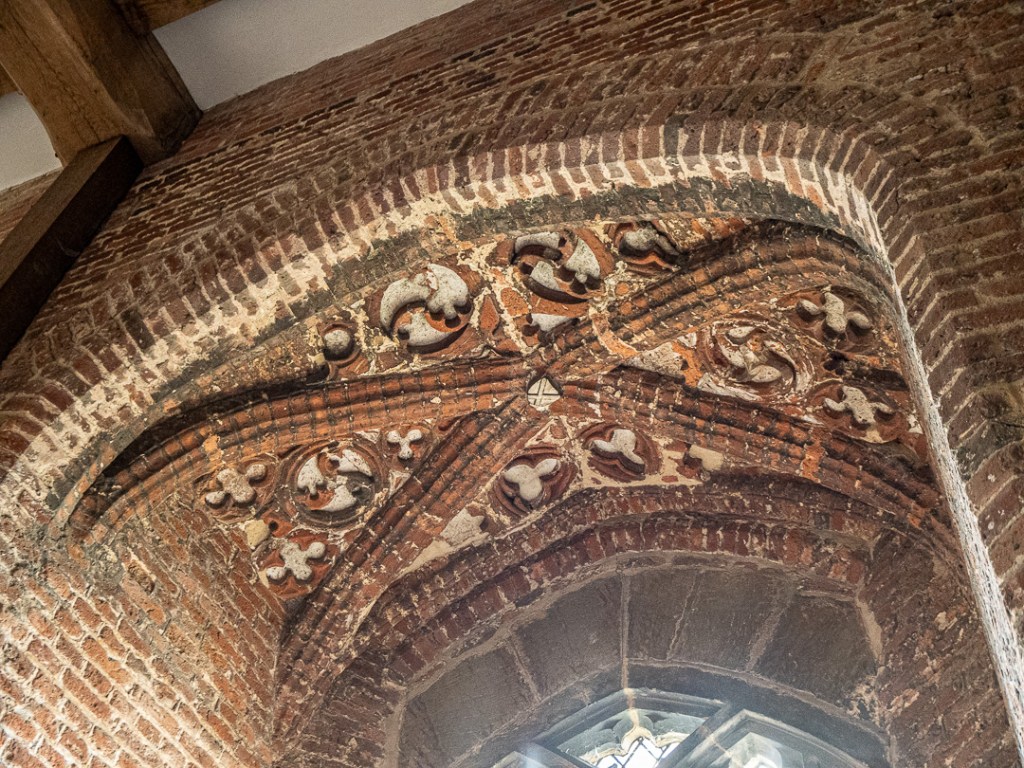
A feature of each of the main rooms in the tower at each level, are the stained glass windows which also bear the coats of arms of the castle’s owners:
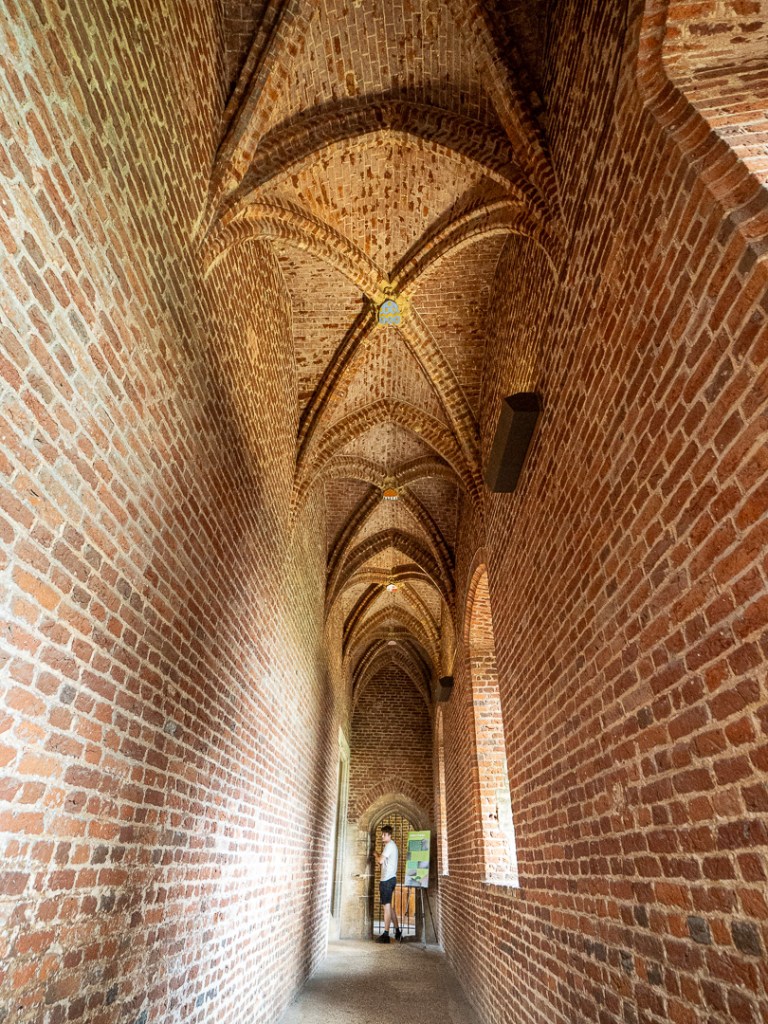
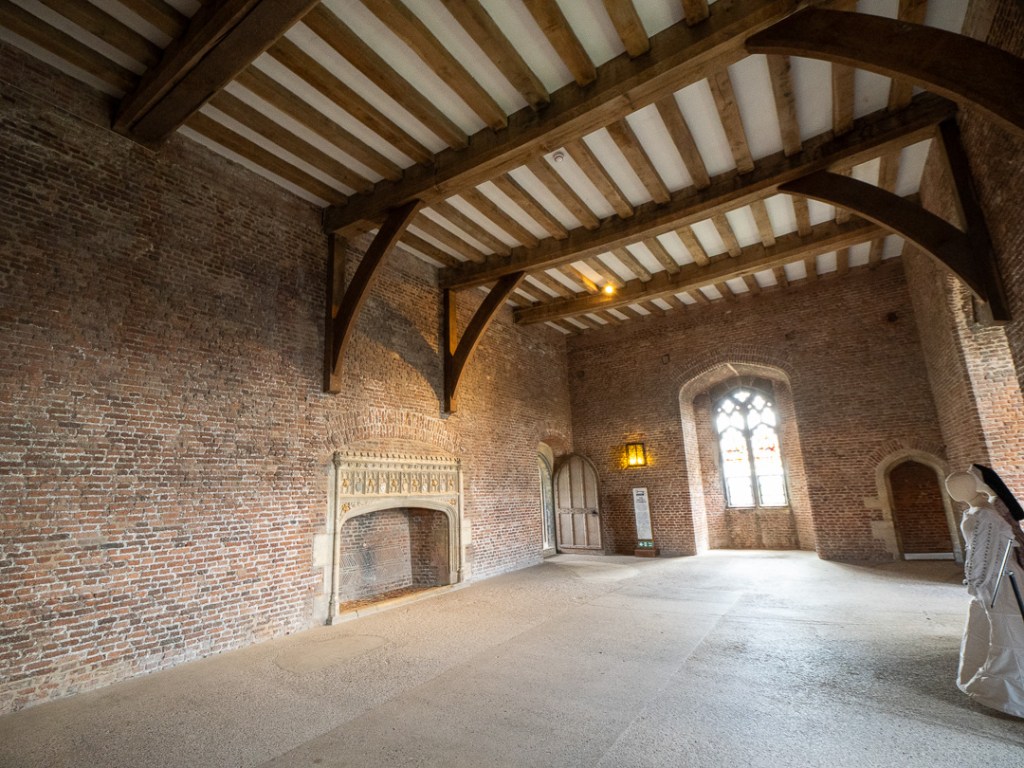
Above the Great Hall, on the second floor, is the Audience Chamber, created for ceremony, those visiting Lord Cromwell would by taken down a corridor from the staircase before entering the room.

The tapestries and period furniture were purchased by Lord Curzon in 1914, to dress the room after its renovation.
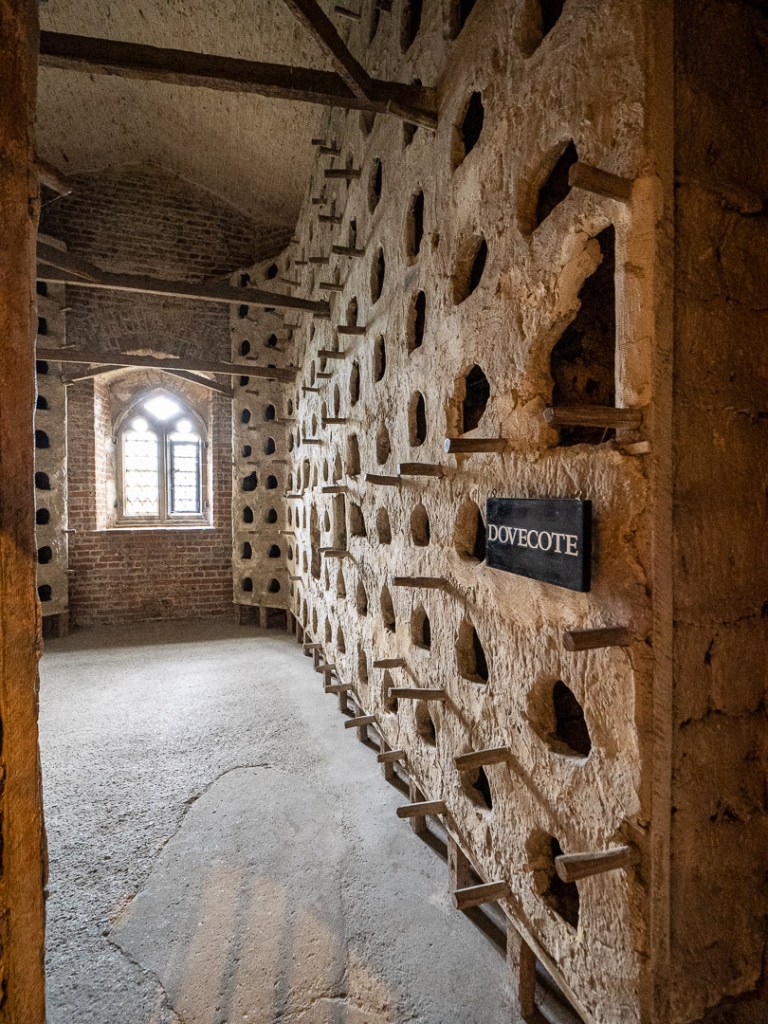
In the south eastern turret has a dovecote which was added in the 18th century, by farmers in the period when the tower was in ruins. This would have been the entrance to Lord Cromwell’s private garderobe.
The third floor is the Private Chamber, where the Lord would have retired for the night.
Above the third floor Private Chamber, there are a further two levels, the roof and the battlements:
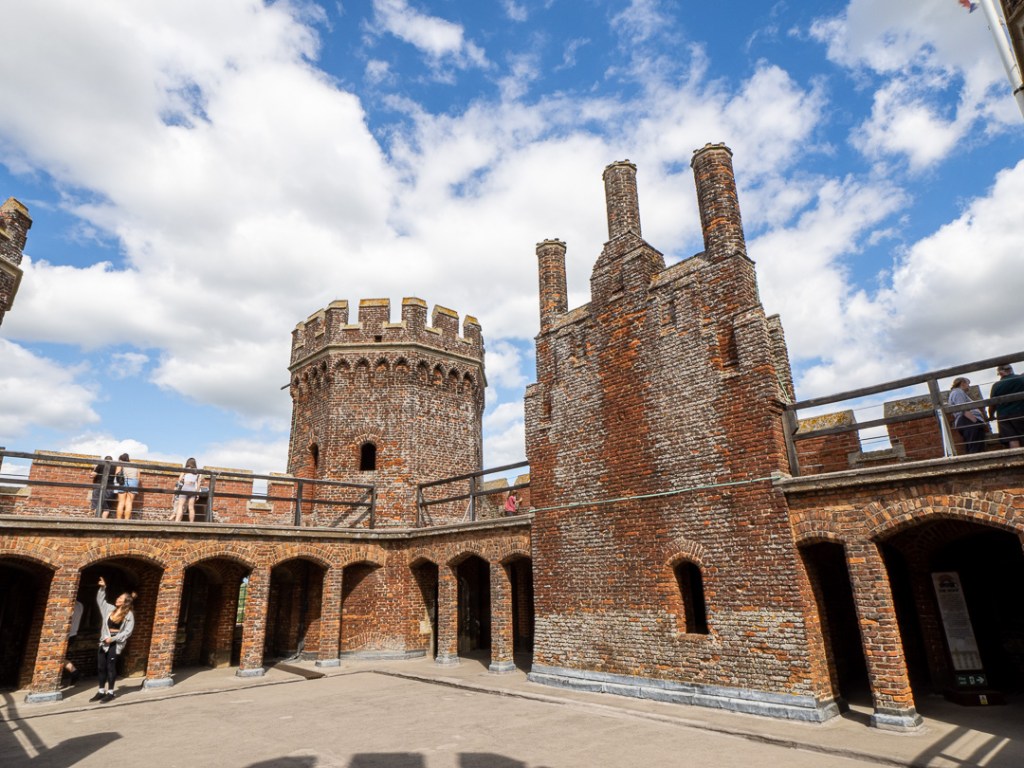
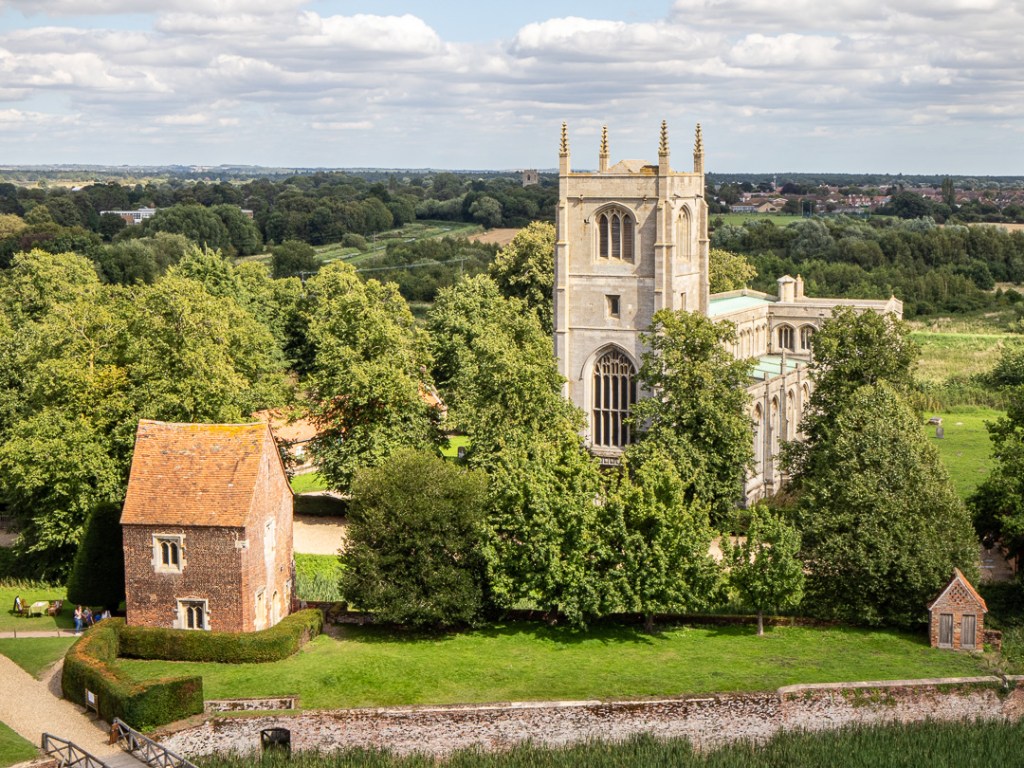
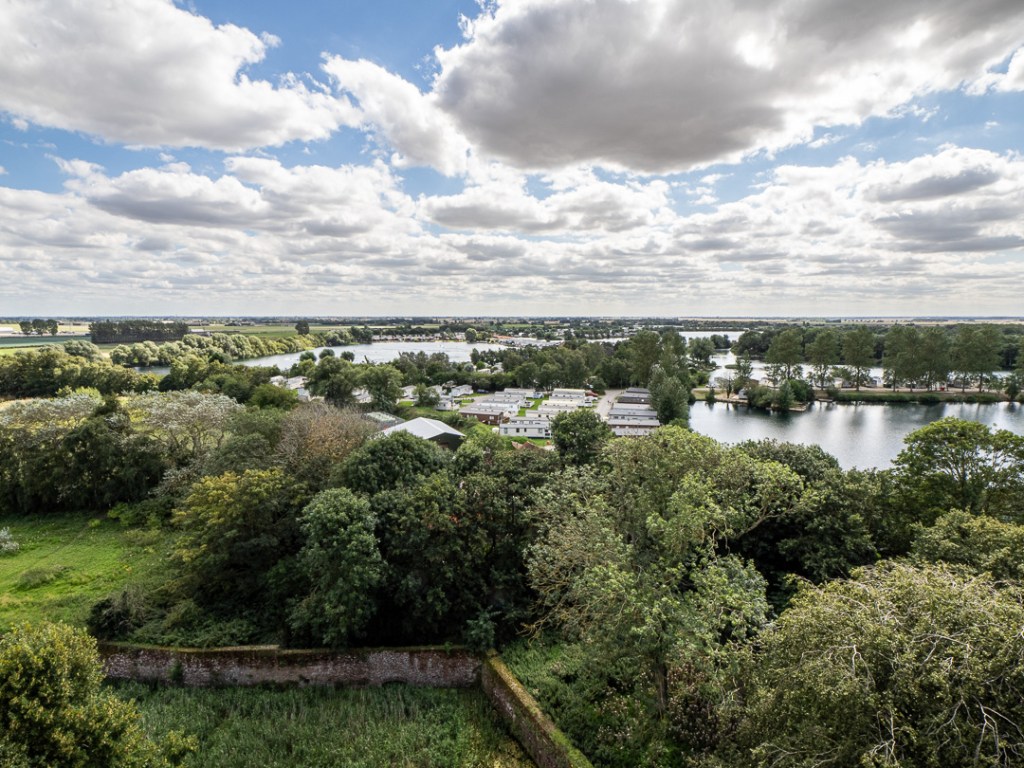
In the flat landscape of Lincolnshire, the tower could be seen for miles and this was in itself, a powerful statement of wealth and power. You can also see for miles in all directions:
Brick is the main construction material throughout the building and there are about 700,000 used in its construction. Cleverly, the walls are much thinner as you go up the tower. Brick was the choice of Lord Cromwell, but there are some stone features, such as the fireplaces, window surrounds and the spiral staircase.
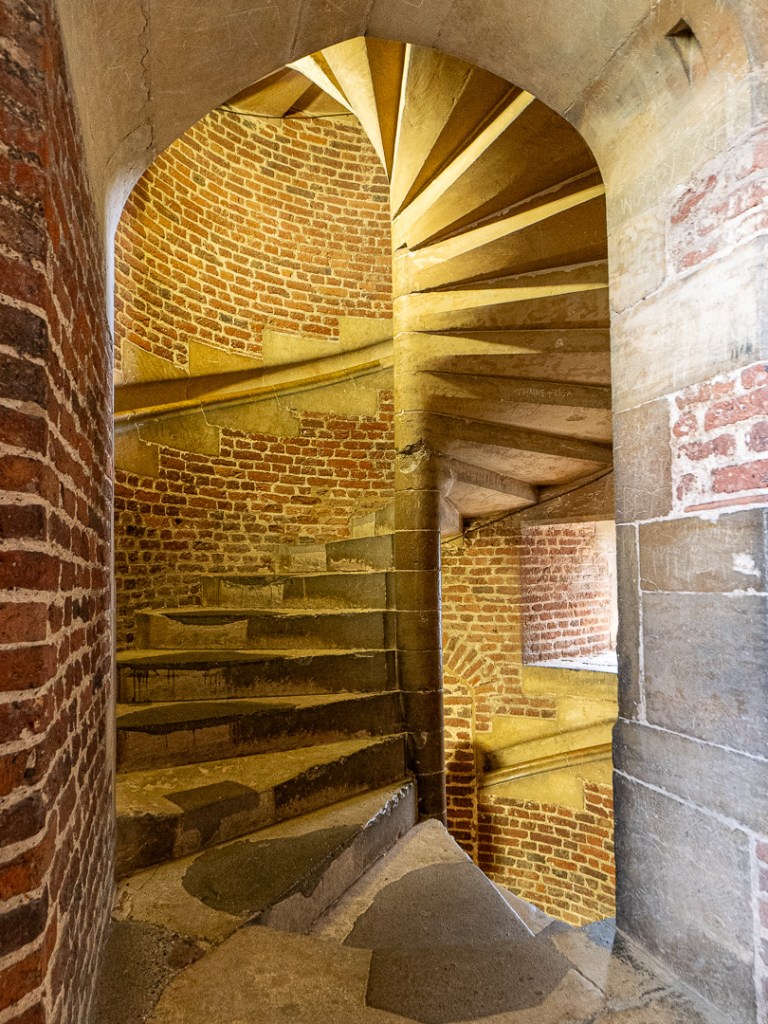
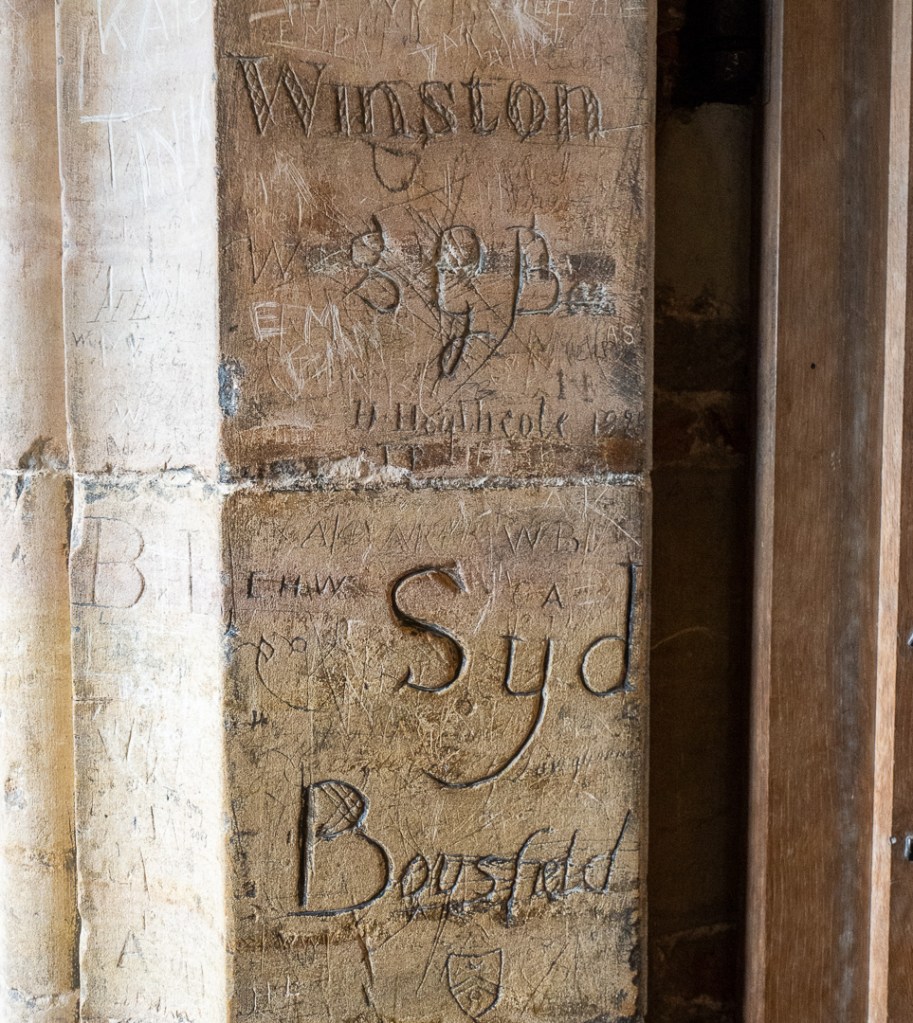
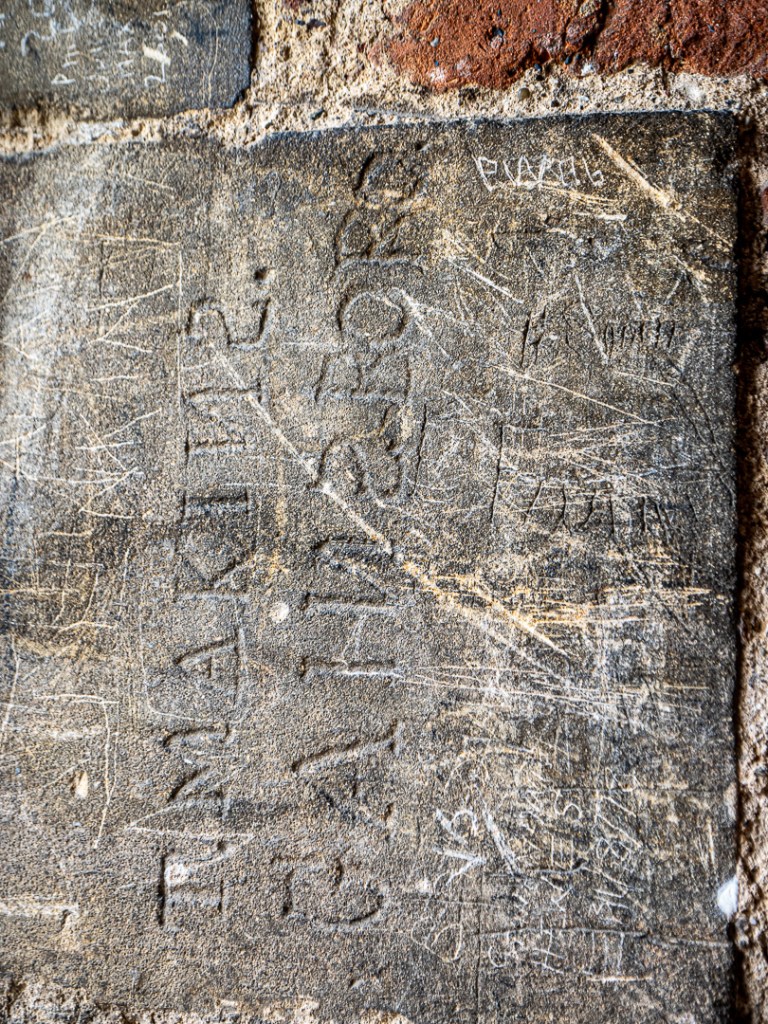
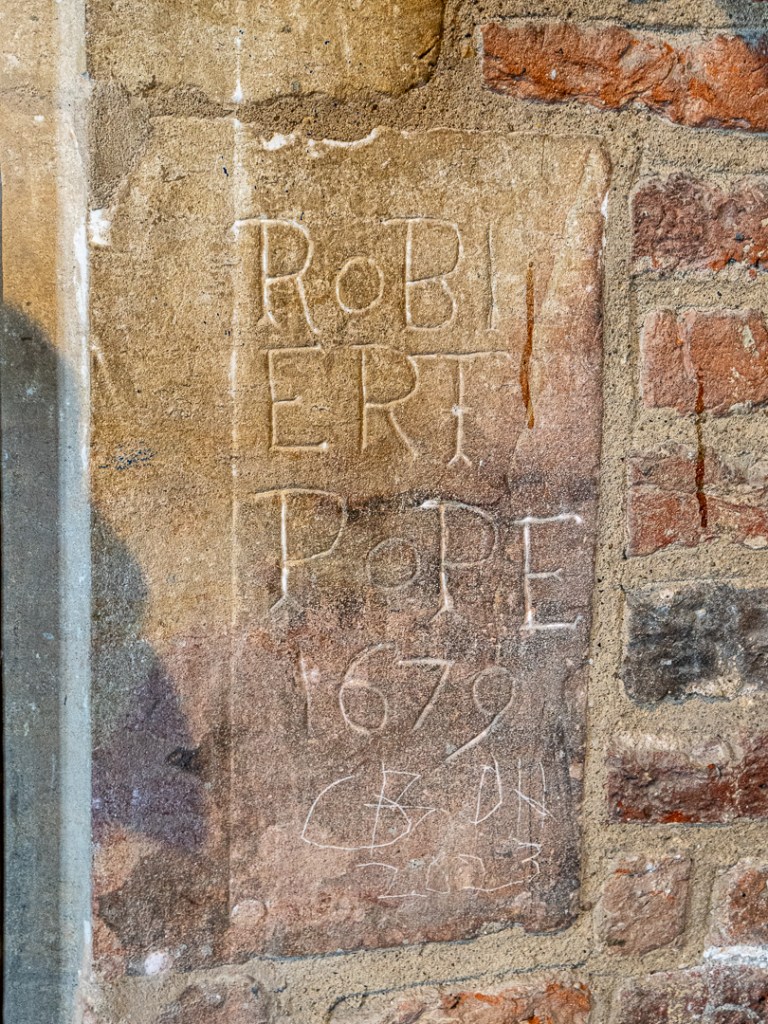
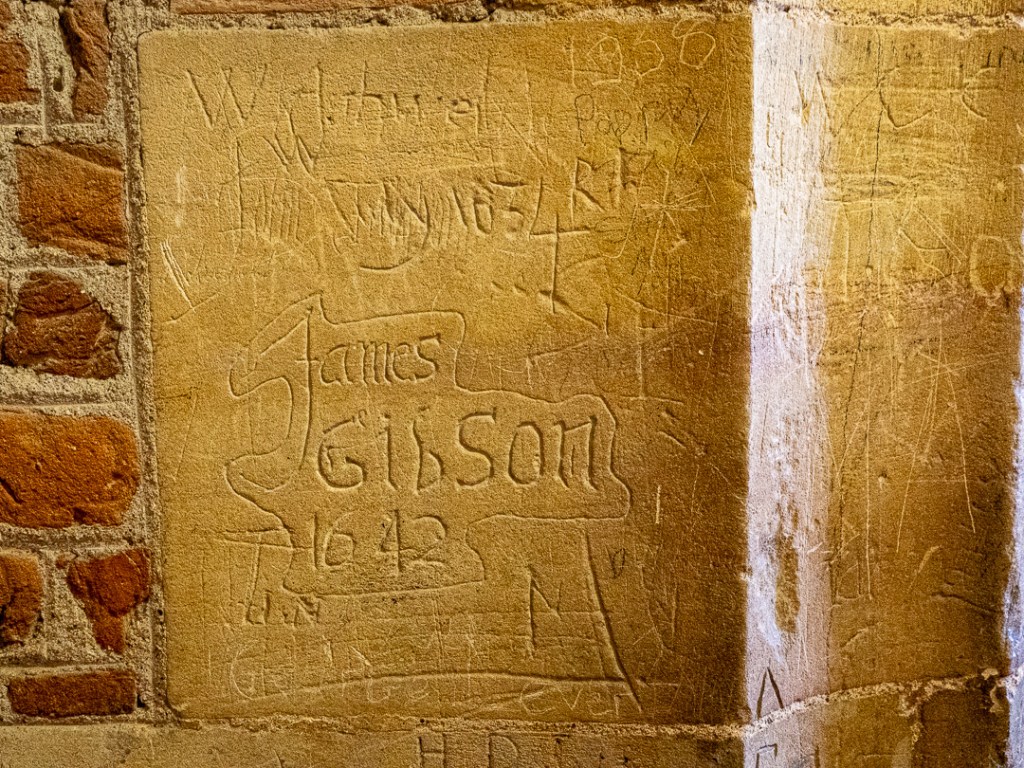
Many of the stone surfaces bear graffiti, etched into the soft stone, some of which date from the early 1600s. The building is in the care of the The National Trust, who make a feature of the graffiti, pointing out some good examples, but they also discourage adding further contemporary examples:
Visiting with a Motorhome:
There is access to the site with a gated car park adjacent to Holy Trinity Collegiate Church, about 150 yards from the castle entrance. The entrance is via a narrow, short driveway, but manageable if you do not meet another vehicle leaving. The National Trust website states that there is a height restriction of 8ft for the car park, but this is because of overhanging trees through the entrance driveway and in parts of the car park. Our motorhome is 10ft tall, and we were fine taking it slowly. Much taller though, and it would have been a problem. Some of the parking area is uneven and/or restricted in height by trees, and longer motorhomes will have to park lengthways.
Entrance is of course free for National Trust members. No fees to park, but you will need to check the NT website for entry fees if not a member.
 "See-u-Later"
What a fabulous building!
LikeLike
Yes it is Keith. Thanks for your comment. Hard to believe that it is as old as it is.
>
LikeLike