
Friday 8th – Sunday 10th September 2023
We spent the weekend at Askam-in-Furness, staying on a Camping and Caravanning Club temporary holiday site at Duddon Sports and Social Club, which is only a short distance from the beach.
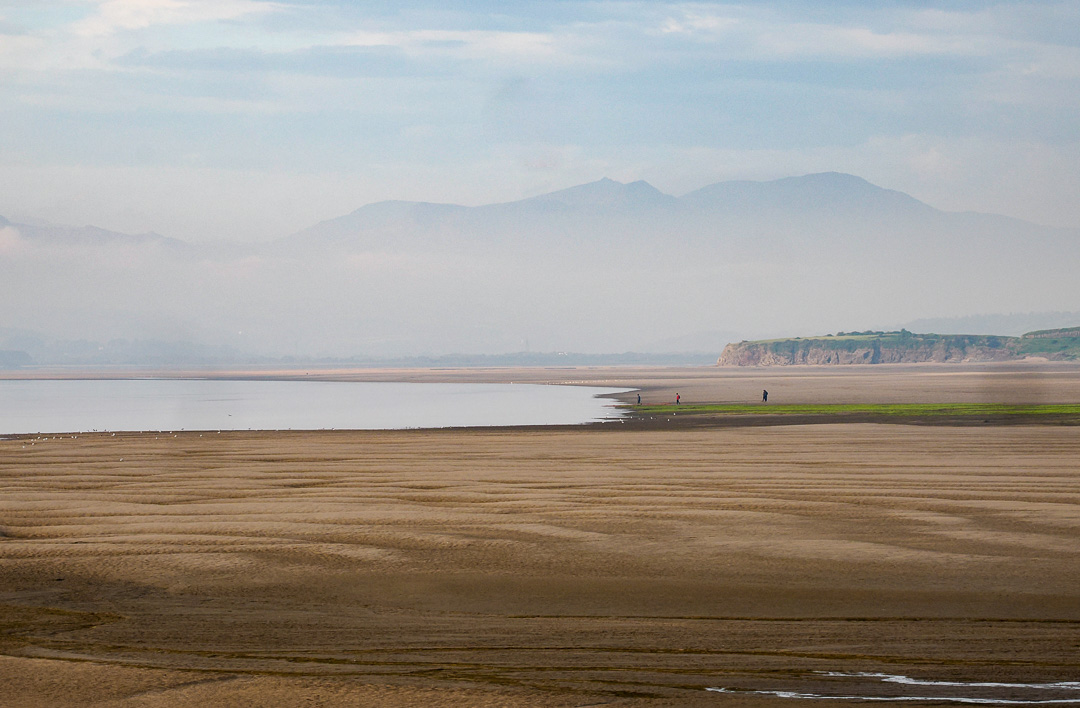
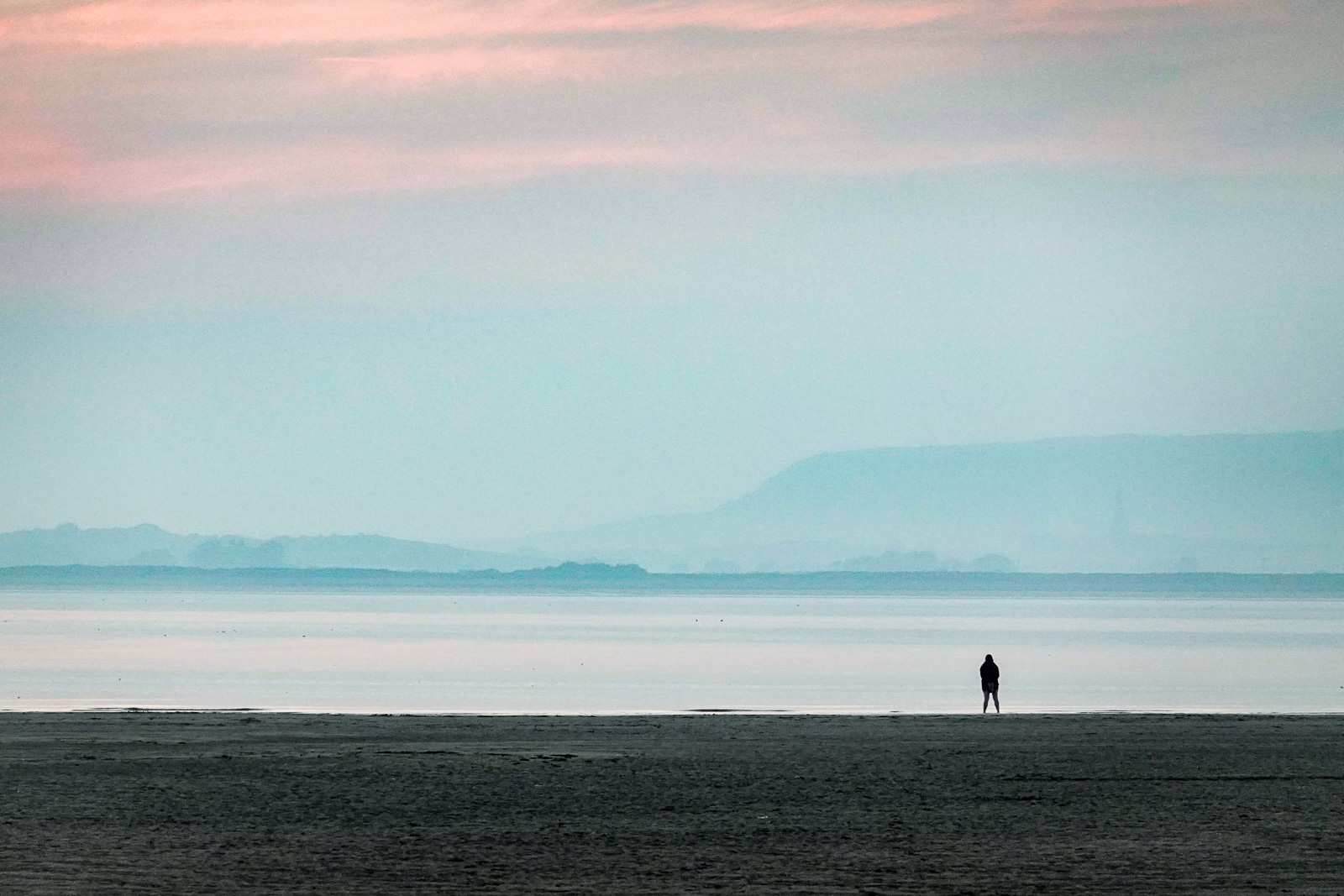
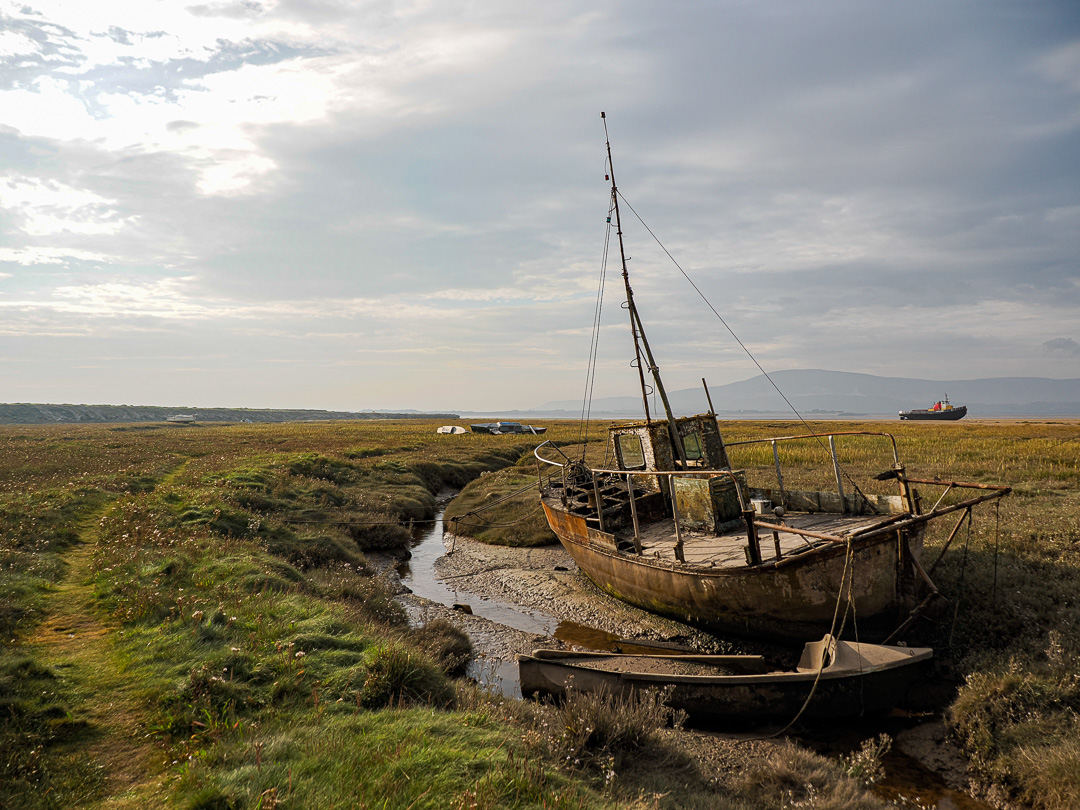
The beach provided atmospheric views over the Lakeland fells. The tide goes out a long way and there are a number of boats apparently stranded there. One of them is a tug named: “Little Gem” which was built in the 1940s and was used for many years on the River Mersey.
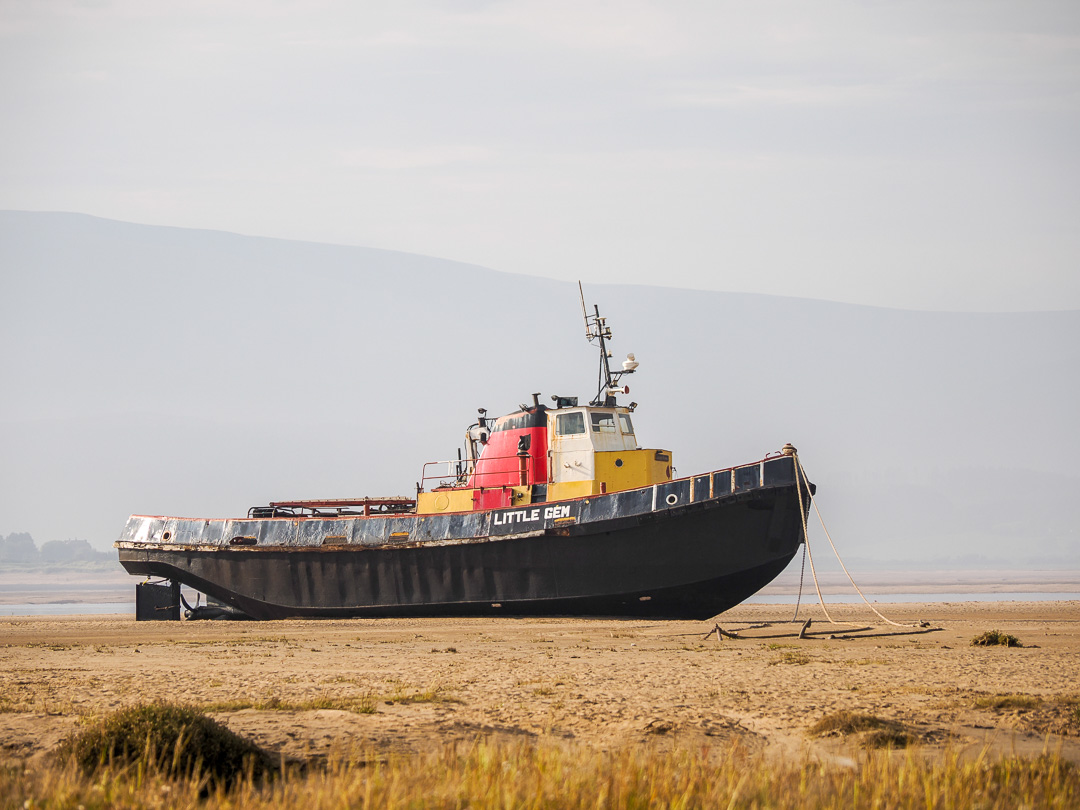
We encountered the owner of Little Gem, David, who told us of its history. He used to skipper the tug on the Mersey and many years later was able to buy it. He also claimed that it is fully seaworthy and its engines would start at the press of button.

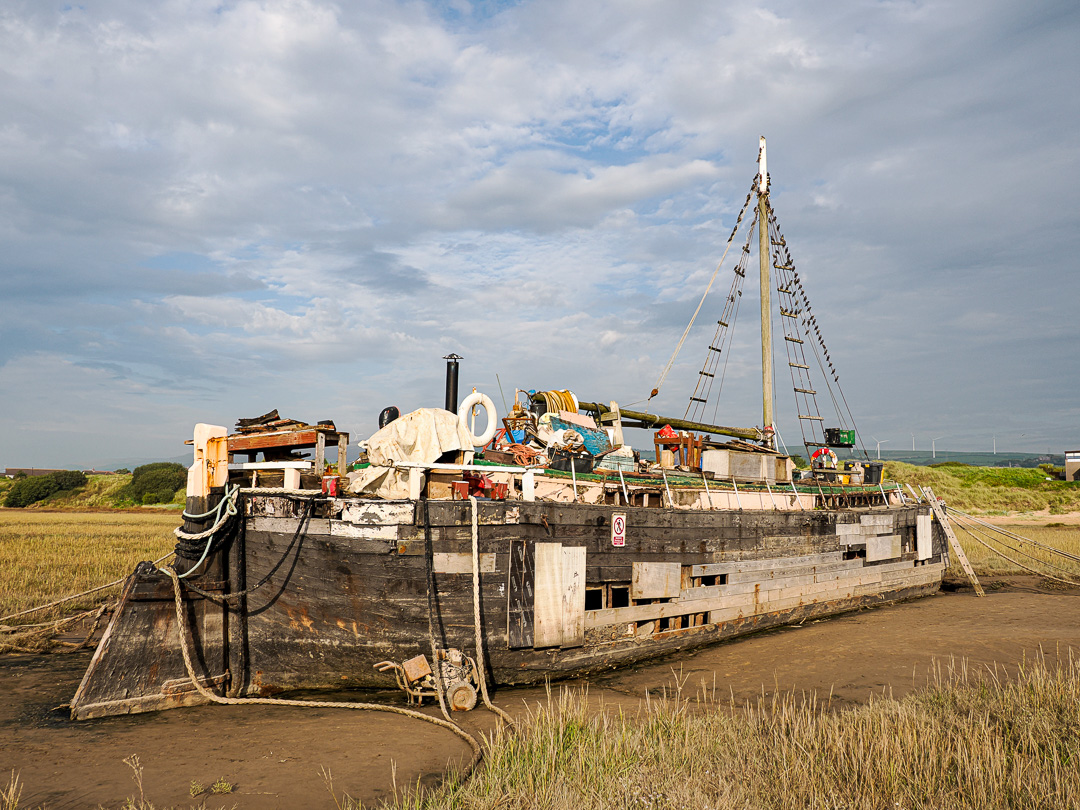
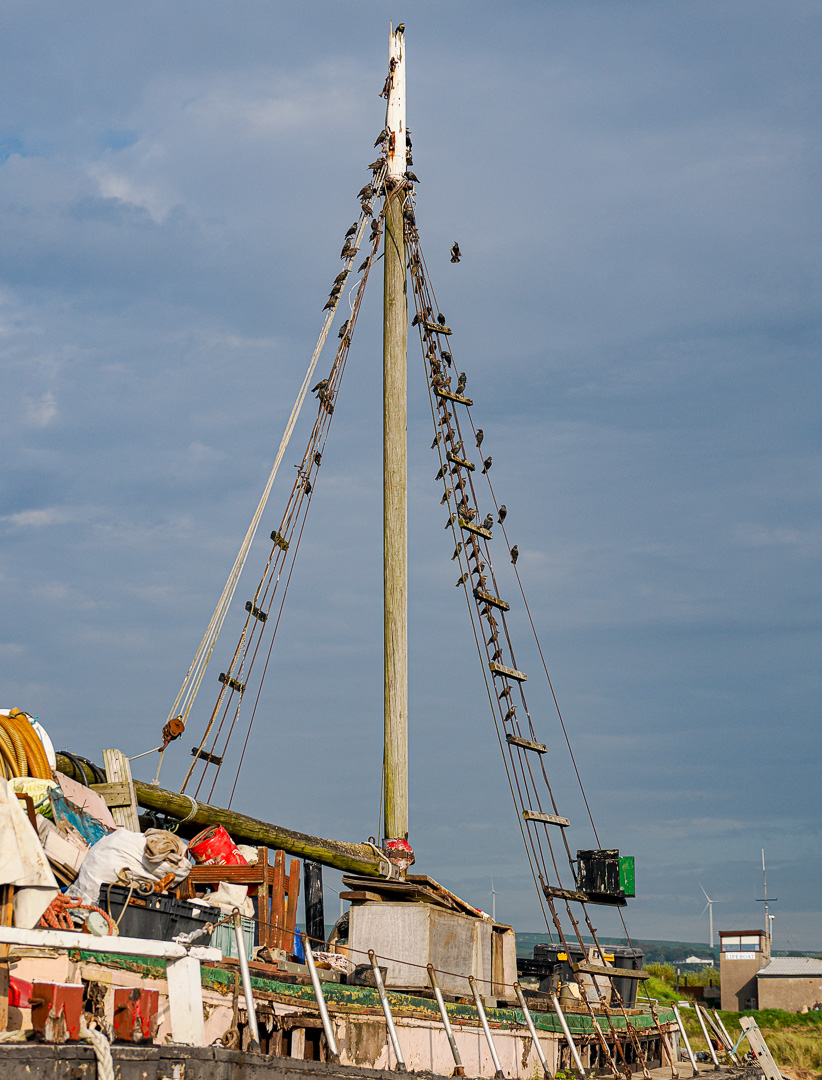
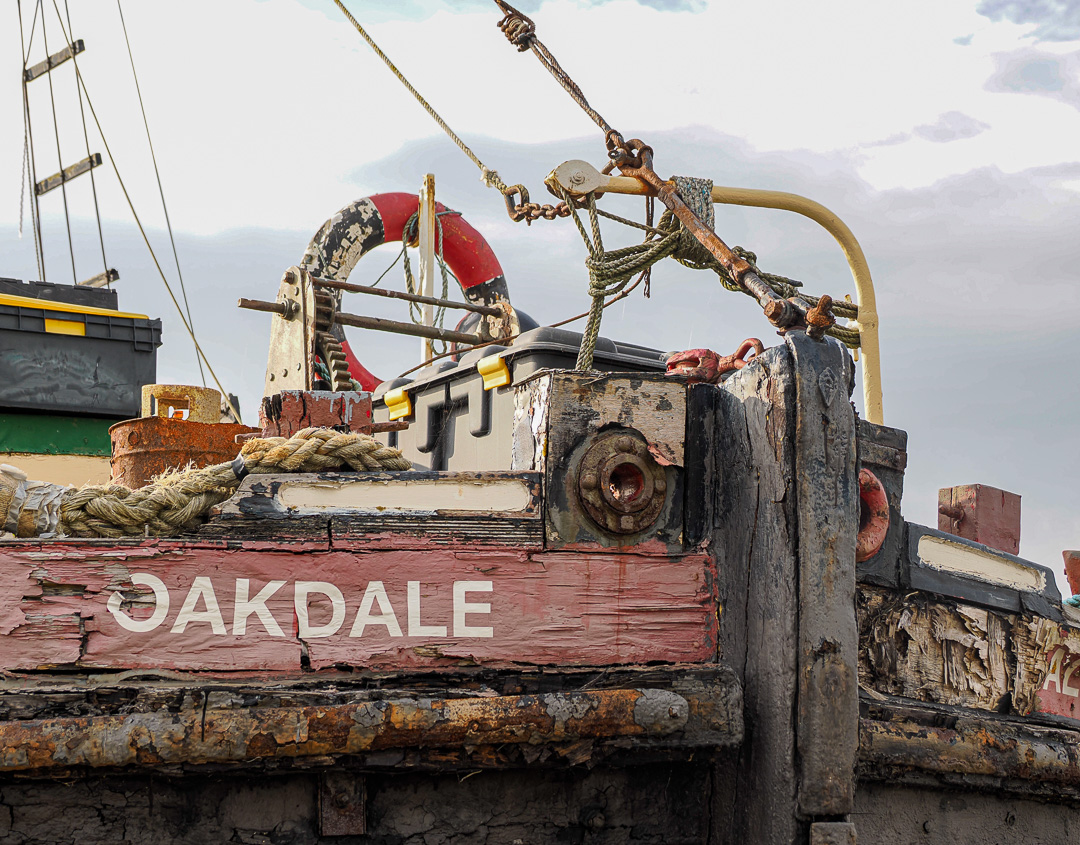
There is also a partially “repaired” (patched) barge called “The Oakdale” which has seen better days. It seems to provide a handy perch for the local starling population.
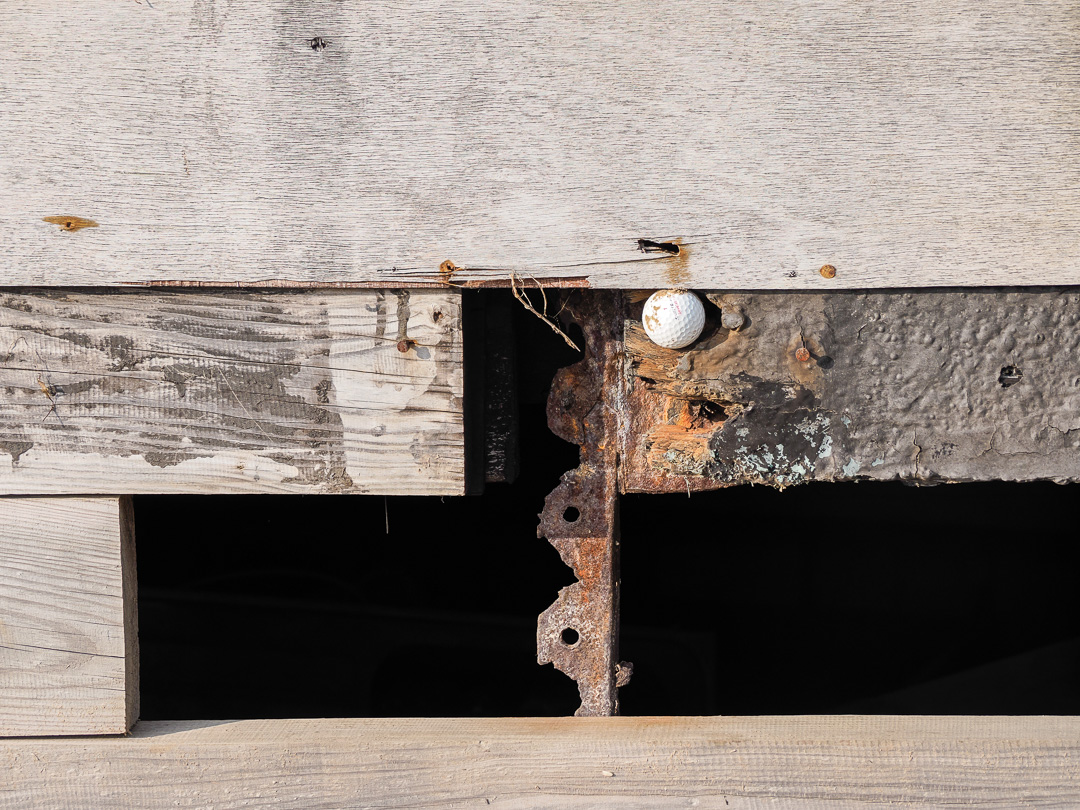
It also, inexplicably seems to attract golf balls which were to be found lodged in its side. There is a golf course nearby, but this would have needed to be a spectacular drive to reach this far. Perhaps someone was using it as target practice:
The Severn Iris looks as though it might be occupied as a dwelling. It even has some solar panels on the roof.
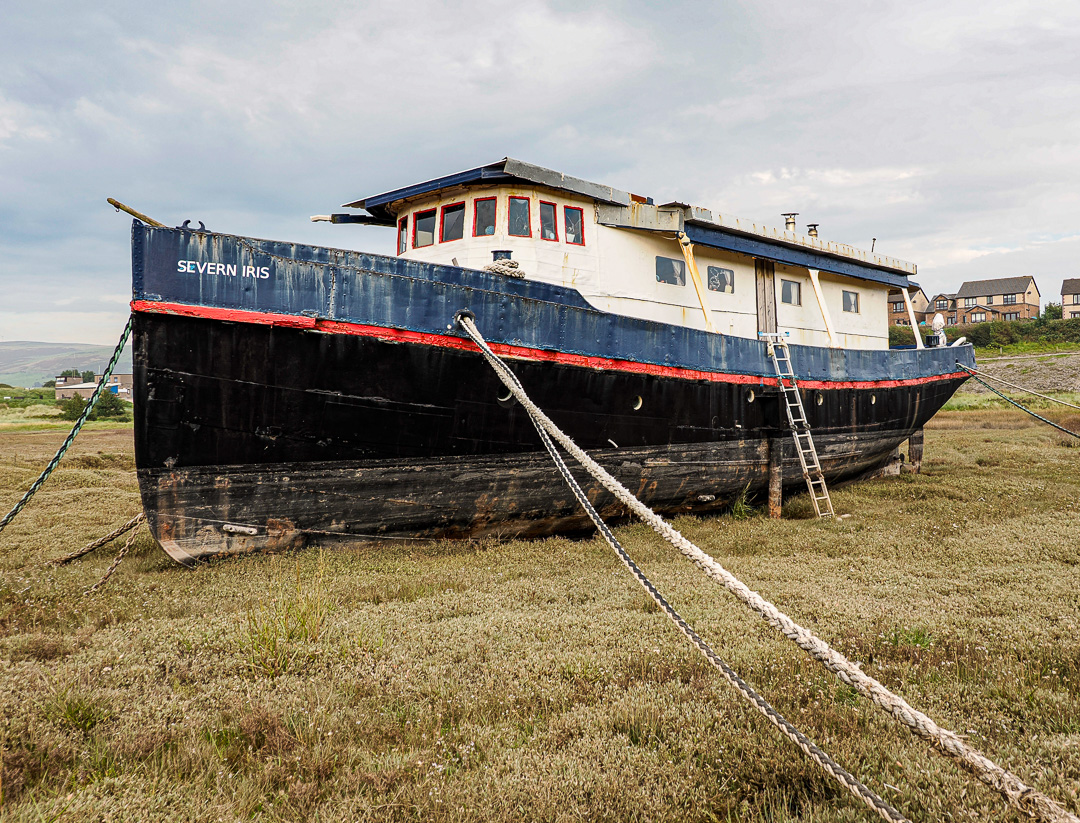
The beach here is littered with many smaller, but derelict, craft.
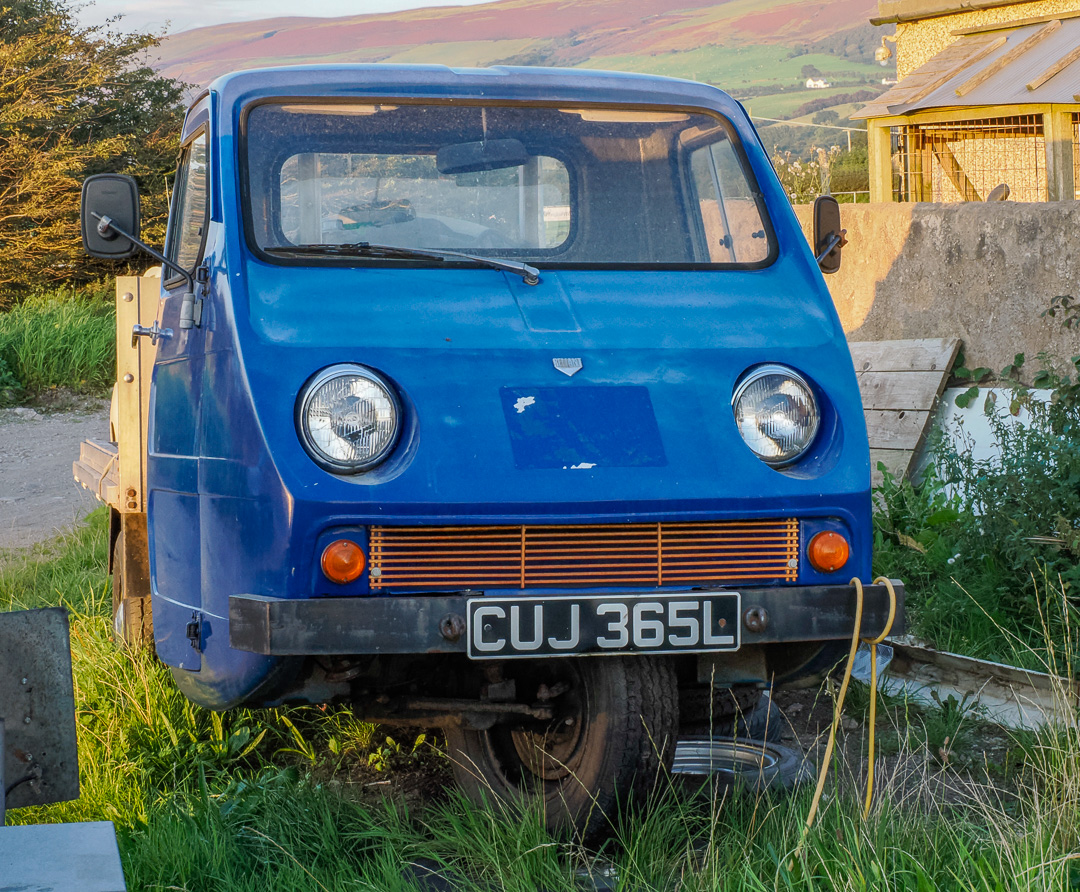
It is not just old boats which seem to have accumulated here. We also saw some old 3-wheeled vehicles, amongst them this 3-wheeled lorry / pick-up truck. A rare sight these days.
Furness Abbey
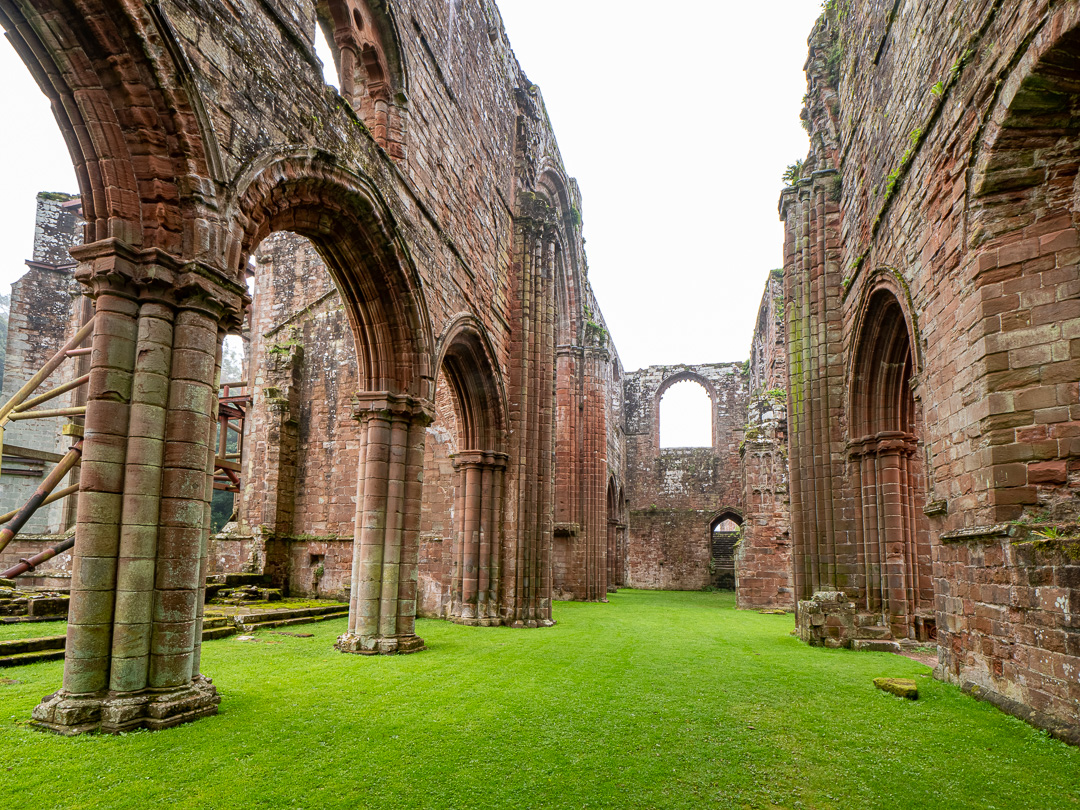
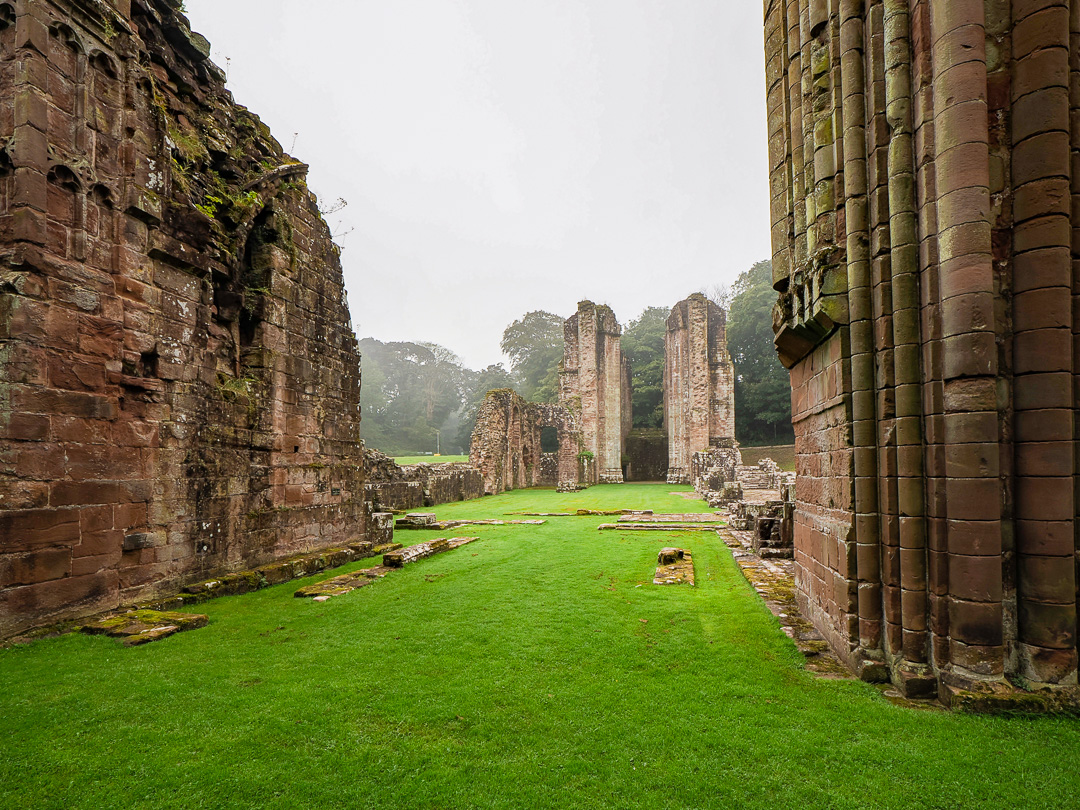
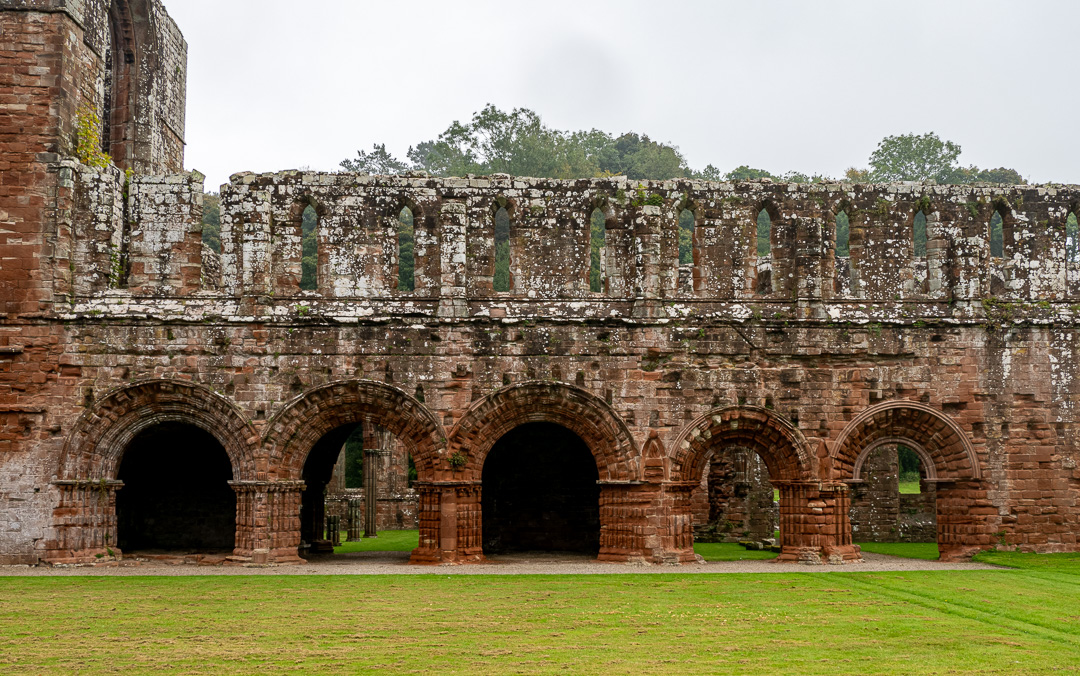
We spent Saturday visiting Furness Abbey, a very large Cistercian monastery founded in the year 1123. Situated in the Vale of Deadly Nightshade, north of Barrow-in-Furness, prior to the English Reformation, it was the second wealthiest monastery in the country, after Fountains Abbey in Yorkshire, which was also a Cistercian monastery.
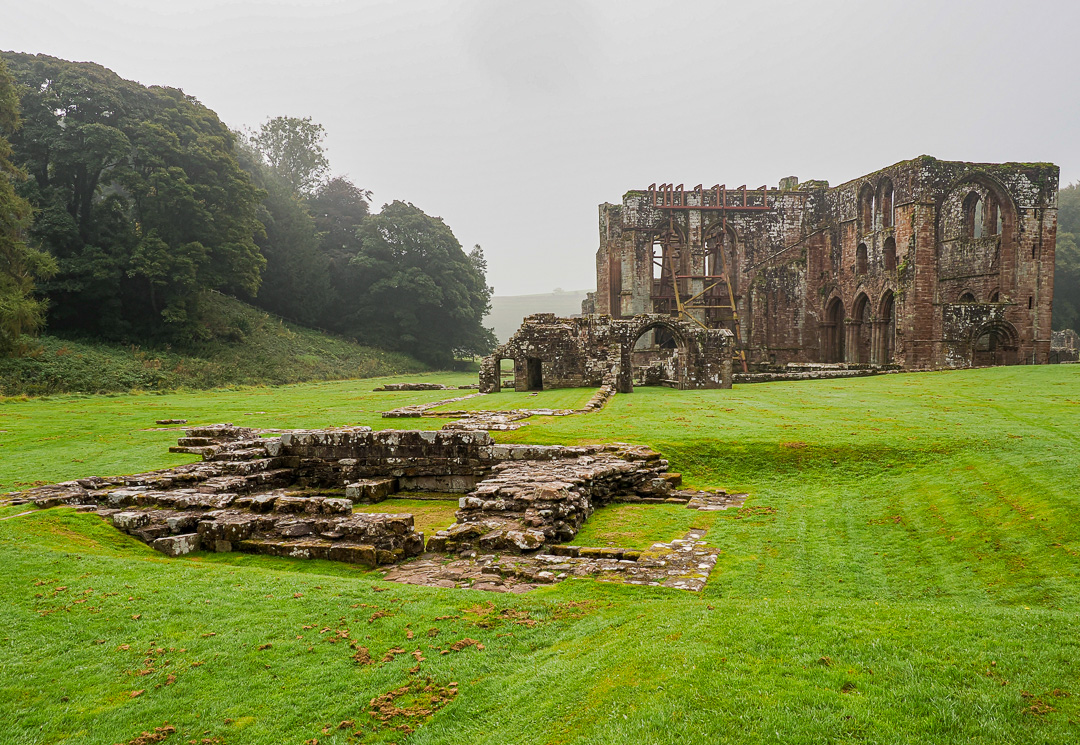
The abbey has several individual grade I listed buildings and is protected as a Scheduled Monument.
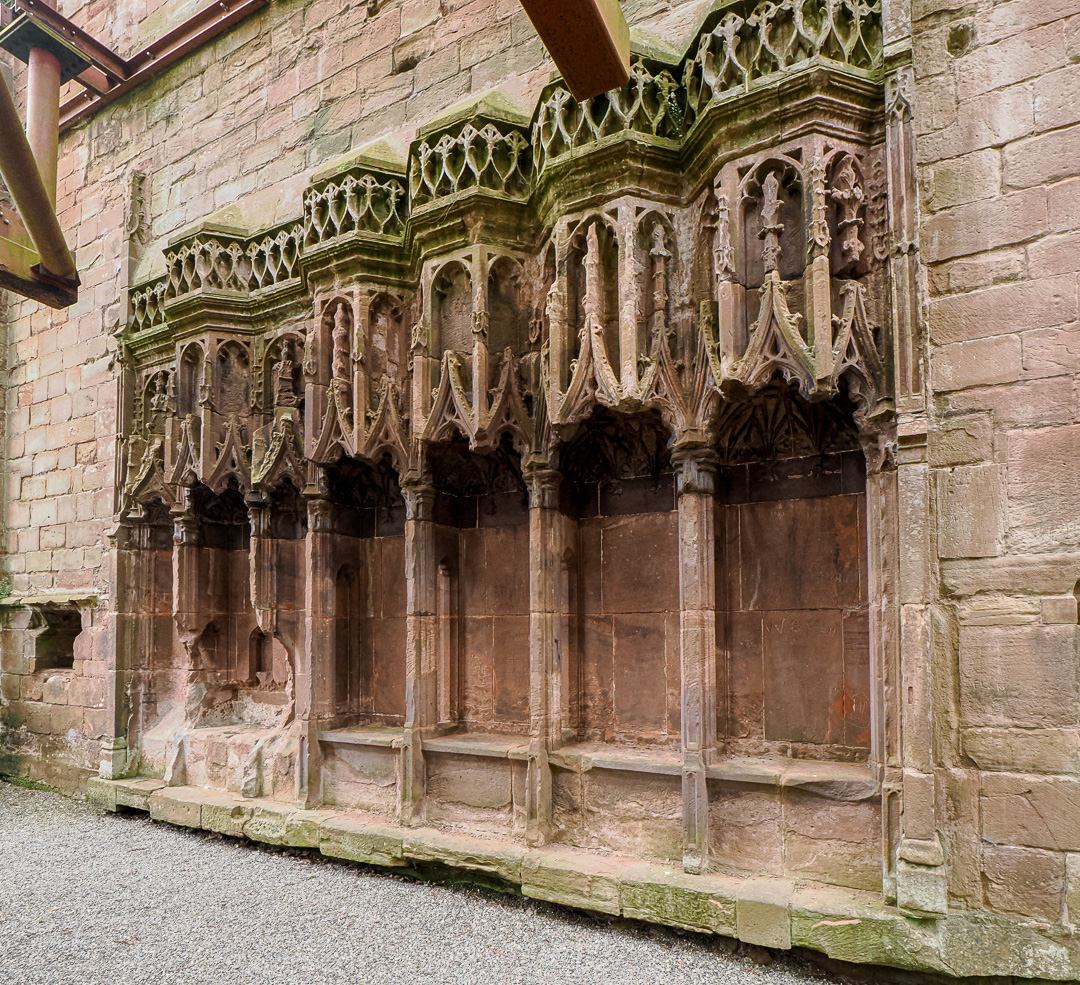
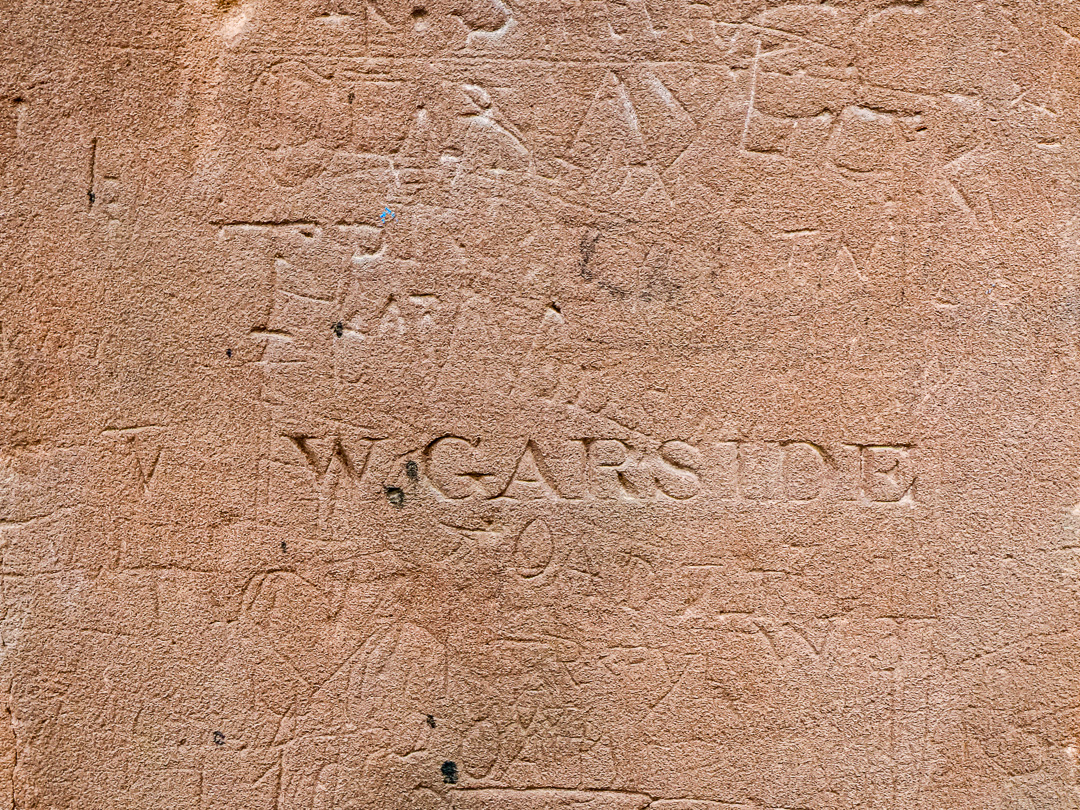
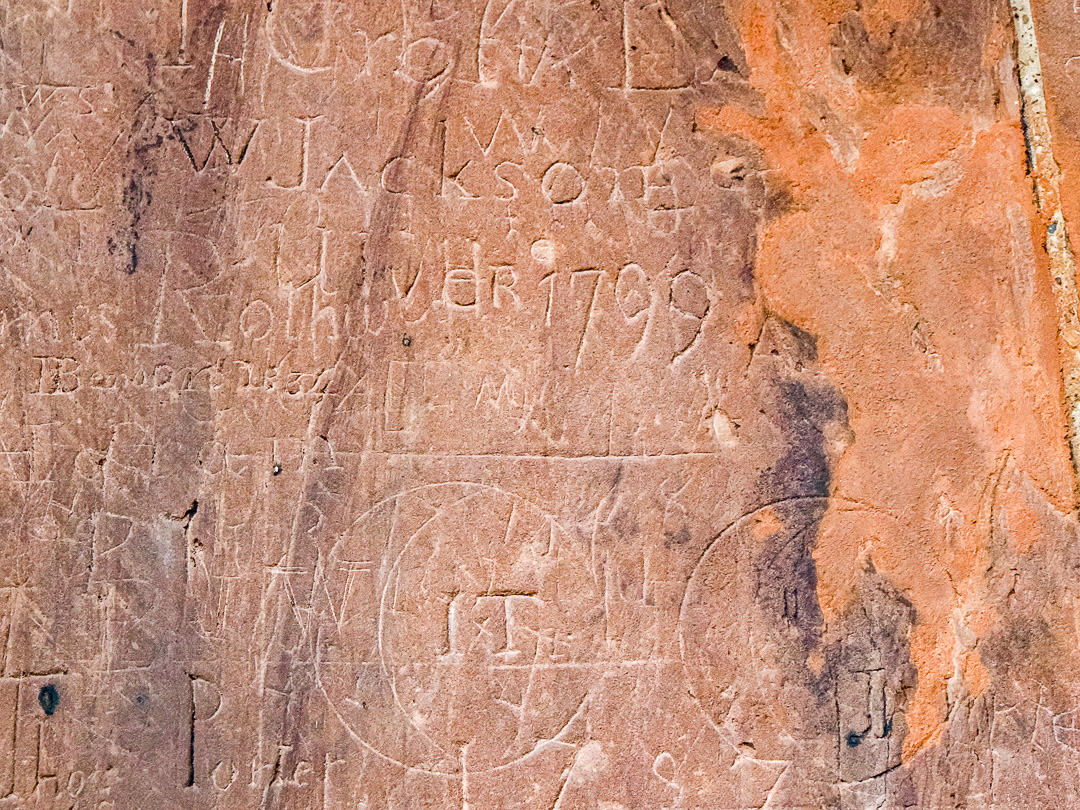
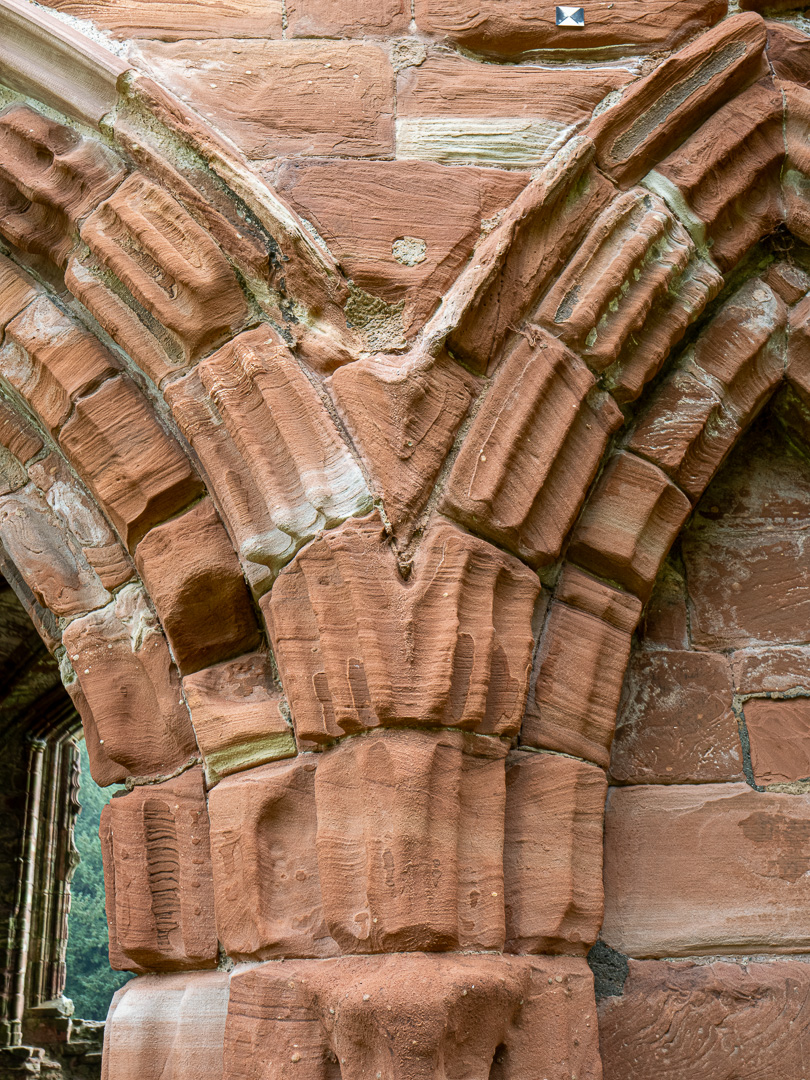
The buildings are made of a soft sandstone and over many years there has been graffiti added of varying age and quality:
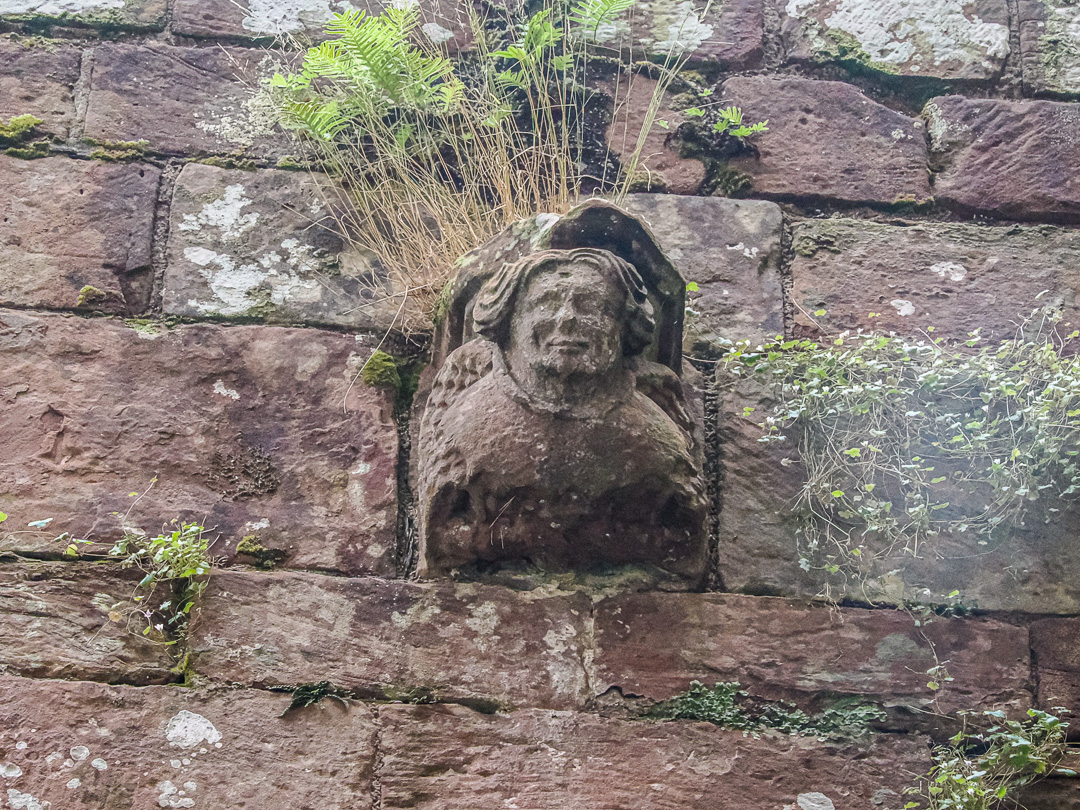
As with many buildings of this age, there are stone heads looking out of the walls. These appear to be in ecclesiastical garb:

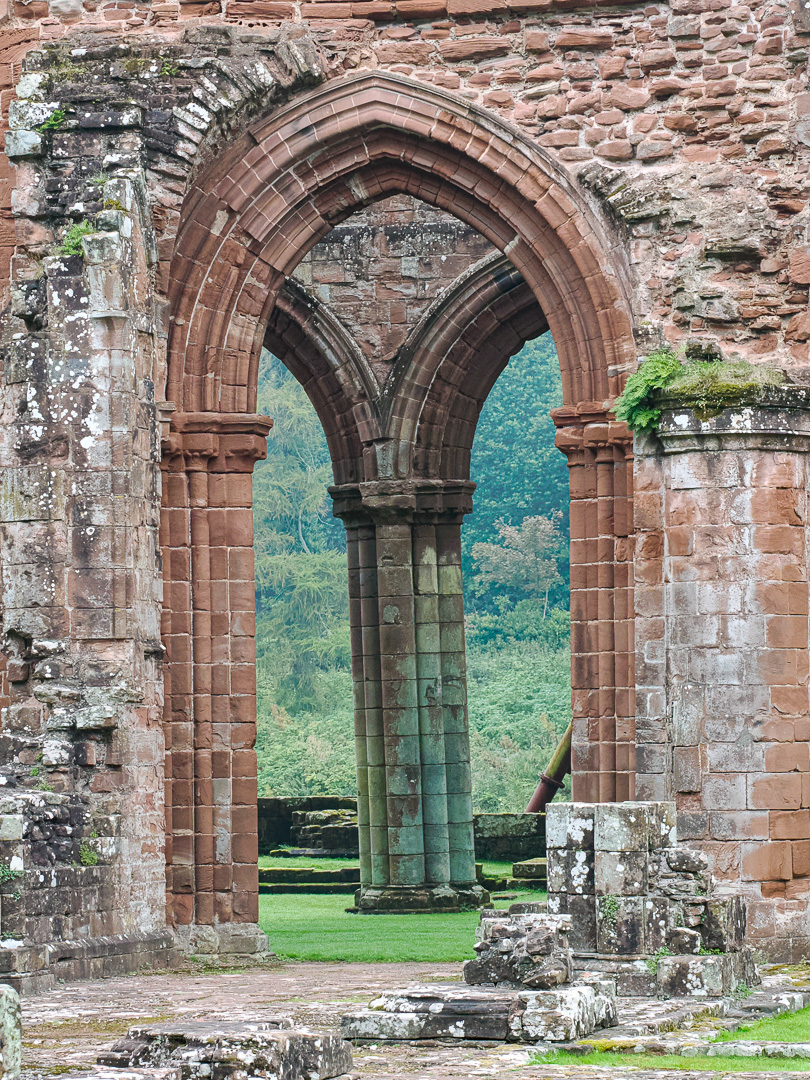
Although the building were set on deep foundations, the bedrock is a long way down and some of the walls have moved out of alignment as can be seen through the arch below. Many parts of the building were underpinned in the 1920s, but further steel-work has been required more recently as an emergency measure. This remains in place despite being no longer needed following further underpinning work.
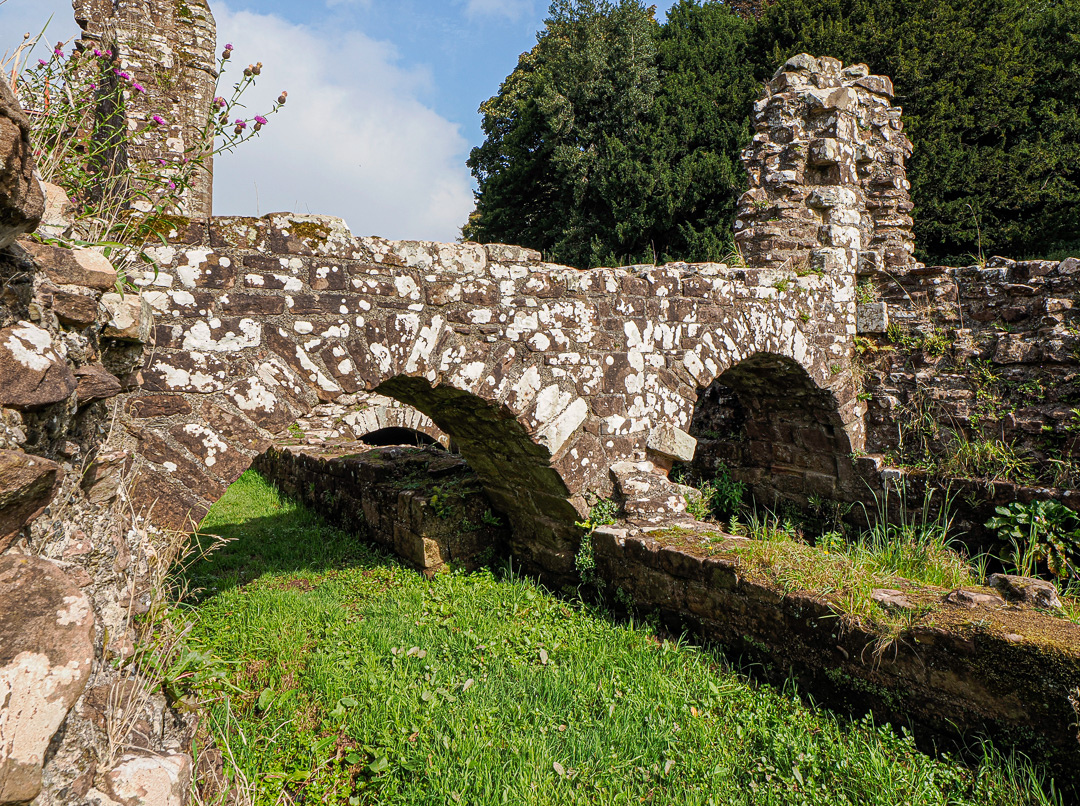
Water is managed throughout the site.
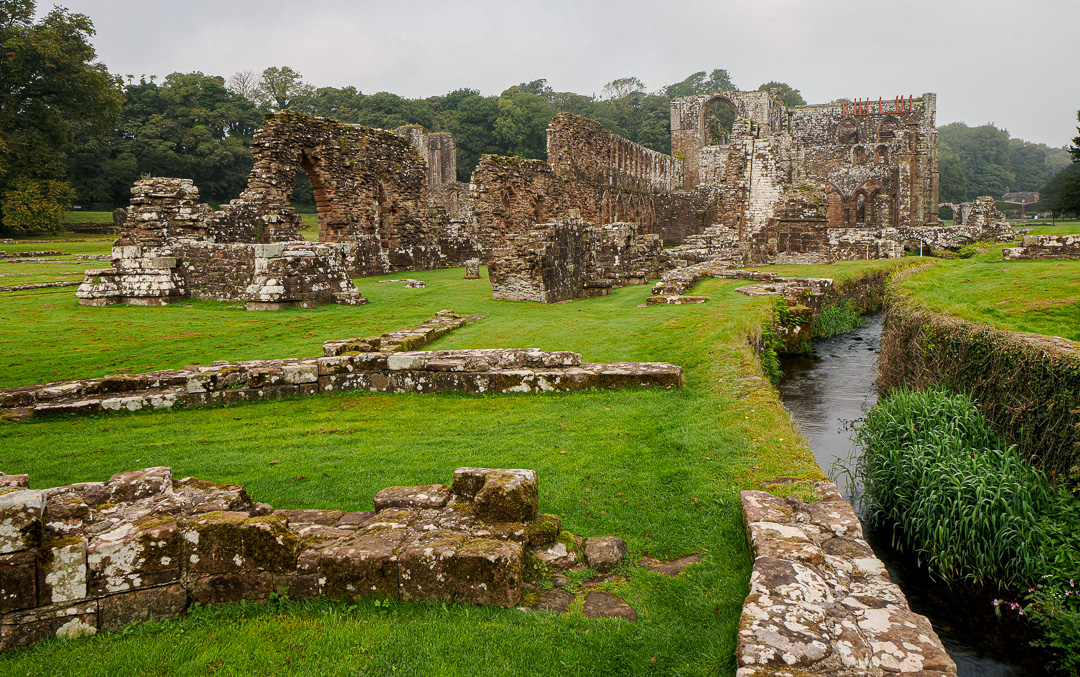
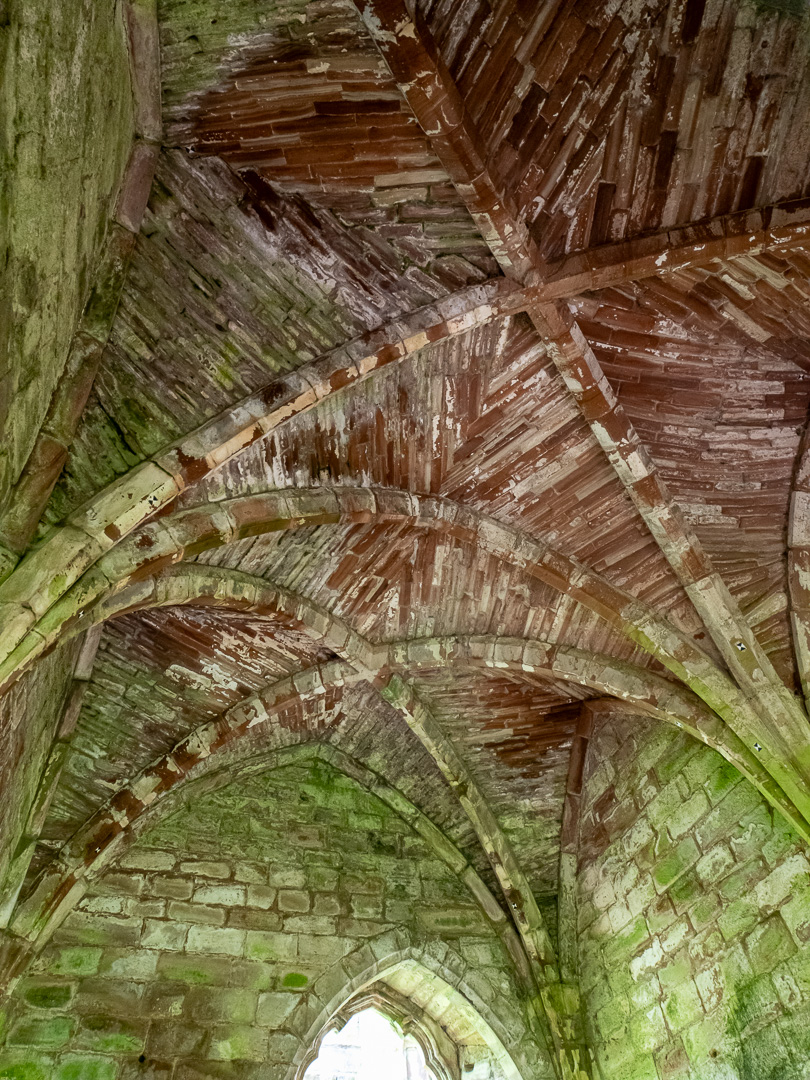
The chapter house is huge, reflecting the number of people who would be attending meetings there.

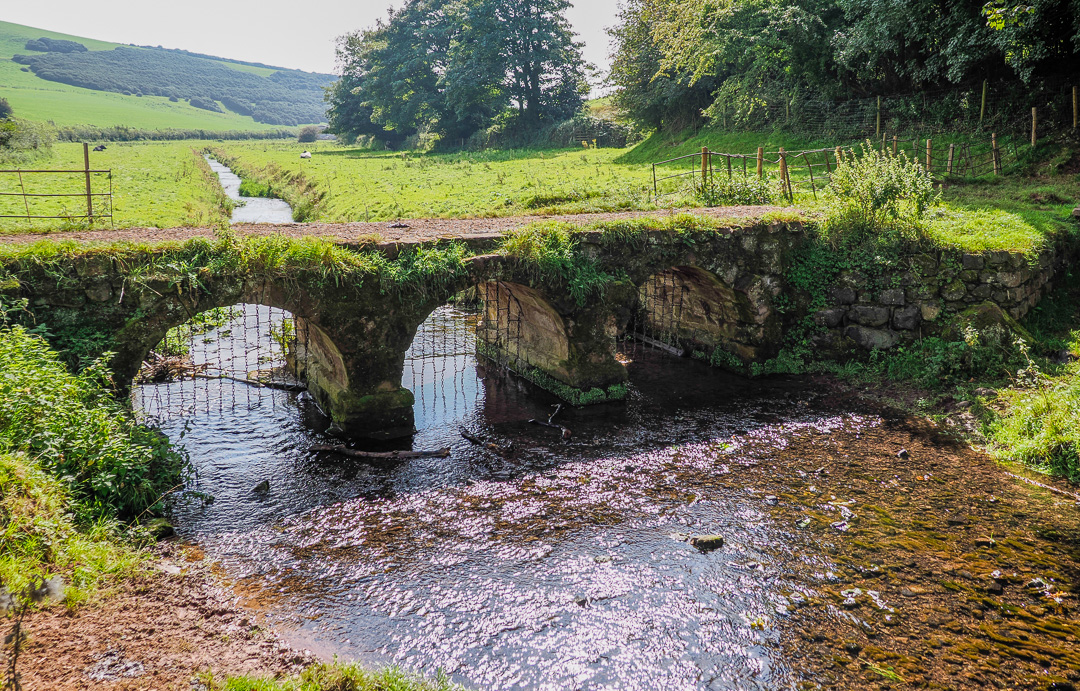
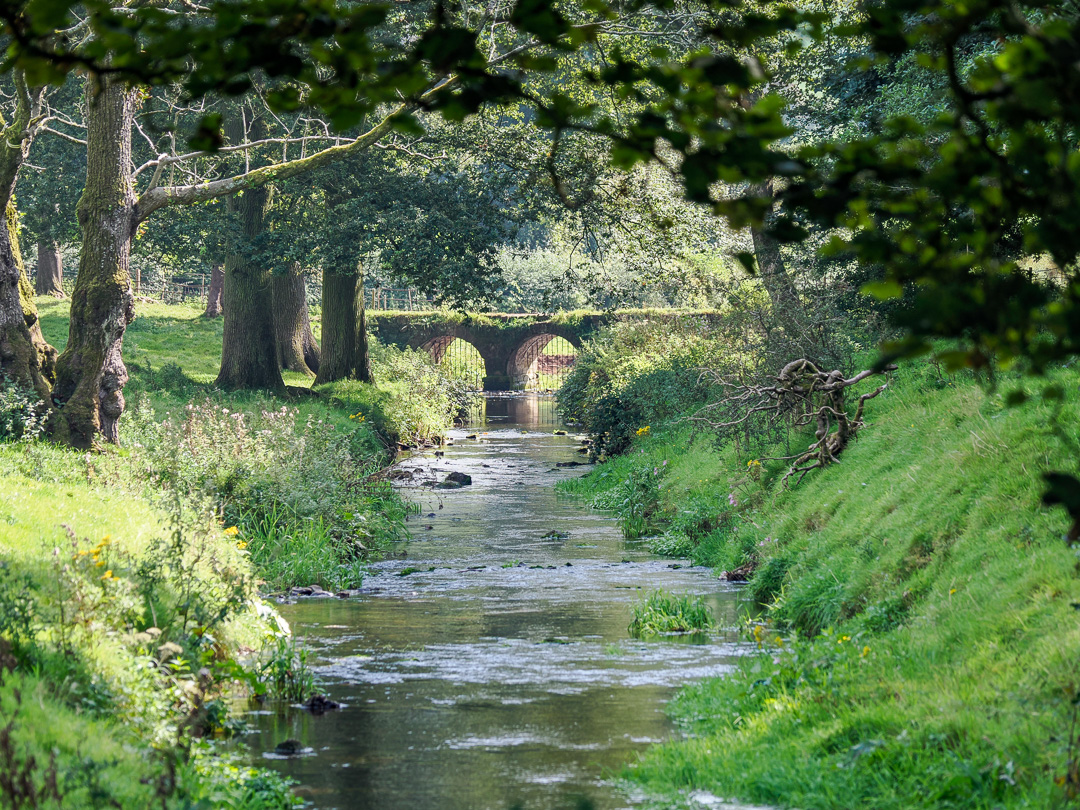
Bow Bridge
About half a mile downstream is a bridge which is contemporary with the abbey and would have been one of the ways that visitors would have approached it.
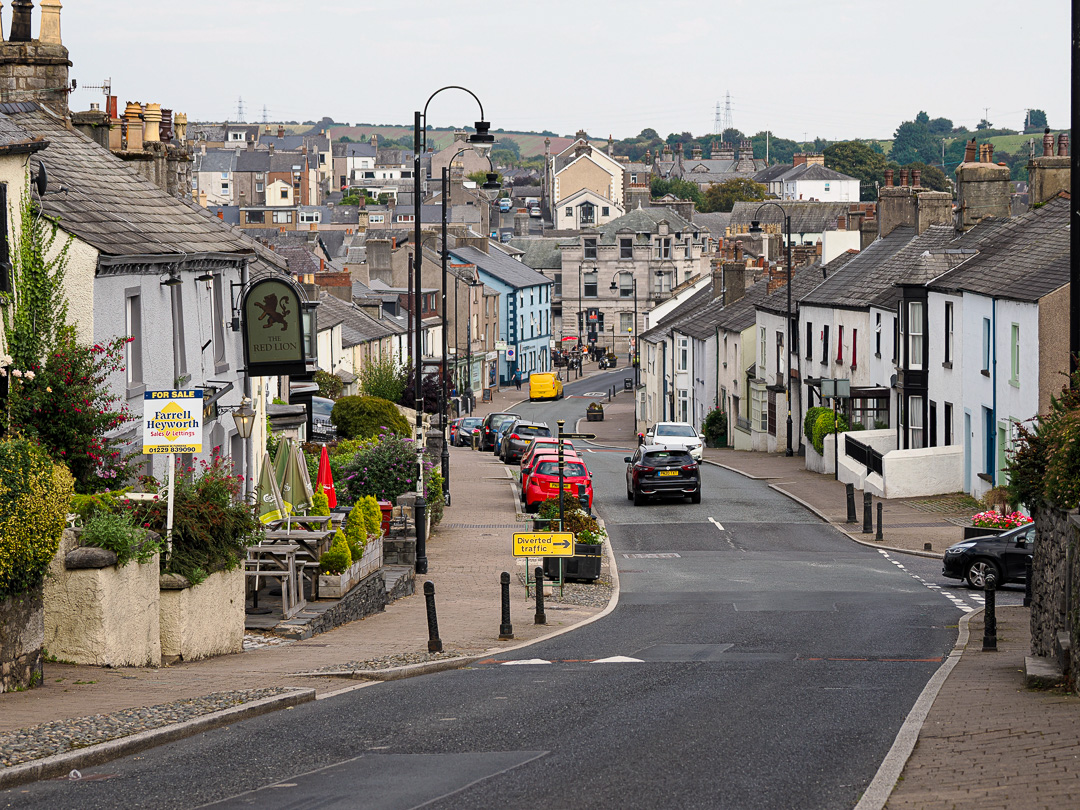
Dalton-in Furness and Dalton Castle
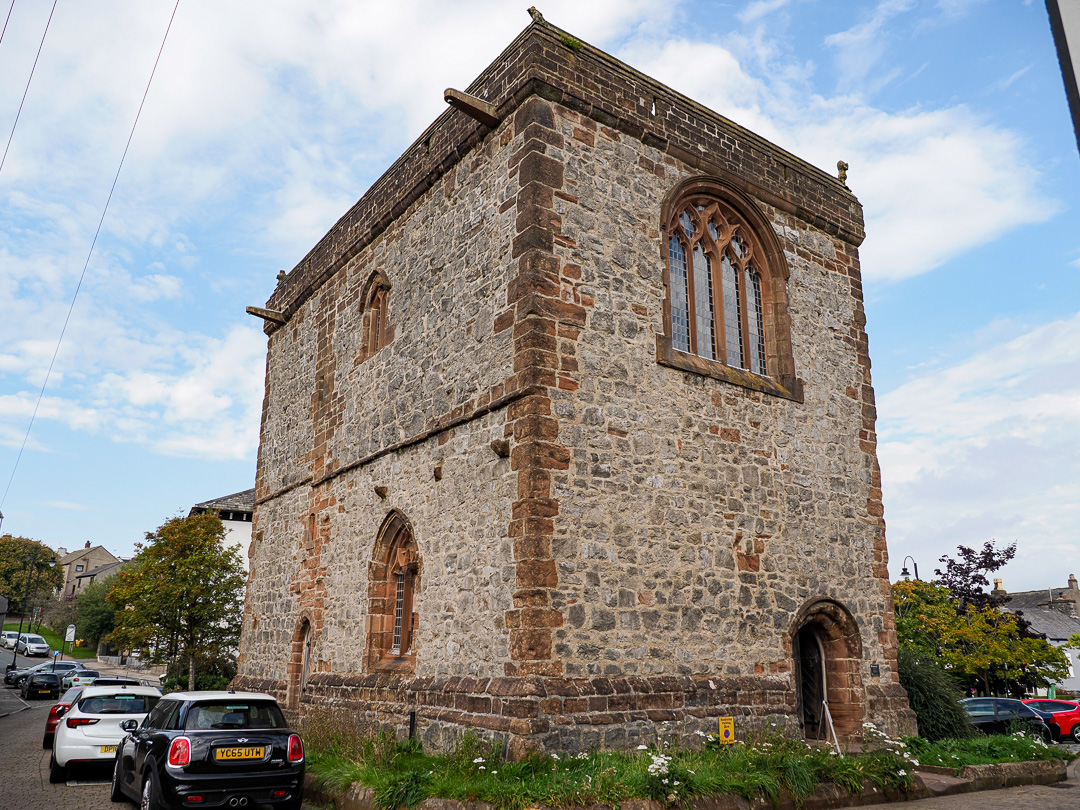
The grade I listed Peel Tower, Dalton Castle was built on the instruction of the abbot of Furness Abbey in the 14th century for the protection of the market town of Dalton-in-Furness. In the time of King Henry VIII, the building had fallen into ruins, but he ordered that it be repaired with materials taken from Furness Abbey following its dissolution. As a fortified building, it did not originally have large windows. These were added in Victorian times when the building was extensively remodelled for use as court house. It is currently owned and managed by the National Trust and is open only on Saturday afternoons.
Roa Island
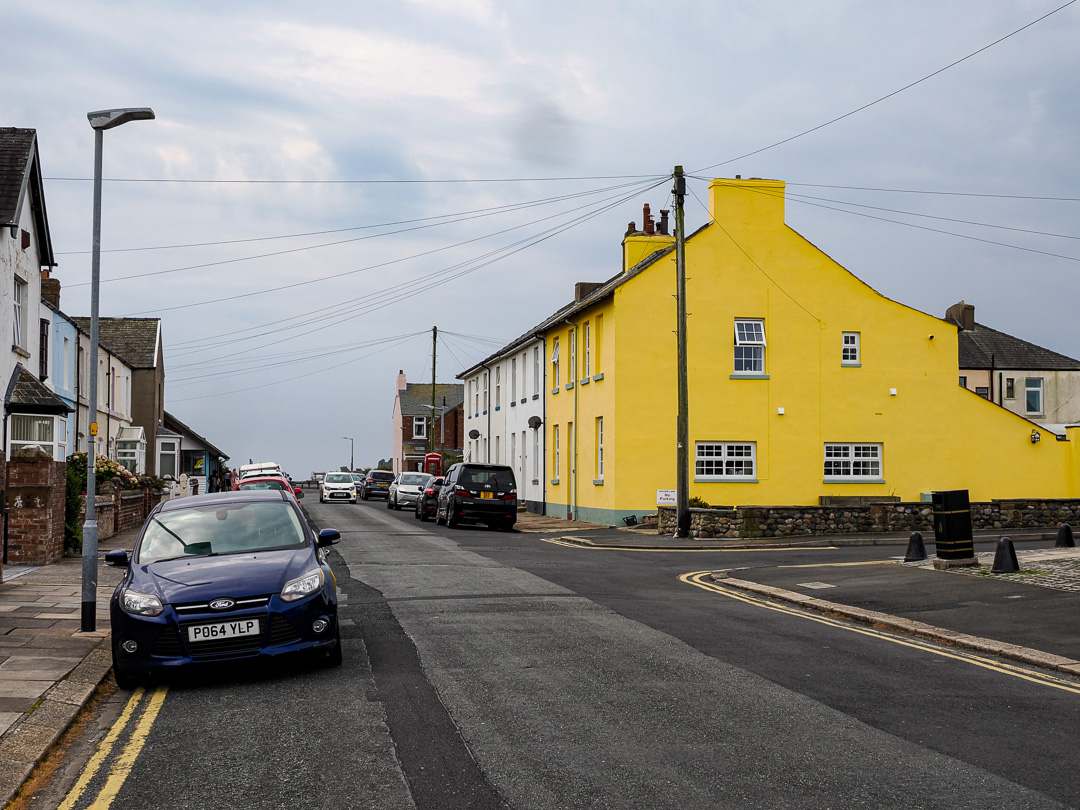
We visited Roa Island on our way home on Sunday. The plan was to take the ferry crossing across to Piel Island, but looking at the threatening imminent rain storm, we changed our mind.

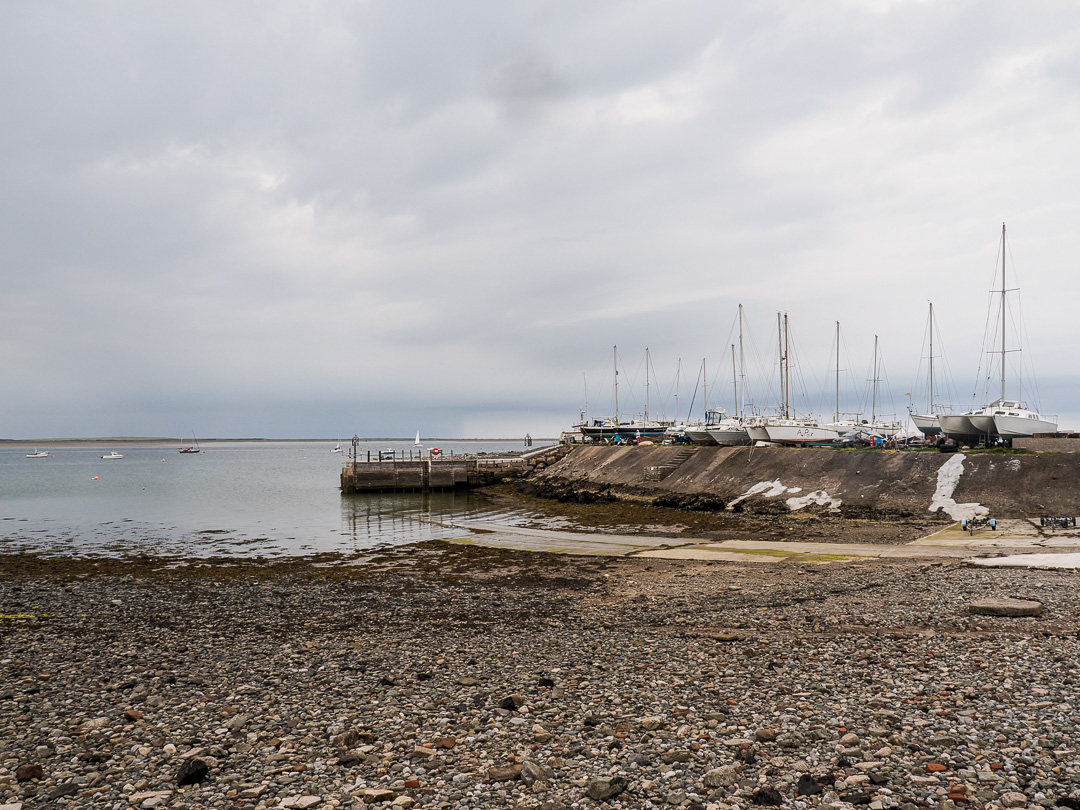
Piel Island is only a short ferry boat ride across the Piel Channel from Roa and it can be clearly seen from the jetty.
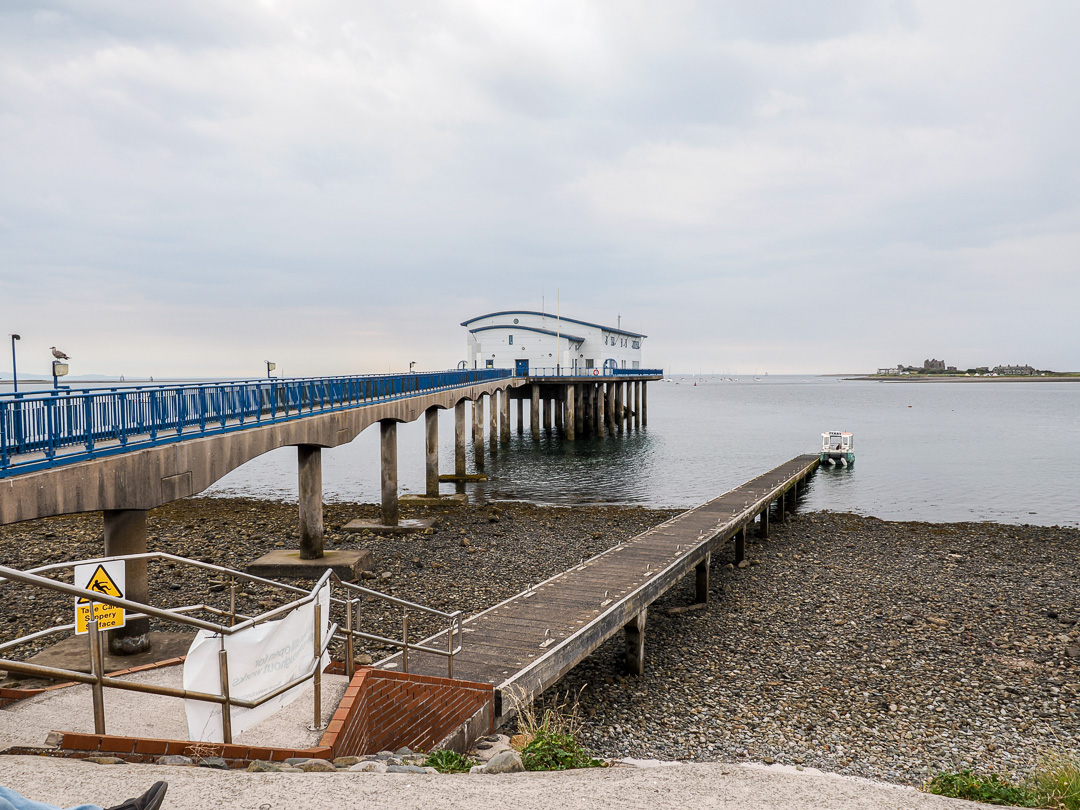
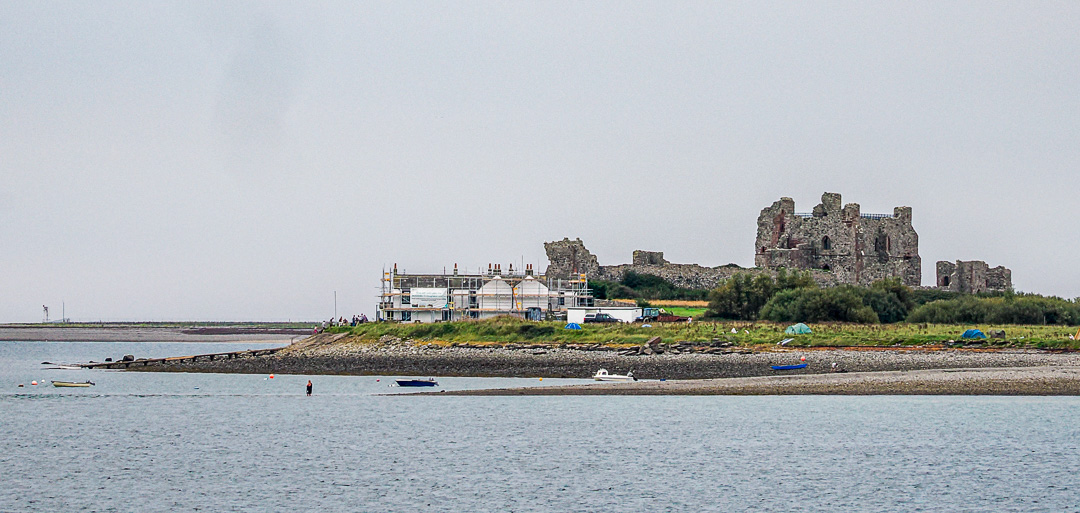
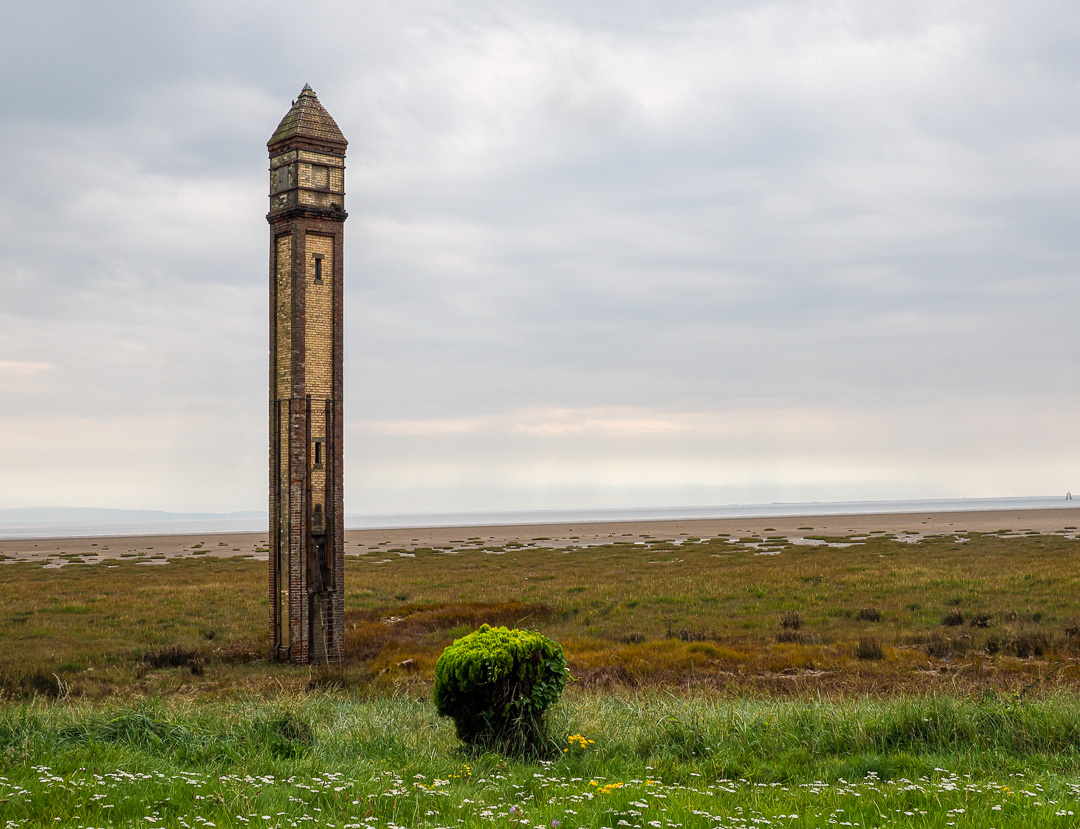
On the coast near Roa Island, is Rampside Leading Light (a navigation beacon, or lighthouse), also known as “The Needle”, it is the only surviving one of 13 such beacons used to guide shipping into Barrow in the 19th century.
Visiting with a Motorhome:
Askam-in-Furness: Roads to the village are a little tight in places, but not too problematic. There is a height barrier on the beach car park and though it would be possible to park on the roadside nearby, it might present a problem turning. Best to park near the centre of the village if possible.
Furness Abbey: Roads to the abbey are again a little tight, but there is a good-sized car park when you get there. It was quiet when we visited, but I doubt it is always like that. Furness Abbey is owned and managed by English Heritage, who charge non-members for entry. Open daily, but check the website for times etc.
Dalton-in-Furness: We parked on a small car park near The Brown Cow pub and walked up to the castle, but found that it would likely have been possible to park the motorhome on the main road in the centre of the town. As stated above, Dalton Castle is owned and managed by the National Trust. It is free to enter, whether you are a member or not, but only on Saturday afternoons. Check the National Trust website for more information.
Roa Island: The island is reached via a causeway from Rampside on the mainland. There is a small car park which is only of use to smaller vehicles, but we had no problem parking on the road. Check the Piel Island Ferry Facebook page for details regarding crossing over to Piel Island (passengers only).


I’m fairly sure I run past Fufu on a regular basis, if you’re based in Euxton…
We are awaiting arrival of our new campervan (sqweee) which is our Pensions 😁
LikeLike
Yes, we are in Euxton. Give us a knock when you next pass if you like.
LikeLike
Cheers 🍻
LikeLike